Region
Central Mexico
The beating heart of Mexico: from Diego Rivera's murals to the markets of Oaxaca, the region that concentrates the country's identity.
Central Mexico is the historical, cultural and political core of the nation. Mexico City — the federal capital of 22 million people — is one of the largest metropolises on the planet and one of the richest in museums, colonial heritage and food. Built on the ruins of Tenochtitlán, the great Aztec capital destroyed by the conquistadors in 1521, it carries two millennia of continuous history in its geology, its architecture and its everyday life.
Six hours by road or under an hour by plane south of Mexico City, Oaxaca is the cultural counterweight to the capital: a human-scale UNESCO-listed city that doubles as Mexico's gastronomic heartland (moles, tlayudas, artisanal mezcal), the center of an exceptional Indigenous craft scene (alebrijes, the black pottery of San Bartolo Coyotepec, Zapotec textiles), and the gateway to the archaeological sites of Monte Albán and Mitla. Together, Mexico City and Oaxaca form the most culturally dense pairing anywhere in Mexico — and one of the most rewarding two-city itineraries in Latin America.
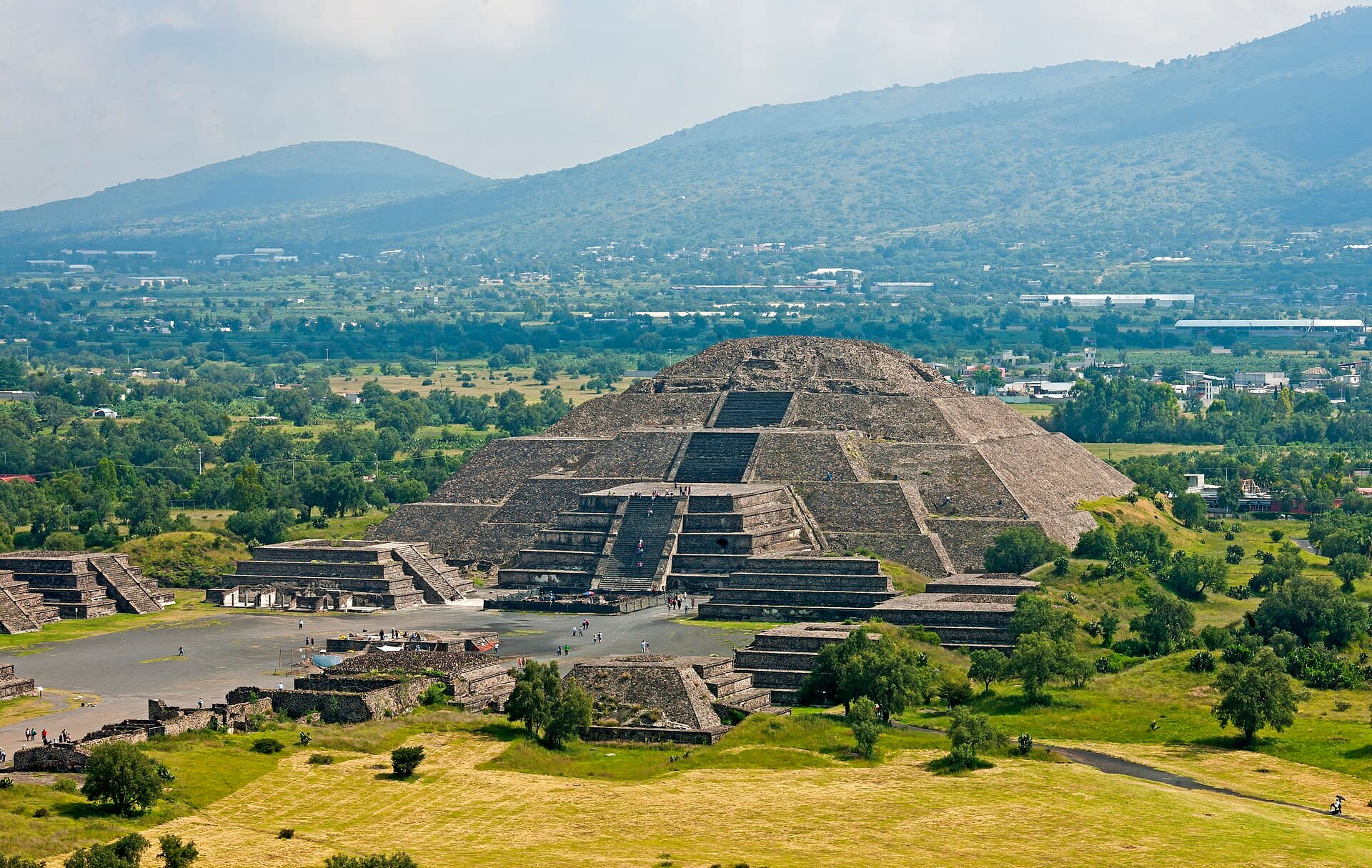
This region sits on the central altiplano between 1,500 and 2,400 meters above sea level, which means a temperate climate rather than the tropical heat of the coast. Mexico City is held at 2,240 m by the volcanic ring of the Eje Volcánico Transversal; on a clear day, the snow-capped Popocatépetl (5,452 m, still active) and Iztaccíhuatl loom on the southern horizon. Oaxaca sits at 1,550 m in a fertile valley framed by the Sierra Norte and the Sierra Sur. Pair these two cities with the pyramids of Teotihuacán and, if you have time, the colonial silver towns of San Miguel de Allende or Guanajuato, and you get the most layered version of Mexico in a single trip — colonial, pre-Hispanic and unmistakably contemporary, all at once.
Situation
Où se situe Central Mexico ?
Ouvrir la carte en grand sur OpenStreetMap →Frequently asked questions
How many days should I spend in Mexico City?+
Will Mexico City's altitude be a problem?+
How do I get from Mexico City to Oaxaca?+
When is the best time to visit Central Mexico?+
Is Mexico City safe?+
Is Día de los Muertos in Oaxaca really worth booking around?+
Our verdict
Central Mexico is essential for any traveler wanting to understand the country in its historical and cultural depth. Mexico City floors first-time visitors with its energy and its museum density — a week is the minimum to scratch the surface. Oaxaca wins them over with its preserved beauty and its singular food identity: there are travelers who arrive expecting a stopover and end up rebooking flights to stay longer. The combination of the two, over 10 to 14 days, is one of the most enriching itineraries in Latin America — and one of the most accessible for travelers worried about safety, language or logistics. Mexico City is a manageable city if you stay in Roma, Condesa, Polanco or Coyoacán, use Uber and the metro, and accept that the first day will be slower than you'd like (the altitude is real). Oaxaca is a different rhythm entirely: walkable, dense, gastronomic, with the kind of cultural texture that you usually only find in cities ten times its size. Plan for at least four days in Oaxaca and add the village circuit — Teotitlán del Valle for the textiles, San Bartolo Coyotepec for the black pottery, Hierve el Agua for the petrified waterfalls. November (Día de los Muertos) is the headline month but also the hardest to book.