Africa
Mauritius
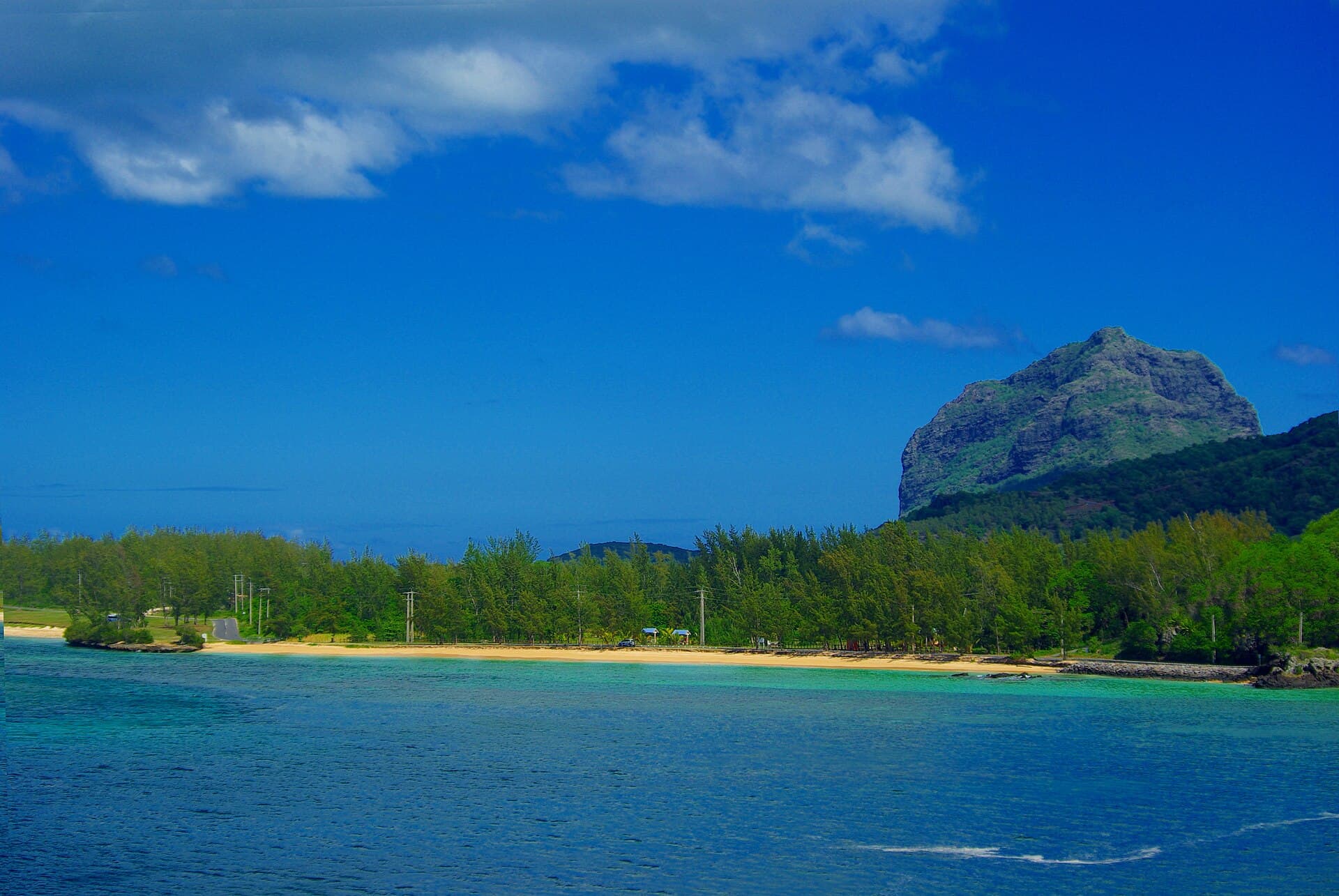
Turquoise lagoons, dramatic volcanic peaks and a Creole-Indian-Chinese melting pot packed into a single small island.
- Capital
- Port-Louis
- Currency
- Roupie mauricienne (MUR)
- Languages
- Créole mauricien, Français, Anglais
- Budget
- Comfort-tier — from around €110/day/person
Mauritius at a glance
Mauritius is a tropical Indian Ocean island that has built its reputation on powder-white beaches, turquoise lagoons ringed by coral reefs and a hospitality culture that genuinely lives up to the brochures. Just 65 by 45 kilometres in size, the island packs in an astonishing variety of landscapes: the UNESCO-listed Le Morne Brabant peninsula rising 556 metres straight out of the lagoon, the seven coloured earths of Chamarel, the lush highlands around Black River Gorges National Park, the bustling colonial harbour of Port Louis and the long, sheltered beaches of Belle Mare, Trou aux Biches and Flic en Flac. Few destinations of this size offer such a clean cross-section of mountains, reefs, plantations and small-town life.
What truly sets Mauritius apart from neighbouring Indian Ocean destinations is its people. Five centuries of trade and migration have produced a society where Creole, Indian, Chinese and Franco-Mauritian communities live side by side — Hindu temples, mosques, Catholic churches and Chinese pagodas often share the same village street within a few hundred metres of each other. That diversity flavours everything from the food (dholl puri in the morning, slow-cooked octopus curry at lunch, grilled lobster at sunset) to the calendar of festivals that runs uninterrupted from Thaipusam Cavadee to Diwali to Chinese New Year, with séga music inscribed on UNESCO's intangible heritage list as the soulful soundtrack.
For English-speaking travellers, Mauritius is also reassuringly easy. English is co-official with French, visa is granted on arrival for most nationalities for stays up to 90 days, driving is on the left in the British tradition, the local currency is the Mauritian rupee and the time zone (GMT+4) keeps jet lag to a minimum. Direct flights connect London, Paris, Mumbai, Johannesburg and Dubai. It is at once a polished honeymoon destination, a relaxed family-friendly beach holiday and, for those who venture beyond the resorts, one of the most culturally layered islands of the southern hemisphere — a small country that punches well above its weight.
What we love
- ✅Turquoise lagoons perfect for snorkelling all year round
- ✅Warm multicultural population (Creole, Indian, Chinese, Franco-Mauritian)
- ✅Outstanding fusion cuisine (curry, dholl puri, rougail)
- ✅Exceptionally safe compared to most tropical destinations
- ✅Direct flights from London, Paris and Mumbai (around 11h from Europe)
What to know
- ❌Tourist costs noticeably higher than neighbouring Réunion
- ❌Cyclone risk between January and March
- ❌Fewer truly public beaches than the map suggests
- ❌Short distances on paper, but dense traffic around Port Louis
Explore Mauritius
Situation
Où se situe Mauritius ?
Ouvrir la carte en grand sur OpenStreetMap →Frequently asked questions
When is the best time to visit Mauritius?+
Is Mauritius expensive for British and American travellers?+
Mauritius vs Seychelles — which should I choose?+
Is Mauritius safe for tourists and solo travellers?+
How many days do I need in Mauritius?+
Do I need a visa to enter Mauritius?+
What language do people speak in Mauritius?+
Our verdict
Mauritius is a benchmark in the beach and lagoons category of the Indian Ocean, and it earns that reputation with quiet confidence rather than hype. Its core strengths are clear: gin-clear turquoise lagoons that stay swimmable year-round, a remarkably warm and multicultural population where Creole, Indian, Chinese and Franco-Mauritian heritages mix without friction, and an unusually safe environment for an island holiday — including for honeymooners, families with young children and solo female travellers.
The gastronomy is a genuine highlight that is often underplayed in marketing: street-side dholl puri, slow-cooked octopus curry, fresh tropical fruit and Chamarel rum all deserve as much attention as the spa menu. The island also delivers premium experiences without the logistical complexity of larger destinations — direct flights from Europe, paved roads everywhere, English widely spoken, no jet lag worth mentioning.
On the limits side, tourist-facing prices are noticeably higher than neighbouring Réunion, public beaches are fewer than the map suggests, and traffic around Port Louis at rush hour can erase the small-island feel. The kitesurfing and surfing crowd should also know that the south-east trade winds dominate the east coast from June to September. None of this dents the overall picture: the value-to-experience ratio holds up exceptionally well for travellers prioritising safety, comfort and cultural depth. If you want a premium tropical destination that does not demand sacrifices in logistics or peace of mind, Mauritius should be at the very top of the shortlist.

"Plein été austral : chaleur, lagon à 28° et fortes pluies — la saison cyclonique débute."
Expert on Mauritius · 1 contributions