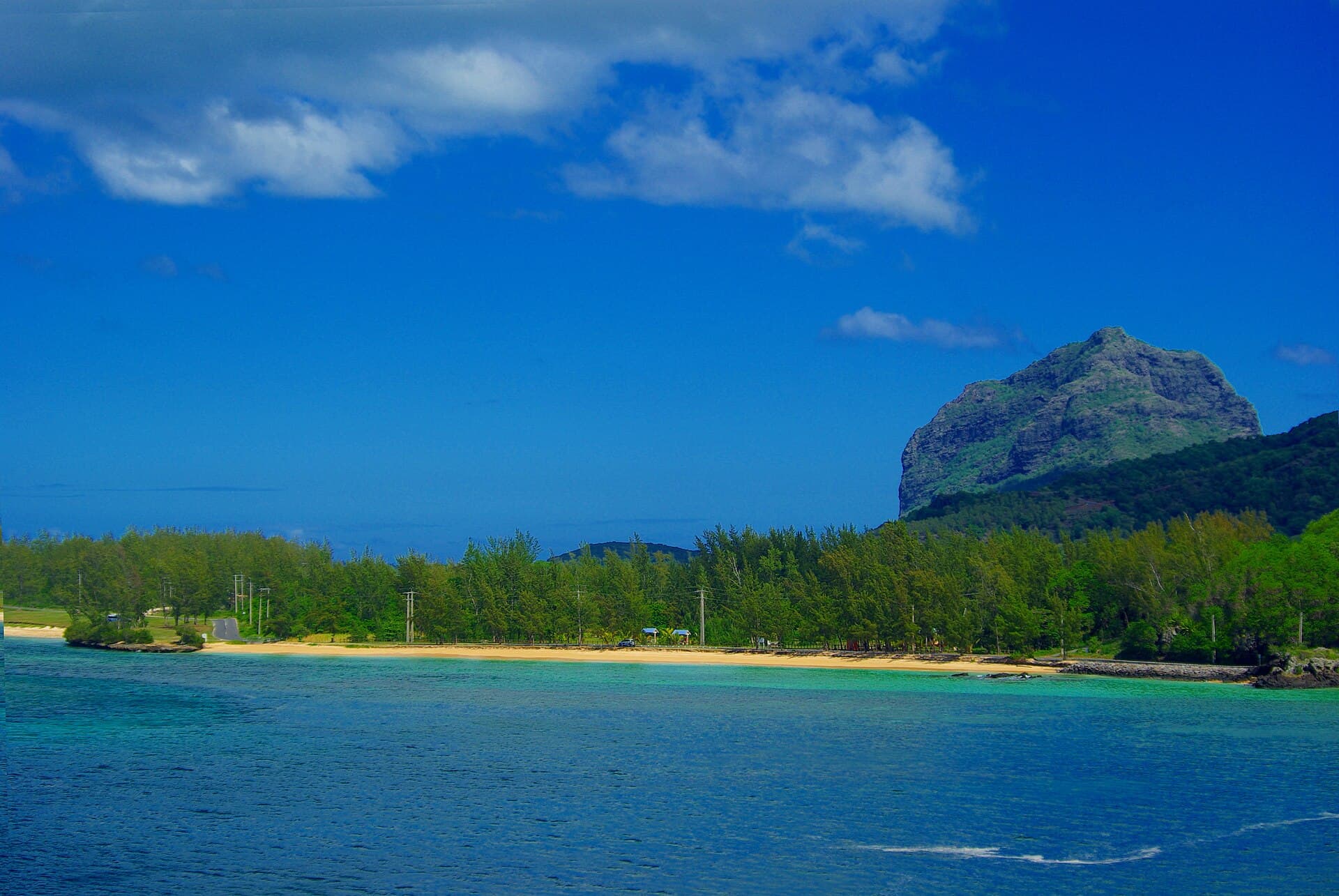

"Plein été austral : chaleur, lagon à 28° et fortes pluies — la saison cyclonique débute."
Expert on Mauritius · 1 contributions
The best periods
The best time to visit Mauritius is April to June and September to December. The most recommended months are Octobre, Novembre.
Été austral — saison chaude et humide
- ✅Mer chaude, idéale pour la baignade et le snorkeling
- ✅Paysages luxuriants, végétation très verte
- ✅Ambiance festive autour de Noël et du Nouvel An
- ❌Chaleur et humidité marquées
- ❌Averses tropicales possibles
- ❌Risque cyclonique entre janvier et mars
Hiver austral — saison sèche
- ✅Climat plus sec, températures douces
- ✅Idéal pour les randonnées et excursions
- ✅Bonne période pour l'observation des baleines (juin à septembre)
- ❌Vent parfois soutenu sur la côte est et au Morne
- ❌Eau un peu plus fraîche qu'en été austral
Month-by-month climate
Temperatures, rainfall and sunshine in Mauritius across the 12 months.
| Jan | Fév | Mar | Avr | Mai | Juin | Jui | Aoû | Sep | Oct | Nov | Déc | |
|---|---|---|---|---|---|---|---|---|---|---|---|---|
| Min | 21° | 21° | 21° | 20° | 18° | 16° | 16° | 16° | 16° | 17° | 18° | 20° |
| Max | 28° | 28° | 27° | 26° | 25° | 23° | 22° | 22° | 23° | 24° | 26° | 27° |
| Mer | 28° | 28° | 28° | 28° | 27° | 25° | 24° | 24° | 24° | 24° | 25° | 27° |
| Pluie | 259mm | 314mm | 296mm | 160mm | 124mm | 85mm | 115mm | 100mm | 89mm | 51mm | 48mm | 120mm |
| Soleil/j | 9h | 8h | 8h | 7h | 6h | 6h | 6h | 6h | 9h | 10h | 10h | 10h |
Tourist crowds
Monthly attendance levels (0 = empty, 100 = saturated).
Average flight prices
Average round-trip Paris → Mauritius by month.
Frequently asked questions
When is the best time to visit Mauritius?+
Is Mauritius expensive for British and American travellers?+
Mauritius vs Seychelles — which should I choose?+
Is Mauritius safe for tourists and solo travellers?+
How many days do I need in Mauritius?+
Do I need a visa to enter Mauritius?+
What language do people speak in Mauritius?+
Our verdict
Mauritius is a benchmark in the beach and lagoons category of the Indian Ocean, and it earns that reputation with quiet confidence rather than hype. Its core strengths are clear: gin-clear turquoise lagoons that stay swimmable year-round, a remarkably warm and multicultural population where Creole, Indian, Chinese and Franco-Mauritian heritages mix without friction, and an unusually safe environment for an island holiday — including for honeymooners, families with young children and solo female travellers.
The gastronomy is a genuine highlight that is often underplayed in marketing: street-side dholl puri, slow-cooked octopus curry, fresh tropical fruit and Chamarel rum all deserve as much attention as the spa menu. The island also delivers premium experiences without the logistical complexity of larger destinations — direct flights from Europe, paved roads everywhere, English widely spoken, no jet lag worth mentioning.
On the limits side, tourist-facing prices are noticeably higher than neighbouring Réunion, public beaches are fewer than the map suggests, and traffic around Port Louis at rush hour can erase the small-island feel. The kitesurfing and surfing crowd should also know that the south-east trade winds dominate the east coast from June to September. None of this dents the overall picture: the value-to-experience ratio holds up exceptionally well for travellers prioritising safety, comfort and cultural depth. If you want a premium tropical destination that does not demand sacrifices in logistics or peace of mind, Mauritius should be at the very top of the shortlist.