
"Janvier est le mois le plus calme de l'année à Kyoto. Les temples sont quasi déserts, la neige recouvre parfois les toits de Kinkaku-ji et Ryoan-ji dans un décor de carte postale. L'ambiance zen d'une Kyoto hivernale est une expérience rare que peu de voyageurs connaissent."
Expert on Kyoto · 1 contributions
 Japan Desk — Mowando·Editor
The best periods
The best time to visit Kyoto is March-April (cherry blossoms) and November (autumn colours).
Printemps — sakura et floraison
- ✅Cerisiers en fleurs dans les temples et jardins : Maruyama Park, Philosopher's Path, Kinkaku-ji — Kyoto est à son pic de beauté
- ✅Températures idéales (10-18 °C) pour les longues journées de visites à pied
- ✅Ambiance festive des hanami dans les jardins de temples, lumière printanière exceptionnelle
- ❌Période la plus fréquentée de l'année — hôtels complets parfois un an à l'avance pour les semaines sakura
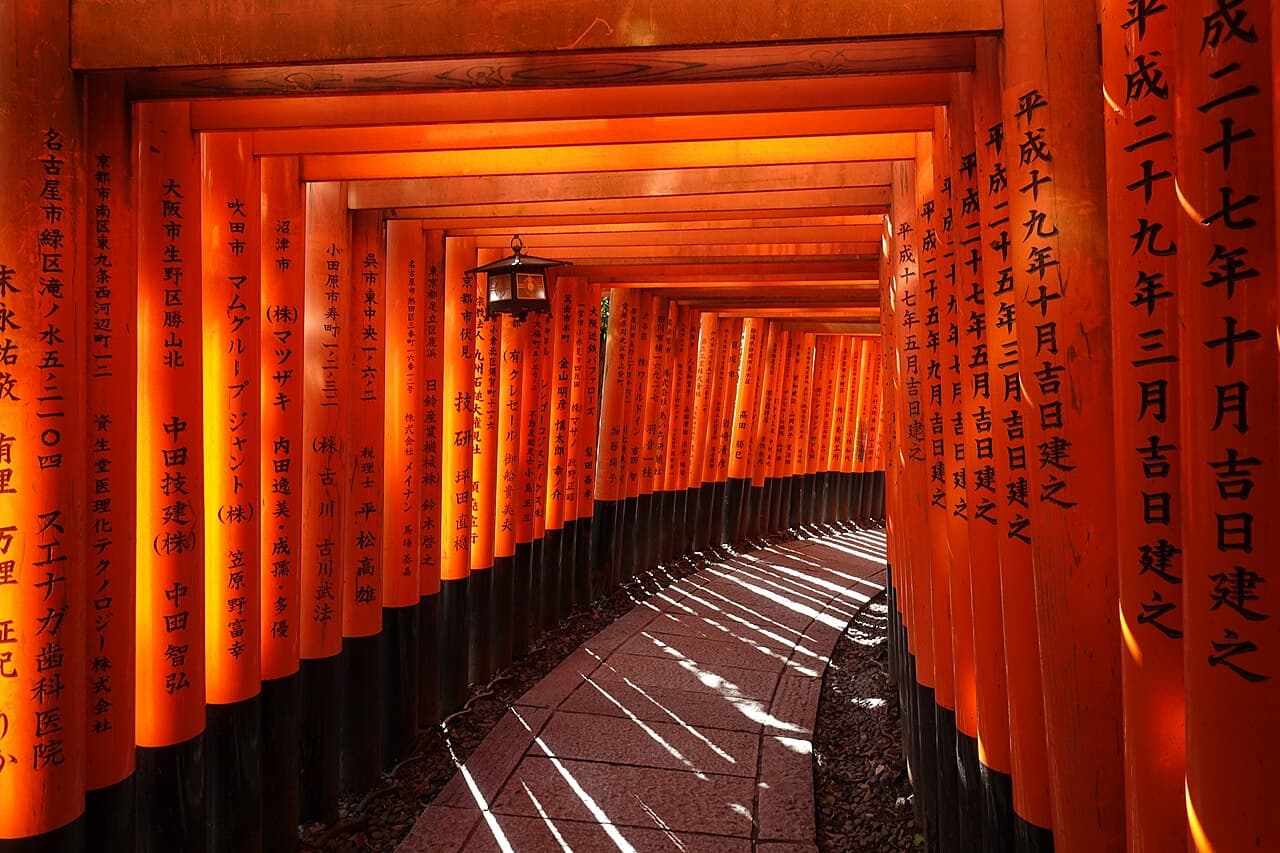
- ❌Foule dense sur le chemin des Philosophes et autour de Fushimi Inari tôt le matin
- ❌Les prix des ryokan et hôtels atteignent leurs sommets annuels
Été — chaleur et retraites zen
- ✅Festivals d'été (Gion Matsuri en juillet — le plus grand du Japon) d'une beauté et d'une authenticité incomparables
- ✅Lumière longue du soir sur les toits de temples de Higashiyama
- ❌Chaleur humide (28-34 °C en juillet-août), particulièrement éprouvante en kimono ou lors de visites de temples sans ombre
- ❌Forte affluence touristique internationale, surtout à Fushimi Inari et Arashiyama
Automne — momiji et splendeur des érables
- ✅Feuillage d'automne : les érables de Tofuku-ji, Eikan-do et Arashiyama sont parmi les plus beaux du Japon
- ✅Températures parfaites (12-20 °C), ciel souvent d'un bleu saisissant
- ✅Gastronomie kaiseki à son sommet avec les ingrédients d'automne
- ❌Novembre est le deuxième mois le plus fréquenté après avril — réservations indispensables
- ❌Les sites les plus populaires (Tofuku-ji, Eikan-do) sont saturés les week-ends de couleurs
Month-by-month climate
Temperatures, rainfall and sunshine in Kyoto across the 12 months.
| Jan | Fév | Mar | Avr | Mai | Juin | Jui | Aoû | Sep | Oct | Nov | Déc | |
|---|---|---|---|---|---|---|---|---|---|---|---|---|
| Min | 2° | 3° | 6° | 11° | 16° | 20° | 24° | 25° | 20° | 14° | 8° | 3° |
| Max | 9° | 10° | 15° | 20° | 25° | 28° | 33° | 34° | 28° | 22° | 17° | 11° |
| Mer | — | — | — | — | — | — | — | — | — | — | — | — |
| Pluie | 49mm | 60mm | 112mm | 118mm | 148mm | 188mm | 175mm | 162mm | 162mm | 122mm | 80mm | 43mm |
| Soleil/j | 5.3h | 5.8h | 6.2h | 6.7h | 6.8h | 5.1h | 6.1h | 6.7h | 5.5h | 5.6h | 5.5h | 5.2h |
Tourist crowds
Monthly attendance levels (0 = empty, 100 = saturated).
Average flight prices
Average round-trip Paris → Kyoto by month.
Frequently asked questions
How many days should I plan for Kyoto?+
How do I get around Kyoto?+
Is it really worth staying in a ryokan?+
When is cherry blossom season in Kyoto?+
How do I avoid the crowds at Fushimi Inari?+
What exactly is kaiseki cuisine?+
Can tourists see geisha in Kyoto?+
Should I base myself in Kyoto or Osaka for exploring the Kansai region?+
Our verdict
Kyoto is one of those destinations that lastingly changes a traveller. It is not a city you visit: it is a city you experience, in the slow contemplation of Ryoan-ji's gravel garden, in the silence of Fushimi Inari's forest path at dawn, in the impeccable precision of a kaiseki meal. The constraints are real — peak-season crowds, the cost of the best ryokan, overcrowded buses — but they cannot diminish an experience that touches the very essence of what Japanese civilisation has produced at its most refined. Come in March-April for the sakura or November for the momiji, book your ryokan months ahead, arrive at Fushimi Inari before 7am, and allow yourself at least one tea ceremony in a Zen garden. Kyoto has to be earned — and it repays a hundredfold.
Réserver votre séjour
Liens partenaires — une commission peut nous être reversée, sans surcoût pour vous.
 HébergementAnnulation gratuite
Hôtels & ryokans au Japon
Business hotels efficaces dans les grandes villes, ryokans avec onsen privatif, capsules à Tokyo : tout le Japon comparé sans surprise.
ActivitéSans queueActivités au Japon
Cérémonies du thé à Kyoto, JR Pass, Mont Fuji, sumo, cours de sushi : réservez les activités phares sans queue.
VolComparateurVols vers Tokyo
Comparez Paris-Tokyo, Paris-Osaka et les vols low-cost intra-Japon. Saison épaule oct-nov souvent 30 % moins chère.