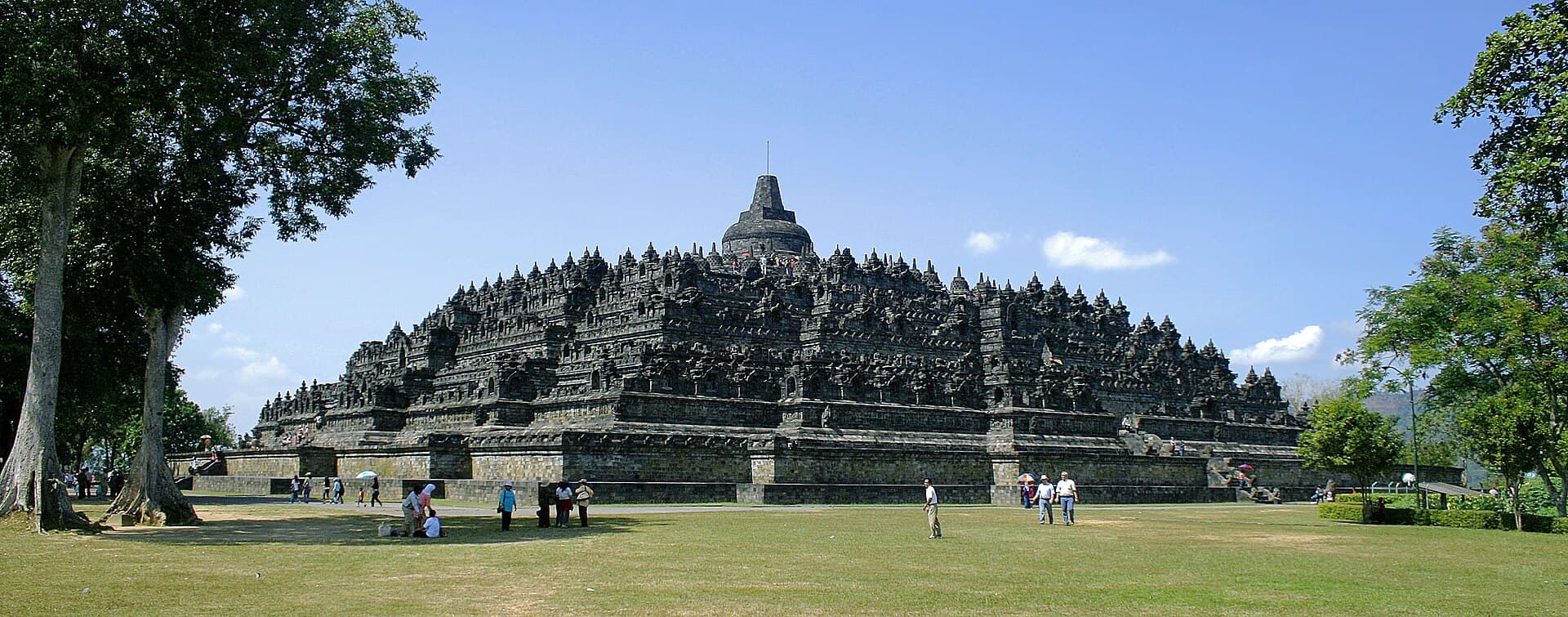
Indonesian culture is a mosaic shaped by centuries of trade, migration and religious layering. In a country that is roughly 87% Muslim, Bali is the remarkable outlier: the only Hindu-majority island in Southeast Asia, with more than 10,000 temples for a population of 4.3 million. That spiritual singularity colours daily life. Every morning, banana-leaf baskets of flowers and rice — the canang sari offerings — appear on shop doorsteps, scooter handlebars and street corners. The Balinese calendar (Saka) drives an unbroken cycle of festivals, ranging from neighbourhood ceremonies to island-wide observances like Nyepi, the Day of Silence, when Bali grinds to a complete halt for 24 hours of darkness and quiet. Travellers who time their trip to catch it experience one of the most singular days you can have anywhere in the world.
The visual language of Balinese culture is immediately recognisable: split temple gates (candi bentar), moss-furred pagoda towers, and the cliffside silhouettes of Tanah Lot and Uluwatu at sunset. Pura Besakih, the Mother Temple, climbs the southern flank of Mount Agung (3,142 m), Bali's highest volcano. Performance traditions — the kecak chant, the masked barong, the elegant legong dance — keep the Ramayana and Mahabharata epics alive in nightly performances at the temples around Ubud and the Bukit peninsula. The craft villages around Ubud (Celuk for silver, Mas for woodcarving, Batuan for painting) remain working ateliers, not tourist stops, and a careful afternoon spent there is one of the best windows into the Balinese aesthetic.
Beyond Bali, Indonesia opens onto cultures every bit as compelling. The Toraja of South Sulawesi build elaborate funeral ceremonies that can last for days. The Dayak of Borneo and the Batak of Lake Toba in Sumatra have their own architectures, languages and beliefs. Mainstream Indonesian Islam is largely moderate and welcoming, and travellers are met with warmth in nearly every village as long as the local codes are respected — modest dress at places of worship, a polite selamat pagi (good morning) or selamat sore (good afternoon) on arrival. Bahasa Indonesia, the national language, is unusually approachable for European speakers, with simple grammar and a phonetic script; a handful of phrases will go a long way.
Read also
- Bali, the Island of the Gods — Ubud rice fields, Canggu surf, temples and wellness culture: the complete guide to Bali.
- Lombok and the Gili Islands — Mount Rinjani, the wild beaches of the south coast and the crystal-clear shallows of the Gilis.
- Ubud, the cultural heart of Bali — Terraced rice fields, the Monkey Forest and Balinese craft villages in the hills of Bali.
- Canggu, Bali's surf village — World-class waves, third-wave cafés and Indian Ocean sunsets on Bali's west coast.
- Gili Trawangan, the jewel of the Gilis — Snorkel with green turtles, white-sand beaches and a car-free island vibe.