Mowando

ville

Mumbai

__India's economic capital__ — 20 million inhabitants (greater area), Art Deco-Victorian British colonial heritage, world Bollywood capital, UNESCO Elephanta caves, Marine Drive and its Queen's Necklace, and the unique energy of a megalopolis producing 6% of India's GDP.

4.40Mumbai and Maharashtra

Mumbai (formerly Bombay until 1995, 20 million inhabitants in greater area, capital of Maharashtra state) is India's economic capital — it concentrates the National Stock Exchange (BSE, Asia's oldest), headquarters of India's largest companies (Tata, Reliance, HDFC), the country's largest container port, and Bollywood cinema industry producing over 1,500 films per year (4 times Hollywood). Built on an archipelago of 7 islands progressively united to mainland by 19th century British embankments, the city stretches 60 km north to south along the Arabian Sea coast.

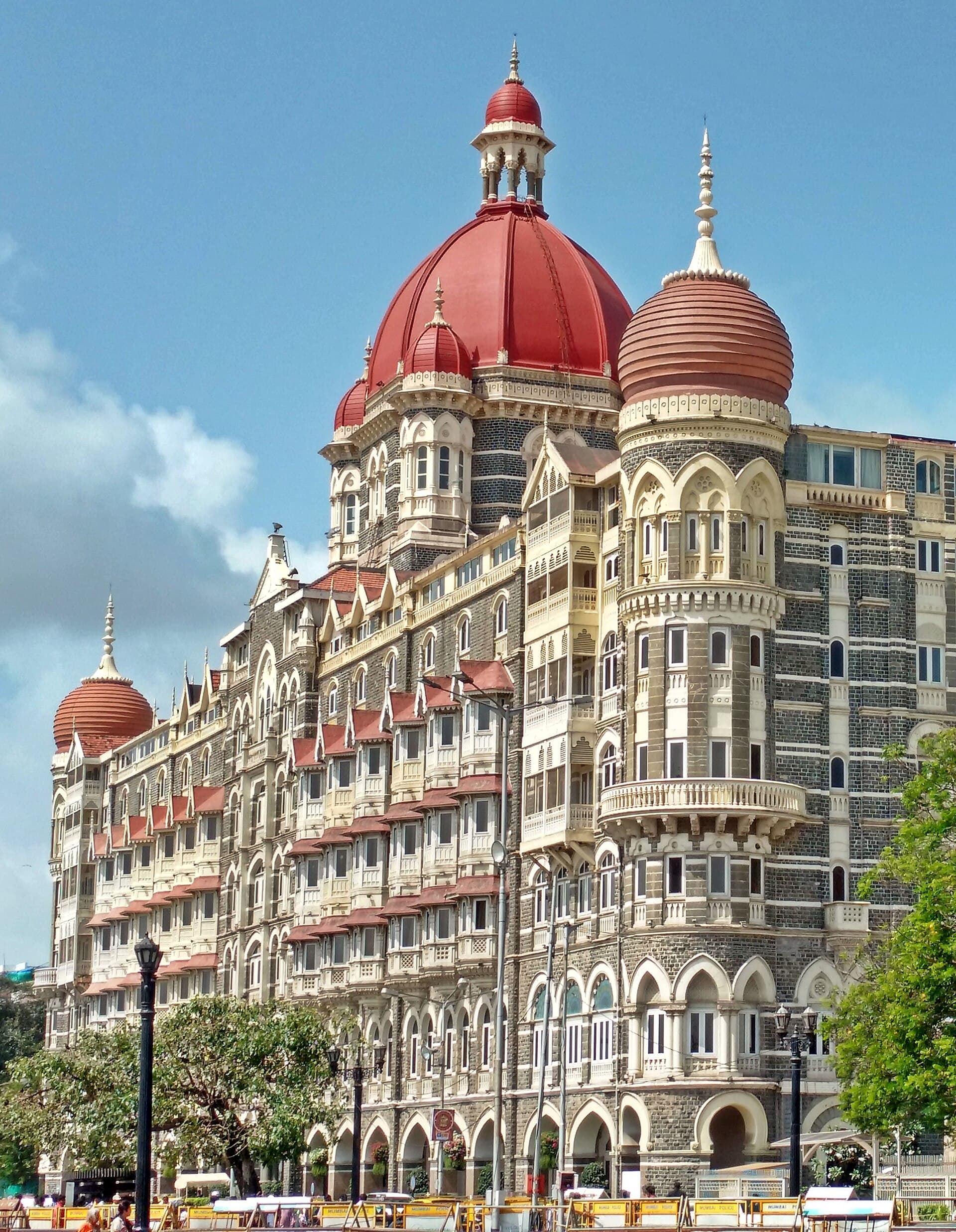
South Mumbai (SoBo) concentrates British colonial heritage and is tourist epicentre. The Gateway of India (1924, yellow basalt archway facing Arabian Sea, built to commemorate King George V's 1911 visit) is the city's absolute icon — departure point for Elephanta ferries, festive evening vibe. Just opposite stands the Taj Mahal Palace Hotel (1903, legendary red-dome palace, one of Asia's most mythical hotels). Colaba district is tourist heart with shops, cafés (legendary Leopold Café), restaurants and markets. Chhatrapati Shivaji Terminus (CST, ex-Victoria Terminus, UNESCO 1888 Victorian Neo-Gothic train station) hosts 3 million travellers daily.

The Marine Drive (officially Netaji Subhash Chandra Bose Road, 3.6 km C-shaped seafront promenade nicknamed Queen's Necklace) is the city's other icon. Built on embankment in 1920s-1940s, it borders ocean from Apollo Bunder to Chowpatty Beach, lined with Art Deco buildings (Mumbai has world's largest Art Deco concentration after Miami, UNESCO-inscribed 2018) — where Mumbaikars stroll at sunset, eat bhel puri on Chowpatty beach, observe nocturnal traffic ballet. The Bandra-Worli Sea Link (2009, 5.6 km cable-stayed bridge connecting south-west to trendy Bandra) is modern counterpart.

Bollywood is in Mumbai's DNA. The city concentrates 95% of Indian cinema production — Film City (200 ha of studios at Goregaon East), Mehboob Studios and RK Studios (historic), Bandra where stars live (Shah Rukh Khan's Mannat villa, Salman Khan, Aamir Khan).

Elephanta Island (Gharapuri, 10 km off Mumbai, 1h ferry from Gateway of India, 300-400 INR ≈ €3-4) shelters Elephanta Caves (UNESCO 1987, 7 Hindu caves carved in basalt rock from 5th to 7th century, dedicated to Shiva) — the climax is Cave 1 with its monumental Trimurti sculpture of three-faced Shiva (5.5 m high, one of Hindu art's major works).

Mumbai overflows with unique living traditions. The Dabbawalas: 5,000 deliverers conveying 200,000 hot lunches daily (home-prepared by wives) to offices throughout the city, with Six Sigma error rate (1 error per 16 million deliveries, studied by Harvard Business School). Dhobi Ghat (Mahalaxmi, world's largest open-air laundry, 200 years old, 7,000 dhobis hand-washing 100,000 garments daily). Crawford Market (1869). Haji Ali Mosque (1431, white at end of long pier accessible only at low tide). Siddhivinayak Temple (Ganesh). Not to mention street food (vada pav, pav bhaji, bhel puri, chaat) and gourmet restaurants (Trishna for seafood, Indigo, Wasabi by Morimoto, Bombay Canteen).

What we love

  • India's economic capital: unique energy, 20M megalopolis
  • Gateway of India + Taj Mahal Palace: colonial icons facing the sea
  • Marine Drive Art Deco UNESCO: 3.6 km seafront promenade (Queen's Necklace)
  • Bollywood Film City: studio visits, unique world experience
  • Elephanta Caves UNESCO: Hindu Trimurti sculptures 5th-7th century

What to know

  • Extremely violent June-September monsoon (floods, paralysed transport)
  • High atmospheric pollution (January winter smog)
  • Immense slums (Dharavi 1M inhabitants) visible everywhere on arrival
  • Difficult transport (chaotic traffic, packed suburban trains)
  • No swimmable beaches nearby (polluted Arabian Sea)

Situation

Où se situe Mumbai ?

Ouvrir la carte en grand sur OpenStreetMap →

Frequently asked questions

How many days for Mumbai?+
Minimum 2-3 nights to fully enjoy the city. D1 arrival, Colaba exploration (Gateway of India + Taj Mahal Palace, lunch at Leopold Café, afternoon walk in colonial streets and Marine Drive to Chowpatty Beach sunset, dinner). D2 Elephanta Caves (9am ferry from Gateway, 2pm return, afternoon CST UNESCO station + Crawford market + Dhobi Ghat from Mahalaxmi bridge, dinner gourmet restaurant Trishna or Bombay Canteen). D3 Bollywood Film City morning (4h guided tour with Mehboob or RK Studios) or Dharavi ethical slum tour (Reality Tours, unique experience), afternoon Bandra shopping, sunset at Bandstand (Bollywood villas), dinner Bandra trendy. 4 nights allow adding Sanjay Gandhi National Park (green lung, Kanheri Buddhist caves 1st century) or Matheran excursion (2h mountain station, only motor-free city in India).
When is the best time to visit Mumbai?+
November to February is the ideal window (dry season, perfect climate 18-30 °C, low humidity, clear sky). December-February is best (pleasant temperature, cool evenings, optimal walking conditions). Absolutely avoid June to September — monsoon is exceptionally violent in Mumbai (600-900 mm of rain in July, 6 times Paris in a year), causing floods that paralyse transport (suburban trains stopped, airport closed), make outdoor visits impossible (Elephanta inaccessible, ferries suspended), and favour tropical diseases (dengue, leptospirosis). March-April very hot (33 °C, high humidity), outdoor activities painful afternoon. October is transition (end monsoon, climate returns gradually, luxuriant vegetation). Events to avoid or favour: Diwali (October-November, lights festival, exceptional atmosphere but crowds), Ganesh Chaturthi (August-September, full monsoon but extraordinary Maharashtra festival), Republic Day Parade (January 26), Mumbai Film Festival (October).
How to get around Mumbai?+
Mumbai is an immense city (60 km North-South) with chaotic traffic — choose transport mode by visited district. Metro: 3 operational lines 2024 (Line 1 Versova-Andheri-Ghatkopar, Lines 2 and 7 in construction), little useful for tourists (south poorly covered). Suburban Railway: Mumbai's vital artery (8M travellers/day), 3 lines (Western, Central, Harbour), very cheap (10-30 INR per trip ≈ €0.10-0.30), but packed at rush hour (world density record 4,500 people in cars designed for 1,700). Women have reserved cars — preferable for solo female travellers. Black and yellow taxis: iconic, mandatory meter (200-500 INR per city ride ≈ €2-5). Uber / Ola: widely available, English app, much more practical and cheap (scam reduction). Rickshaws: banned in south Mumbai (Colaba, Fort), available from Bandra north (50-200 INR ≈ €0.50-2). BEST bus (public network): cheap but slow and packed. On foot: Colaba, Fort, Marine Drive walked. Elephanta ferry: 300-400 INR return from Gateway of India, 1h. Tip: use Uber/Ola for 95% of travel (50-200 INR per average ride).
Which hotel to choose in Mumbai?+
Mumbai offers excellent hotel range by district. Colaba (south, tourist heart): Taj Mahal Palace Hotel (5*, legendary palace facing Gateway of India, €500-1,200/night) — Asia's mythical hotel, unforgettable experience. The Oberoi (5*, Marine Drive, €400-700/night, sea view). Hotel Suba Palace (4*, 100 m from Taj, €100-150/night, excellent value-for-money). Sea Palace Hotel (3-4*, Colaba, €80-130/night). YWCA International Guest House (economical, €35-60/night, clean and safe). Hostel Bombay Backpackers (€15-25/night dorm). Bandra (west, trendy): Taj Lands End (5*, Bandra-Worli Sea Link view, €250-400/night). Sofitel BKC (5*, Bandra Kurla Complex, €200-350/night). Airport (Andheri/Sahar): JW Marriott Mumbai Sahar, Holiday Inn Mumbai International Airport (€180-280/night, for transit). Juhu Beach (north-west, beach): JW Marriott Mumbai Juhu (€250-400/night), Bollywood residences nearby. Our recommendations: Taj Mahal Palace for mythical experience (couples, special occasion), Hotel Suba Palace for exceptional value-for-money at Colaba (medium budget), Bandra for trendy vibe and restaurant proximity. Book 2-3 months ahead in high season.
What to eat in Mumbai?+
Mumbai is a gastronomic capital — multicultural heritage (Maharashtra, Gujarat, Goan, Parsi, Anglo-Indian, South Indian) and 24/7 incomparable street food. Essential street food. Vada Pav (Mumbai's 'burger', spicy potato fried in small bread, 10-30 INR ≈ €0.10-0.30, city's most consumed snack). Pav Bhaji (mashed vegetable curry with buttered bread, 50-150 INR, eat at Chowpatty Beach at sunset). Bhel Puri (puffed rice, tamarind, onion, coriander mix, crunchy and fresh, perfect on beach). Pani Puri (hollow balls stuffed with spicy water, careful for sensitive stomachs). Misal Pav (spicy sprouted pea curry, Maharashtra specialty). Sev Puri (garnished crispies). Bombay Sandwich (Indian grilled sandwich). Restaurants at Colaba/Fort. Trishna (legendary Mangalorean seafood, garlic butter crab, €30-60/person). Leopold Café (historic colonial café, mentioned in Shantaram). Britannia & Co (Parsi cuisine, berry pulao, near Ballard Estate). Khyber (Mughal cuisine, lamb, at Kala Ghoda). Gourmet restaurants. Bombay Canteen (contemporary Indian cuisine, €30-50). Indigo (European-Asian fusion at Colaba, €50-80). Wasabi by Morimoto (Japanese at Taj Mahal Palace, €80-150). Café Bandra (international cuisine in trendy district). Must-taste specialties: Bombay Duck fish (dried), Pomfret (delicate flat fish), Mangalorean prawn curry, sol kadhi (coconut-kokum drink). Drinks: chai masala (spiced tea), lassi (yoghurt-mango), nimbu pani (lemon-water), Old Monk rum (legendary). Safety advice: street food OK if well-cooked or hot, avoid tap water (always sealed bottle), raw vegetables in modest restaurants.

Our verdict

Mumbai is India's energetic gateway — 20-million-inhabitant economic capital where Art Deco-Victorian colonial heritage, Bollywood and unique living traditions cohabit in incomparable intensity. Our recommendation: plan 3 nights in Mumbai as discovery stage (7-10 day formula with Kerala, Goa or Rajasthan extension). Choose a hotel at Colaba (tourist heart, walking distance from Gateway and Marine Drive — Taj Mahal Palace for the dream €500-800/night, Sea Palace or Hotel Suba Palace more affordable €80-150/night) or Bandra for trendy vibe. Travel from November to February (dry season, perfect climate 18-30 °C), ideally December-February (low humidity, clear sky). Absolutely avoid June to September (600-900 mm/month monsoon, floods, paralysed transport). Don't miss Gateway of India + Taj Palace at sunset, Marine Drive Queen's Necklace in evening, Elephanta Caves UNESCO (1h ferry from Gateway), a Bollywood Film City or Dharavi tour (ethical slum tour with Reality Tours, €20-30/person), gourmet dinner at Trishna or Bombay Canteen, and a street food tasting (vada pav, pav bhaji, bhel puri).

Nearby
The Editors
The Editorsauteur principal✓ Verified

"Janvier : climat idéal, ciel dégagé, foule maximale, tarifs en hausse, smog hivernal possible."

Expert on Mumbai · 1 contributions

Mowando Letter

Once a month: the right destinations for the right season + the best booking windows.

No spam. One-click unsubscribe. Your data is never shared.