The North and Akureyri are visited year-round, with very different experiences depending on the season.
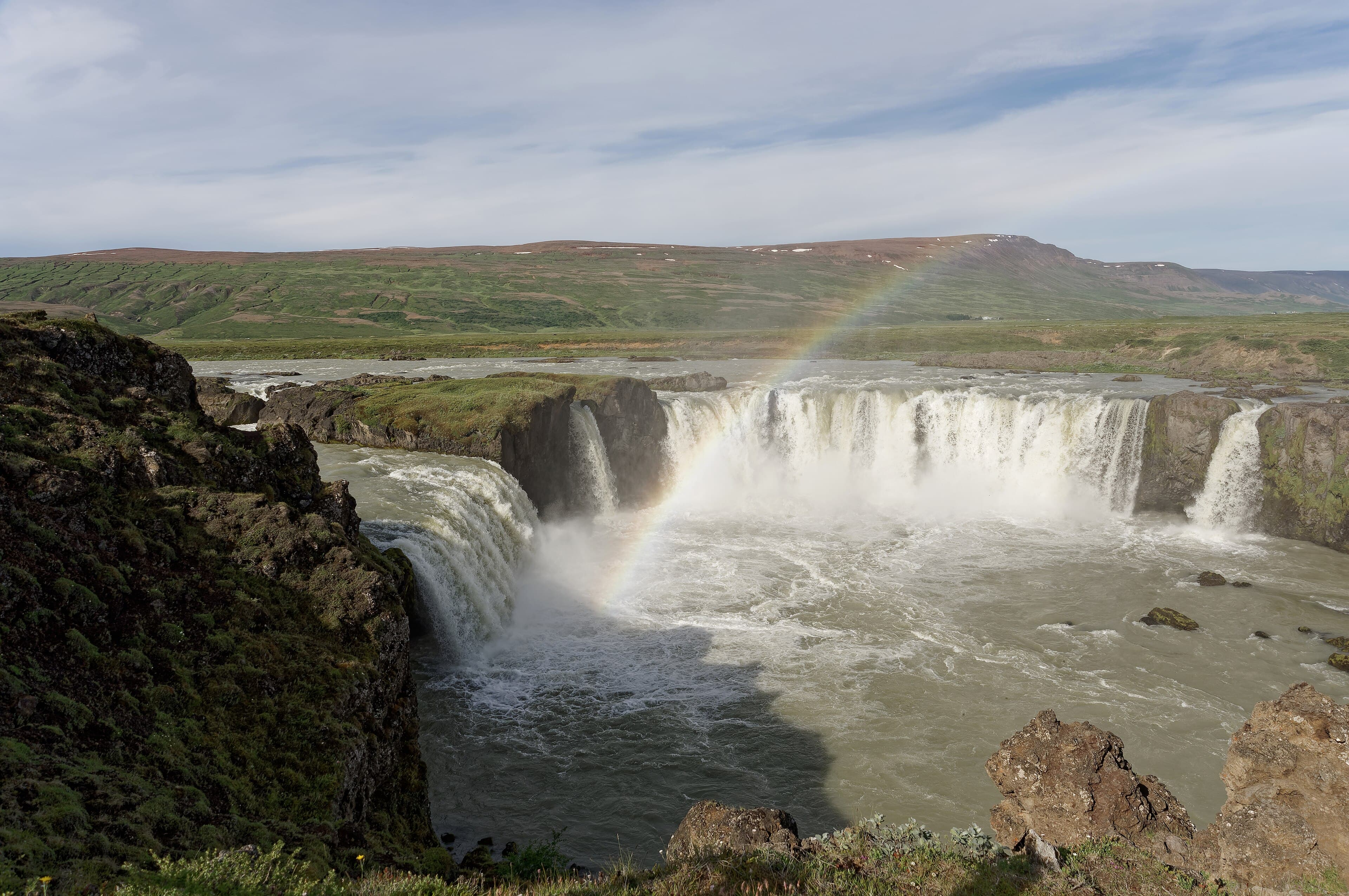
From June to August is the prime season for whales and landscapes. Midnight sun at Akureyri (100 km from the Arctic Circle), Húsavík whale tours at full capacity (success rate >99%, 11 species observable), full access to all roads including F-roads of the highlands (Askja, Kverkfjöll, Sprengisandur). The Akureyri Summer Festival (July-August) offers concerts and cultural events. The trade-off: heavy crowds at Mývatn and Goðafoss in mid-day, non-biting flies (mýflugur) that make the experience unpleasant around the lake in July-August (bring head net), high hotel rates.
September-October is the ideal shoulder season: prices down 30-40%, crowds easing, spectacular autumn colours (golden birches, ochre mosses in lava fields), first Northern Lights from late August, last whale tours (until end of October, success rate still 85-90%). Our recommendation for those seeking the best compromise.
From November to March is aurora and ski season. Mývatn is one of the world's best observation spots (zero light pollution, often clear sky in winter — drier climate than the south-west). Akureyri ski (Hlíðarfjall, 8 lifts, 24 pistes, 1,538 m summit) is Iceland's best resort, with a reliable December to April season. Mývatn Nature Baths in falling snow are an unforgettable experience. The trade-off: very short days (4-5 h of light in December), sometimes extreme driving conditions (Route 1 between Akureyri and Egilsstaðir can be closed several days during blizzards), risk of Reykjavik-Akureyri flight cancellation.
April-May is the other interesting shoulder season: ski-touring in the Tröllaskagi peninsula (into May at 1,000 m+), days lengthening rapidly (16 h of light in May), gradual restart of activities. But weather still very variable and some secondary roads still closed.
Read also
- Akureyri, capital of the North — Iceland's 2nd city at the head of Eyjafjörður: pedestrian centre, world's northernmost botanical garden.
- The East Fjords — Egilsstaðir, Seyðisfjörður, wild reindeer and puffins: the previous Ring Road stretch.
- Iceland — Complete country guide: Schengen entry, budget, when to go, regions.
- Reykjavik and the Southwest — The capital, the Blue Lagoon and the Reykjanes peninsula: the Ring Road launchpad.