Akureyri is visited in half a day to a full day. The pedestrian centre (Hafnarstræti and Kaupvangsstræti streets) concentrates Icelandic designer boutiques, cafés, restaurants. The Akureyrarkirkja (modernist Lutheran church, 1940, 112 access steps) offers a panorama over the town and the fjord. The Lystigarðurinn botanical garden (the northernmost in the world, opened 1912, free) houses 7,000 plant species — surprising for this latitude. The Akureyri Museum of Art and the Nonni House (local 19th-century children's author translated into 40 languages) round out a cultural visit. The Akureyri public pool (Sundlaug Akureyrar, ISK 1,200 / €8) is one of the country's best, with several outdoor geothermal pools.
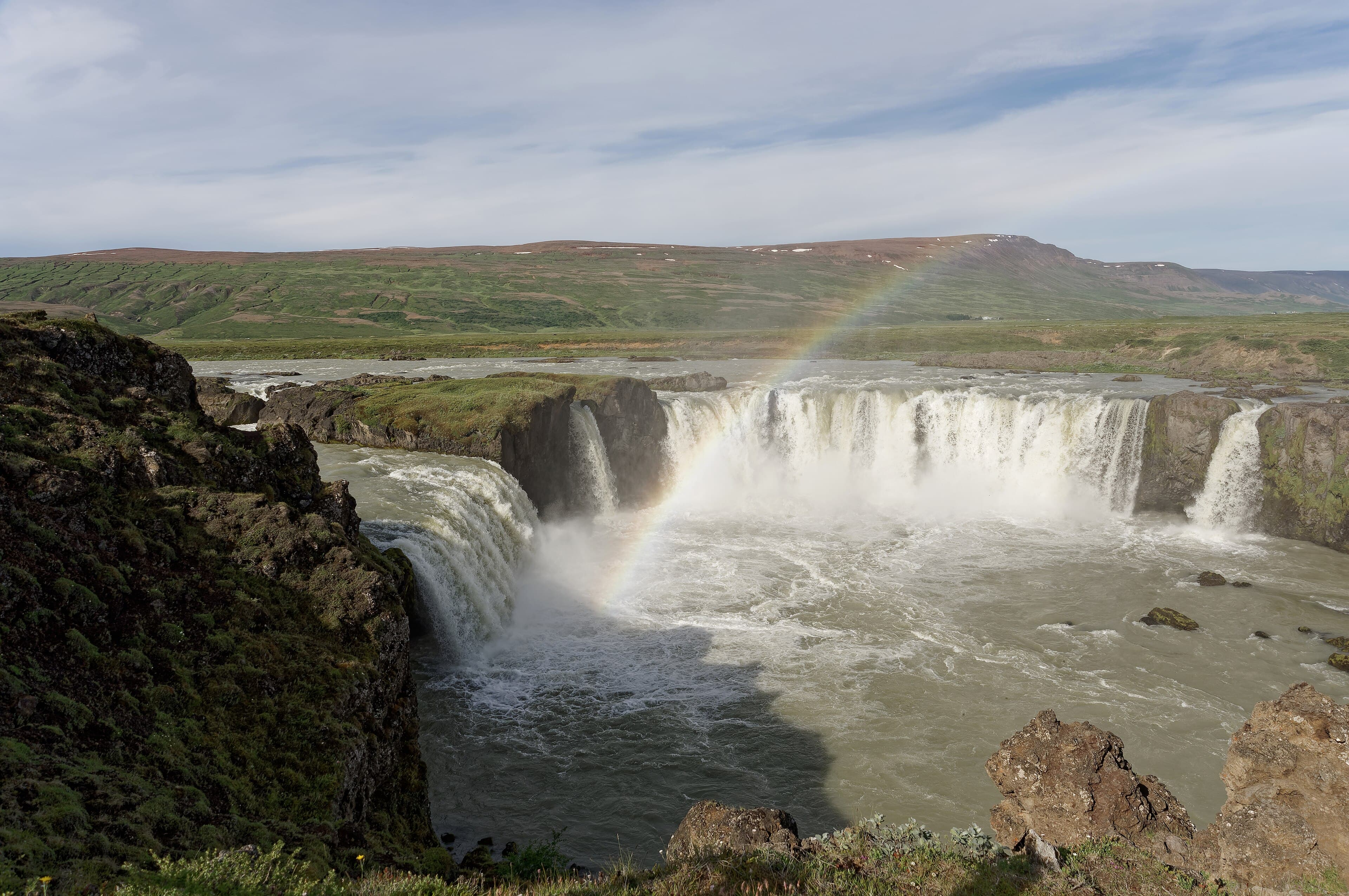
Goðafoss (30 min east of Akureyri via Route 1) takes 30-45 minutes. Park at the west car park (the widest), photograph the waterfall from the upper viewpoint, then descend the path toward the base (5-10 min). The bridge allows you to cross and photograph the waterfall from the east bank, another iconic angle. Free sites, accessible year-round.
The Mývatn lake and surroundings deserve a full day. Recommended clockwise itinerary from Reykjahlíð (main village): Skútustaðagígar (pseudo-craters, 2 km trail around the finest examples), Dimmuborgir (lava field with grotesque formations, several marked trails from 30 min to 2 h), Grjótagjá (cave with hot spring, famous since Game of Thrones — bathing forbidden, water at 50 °C), Hverir/Námafjall (geothermal area, mud pools, fumaroles, free parking), Hverfjall crater (perfectly circular tuff crater, 1 h return hike to the summit for 360° panorama), Mývatn Nature Baths (geothermal lagoon, €50-60/person, 2-3 h on site). Free sites except Mývatn Nature Baths.
Húsavík (1 h from Mývatn or 1 h 30 from Akureyri) is visited in half a day mainly for the whale tour (3 h, €90-120/person, 3 daily departures in high season, operators North Sailing, Gentle Giants, Salka Whale Watching). The Húsavík Whale Museum (ISK 1,800 / €12, one of the world's best on cetology) complements the experience. The picturesque port with its Húsavíkurkirkja wooden church (1907, neo-Norwegian style) and the Húsavík pool (Geosea, geothermal lagoon with Skjálfandi bay view, €50-60) are the other must-dos.
Dettifoss (1 h from Mývatn, Route 862 west side paved year-round, or Route 864 east side on gravel track in season) demands 1-2 hours. West side: wide car park, short trail (15 min one way) to a secured viewpoint. East side (May-September): smaller car park, longer trail (30 min one way) to the base of the waterfall, more iconic and raw view. For hikers, the Selfoss waterfall (1 km upstream of Dettifoss, wider but less tall) and the Hafragilsfoss canyon (1 km downstream) complete a 3-4 h visit.
The Tröllaskagi peninsula is explored on a day road trip from Akureyri: Route 82 to Dalvík (port, ferry to Grímsey island crossing the Arctic Circle), tunnel under Tröllaskagi to Ólafsfjörður (isolated village), then Siglufjörður (former Atlantic herring capital of the 20th century, excellent herring museum, gastronomic restaurants), return via the tunnel or by the coast. Count 6-8 h round trip with stops.
Read also
- Akureyri, capital of the North — Iceland's 2nd city at the head of Eyjafjörður: pedestrian centre, world's northernmost botanical garden.
- The East Fjords — Egilsstaðir, Seyðisfjörður, wild reindeer and puffins: the previous Ring Road stretch.
- Iceland — Complete country guide: Schengen entry, budget, when to go, regions.
- Reykjavik and the Southwest — The capital, the Blue Lagoon and the Reykjanes peninsula: the Ring Road launchpad.