The Golden Circle is visited year-round — one of the few Icelandic circuits that remains passable even in the heart of winter, as the main roads (36, 35, 37) are cleared first.
From May to September is the most comfortable season: roads are perfectly passable, days are long (16-21 hours of light), easy access to all secondary sites, possibility to visit late in the evening to avoid crowds. Gullfoss is at full flow (May-June snowmelt), Strokkur erupts in a green setting and Þingvellir offers clear panoramas over the lake and fissures. Book Silfra (snorkelling/diving) and rural lodgings 1-2 months ahead.
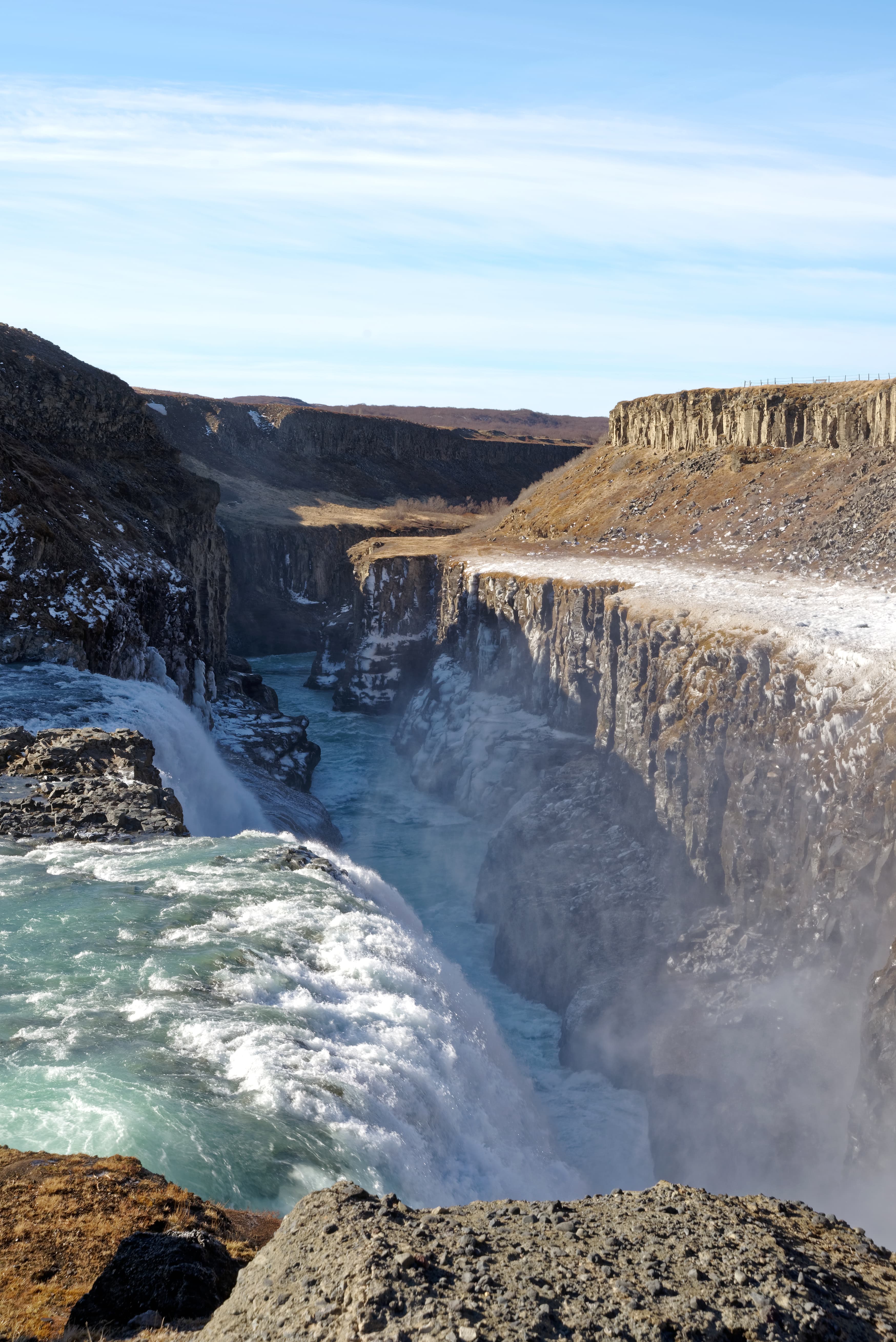
From November to March, the Golden Circle transforms: snow on the paths, ice on Gullfoss's edges taking unique blue reflections, steaming Strokkur amid white fields, luminous fogs at Þingvellir. The Northern Lights are visible from rural lodgings on clear nights. The trade-off: very short days (4-5 hours of light in December, limiting useful time to 1-2 sites per day), risk of secondary-road closures in blizzards, occasional access bans on Gullfoss paths for safety (ice). In January-February, check road.is and Vedur weather the day before departure.
September-October and April are the shoulder windows: prices down 30-40%, crowds easing, still-easy access to sites and possibility of Northern Lights at the start and end of the period. Our recommendation for the best price/experience balance.
Read also
- Þingvellir, national park — The Viking parliament, the tectonic rift and diving at Silfra in Iceland's founding site.
- Gullfoss, the golden waterfall — Two cascading drops totalling 32 m in a deep canyon: one of Europe's most beautiful waterfalls.
- Reykjavik and the Southwest — The capital, the Blue Lagoon and the Reykjanes peninsula: the launchpad for the Golden Circle.
- The South Coast — Seljalandsfoss, Skógafoss, Reynisfjara, Jökulsárlón: the logical extension south of the Golden Circle.