Mowando

Region

Les Saintes

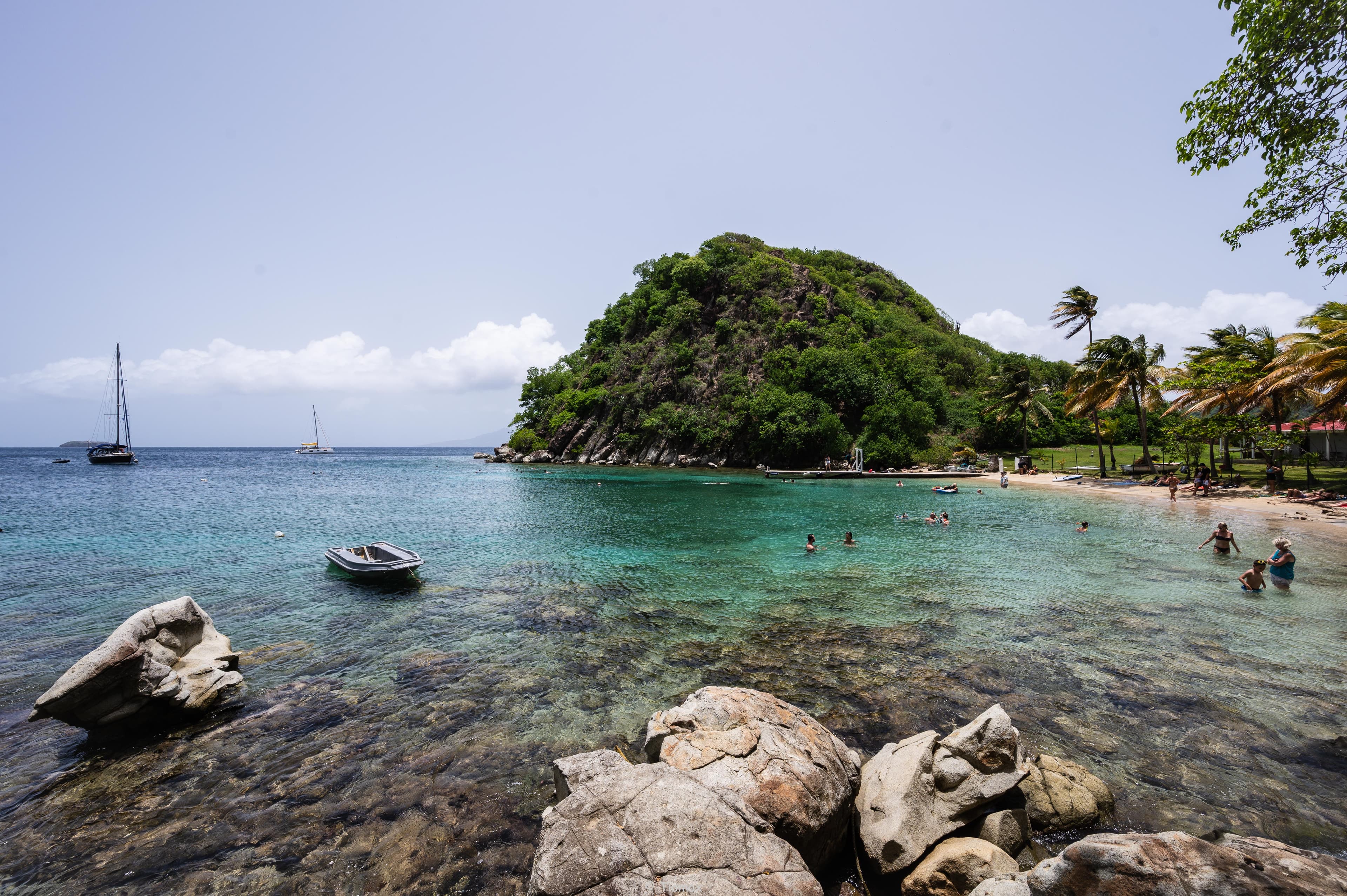
One of the world's most beautiful bays according to UNESCO: a mini-archipelago of 9 islets including Terre-de-Haut and Terre-de-Bas, 15 km south of Guadeloupe. Fort Napoléon, Pain de Sucre, Pompierre beach — a concentrate of Caribbean paradise.

4.90

Les Saintes — 'Lézan' in Guadeloupean Creole — form a mini-archipelago of 9 islets nestled 15 km south of the southern coast of Basse-Terre. Discovered by Christopher Columbus on 4 November 1493 (All Saints' Day, hence their name), these islands of spectacular landscapes were long a strategic French outpost for controlling Caribbean maritime routes — hence the presence of Fort Napoléon (built in the 19th century on the remains of an earlier fort) that still dominates the bay from its 114 metres altitude.

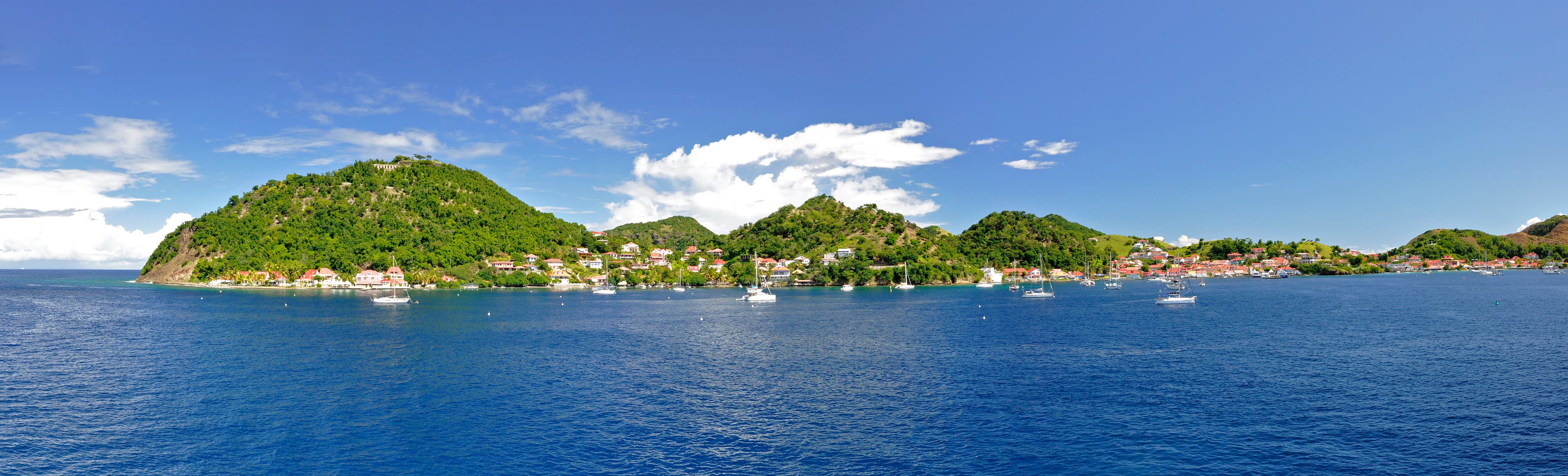
Only two islands are inhabited: Terre-de-Haut (5 km², about 1,500 inhabitants, the most visited) and Terre-de-Bas (10 km², about 1,000 inhabitants, more authentic and confidential). The 7 remaining islets (Grand îlet, La Coche, Les Augustins, Le Pâté, La Redonde, le Cabrit, Caye Plate) are uninhabited, refuges for pelicans, frigatebirds and iguanas. The Saintes Bay that shelters them has been classified by UNESCO among the world's most beautiful bays since 1998 — alongside the bays of Rio de Janeiro, Halong or San Francisco. Seen from the Chameau (highest point at 309 m) or from Fort Napoléon, this spectacle of rocky peaks emerging from a turquoise sea is one of the most striking postcards of the Lesser Antilles.

The Saintois identity is singular in the Guadeloupean archipelago. The population descends mainly from Breton and Norman sailors settled from the 17th century — poorly adapted to cane cultivation, they turned to fishing, which remains an essential activity today (the pirogue fishing and the famous saintois straw hat are the island's emblems). This European origin also explains the prevalence of French and a certain cultural mixing different from that of 'large' Guadeloupe. The main village of Terre-de-Haut — a small village of white-walled houses with blue shutters and red roofs — has a deliberate Mediterranean charm that pleasantly surprises visitors.

Explore Les Saintes

Spots in the region
Situation

Où se situe Les Saintes ?

Ouvrir la carte en grand sur OpenStreetMap →

Frequently asked questions

How to get to Les Saintes from Guadeloupe?+
Access is exclusively by maritime shuttle. The main departure points: Trois-Rivières (south Basse-Terre, 30 min crossing, €30 return, several daily rotations via L'Express des Îles, Iguana Beach and Comatrile), Pointe-à-Pitre (Bergevin Maritime Station, 1h crossing, €35-45 return, less frequent rotations), Saint-François (1h15, €40 return, 1-2 rotations/day). Trois-Rivières is the fastest and most popular option. Book online at least 1-2 days in advance in peak season, earlier for weekends and school holidays. There is no regular air link to Les Saintes (the former Terre-de-Haut airfield now only accommodates private flights).
How many days do you need to visit Les Saintes?+
The day excursion (8 am-5 pm with round-trip shuttle) allows you to see the essentials of Terre-de-Haut: Fort Napoléon, Pompierre beach, lunch in the village. But ideally, plan 2 to 3 nights to truly taste the island's charm — the magic operates especially early in the morning and late in the day, when cruise visitors have left. Over 2-3 days, add Pain de Sucre, Anse Crawen (the most beautiful wild beach), an excursion to Terre-de-Bas and sunset from Fort Napoléon. For a truly complete discovery (5-7 days), also explore the uninhabited islets by boat and have a diving day.
Why is the Saintes Bay UNESCO-classified?+
Since 1998, the Saintes Bay has been among the 30 'world's most beautiful bays' according to the UNESCO world club — alongside the bays of Rio de Janeiro, Halong, San Francisco or Tribugá (Colombia). The classification recognises the exceptional natural beauty of the bay: rocky peaks emerging from a turquoise sea, harmony between uninhabited islets and preserved villages, quality of the marine environment. The best view is taken from Fort Napoléon (Terre-de-Haut, 114 m), from the Pain de Sucre (climbable in 30 min walking from Anse Pompierre) or from the Chameau (309 m, the archipelago's highest point, 1h30 round-trip walk).
Which is the most beautiful beach in Les Saintes?+
Several beaches contend for the title. Pompierre Beach (Terre-de-Haut, north coast) is the most famous — 600 m of golden sand, coconut palms, shallow turquoise water, view of Pain de Sucre. Ideal for families, but very busy mid-day in peak season. Anse Crawen (Terre-de-Haut, south coast) is the wildest and most discreet, 30 min walking from the village — golden sand, crystal water, naturism tolerated, few people. Grande Anse Beach (Terre-de-Bas, south coast) is the longest and most authentic — little visited by cruise passengers. For snorkelling, prefer Anse Pompierre (shallow water, tropical fish) or the surroundings of Pain de Sucre (from the sea).
What is the history of Fort Napoléon?+
Fort Napoléon was built between 1844 and 1867 on the hill of Mont Mire (114 m), on the site of an earlier fort destroyed during the Battle of the Saintes (1782) which pitted the English fleet of Admiral Rodney against the French fleet of Admiral de Grasse — one of the largest naval battles of the 18th century that marked the French defeat and the loss of maritime supremacy in the region. The current fort has never served militarily — it has been converted into a history museum (Battle of the Saintes, Saintois life, maritime heritage) and an exotic botanical garden (cacti, succulent plants, 360° panoramic view of the bay). Allow 1h30-2h for the visit (€5 entry). Avoid the hottest hours (10 am-3 pm) — little shade.
How to get around Terre-de-Haut?+
Terre-de-Haut is small (5 km²) and the centre is pedestrian — cars are forbidden or very restricted to preserve the island's authenticity. Options for getting around: on foot (village to Pompierre = 15 min, Pain de Sucre = 30 min, Fort Napoléon = 25 min uphill), by bike (€10-15/day, several rental shops in the village), by scooter (€25-35/day, the most practical for reaching Anse Crawen or Le Marigot), by collective minibus ('taxi-bus', €3-5/journey to main beaches from the landing place). For Terre-de-Bas, inter-island shuttle (15 min, €8-10 return, departure Anse Mire) — the island is larger (10 km²) and accepts cars, local rental possible.
Where to stay in Les Saintes?+
The offer is limited and concentrated in Terre-de-Haut. Terre-de-Haut village: several family Creole guesthouses (€60-100/night), some small charming hotels (€100-180), one upscale boutique-hotel ('Le Bois Joli', pool and view, €200-350/night). Outside the village: a few pool residences toward Le Marigot or Pompierre (€120-200/night), ideal for multi-day stays. Terre-de-Bas offers a few more authentic and budget-friendly guesthouses (€50-80/night) for travellers seeking absolute calm. Book mandatorily 4 to 6 months ahead for school holidays and Christmas. Off-season, the best addresses free up easily.

Our verdict

Les Saintes are one of the most beautiful mini-archipelagos in the Lesser Antilles — a concentrate of Caribbean paradise 1 hour by shuttle from Basse-Terre. The UNESCO-listed bay, Fort Napoléon, Pompierre beach and Pain de Sucre justify the escape on their own. Ideally, plan minimum 2 to 3 nights in Terre-de-Haut to enjoy the island calmly before and after cruise stops, and devote at least half a day to Terre-de-Bas for its preserved authenticity. Hire a bike or scooter to explore freely, and don't forget the sunset from Fort Napoléon — one of the most beautiful in the French Antilles.

Mowando Letter

Once a month: the right destinations for the right season + the best booking windows.

No spam. One-click unsubscribe. Your data is never shared.