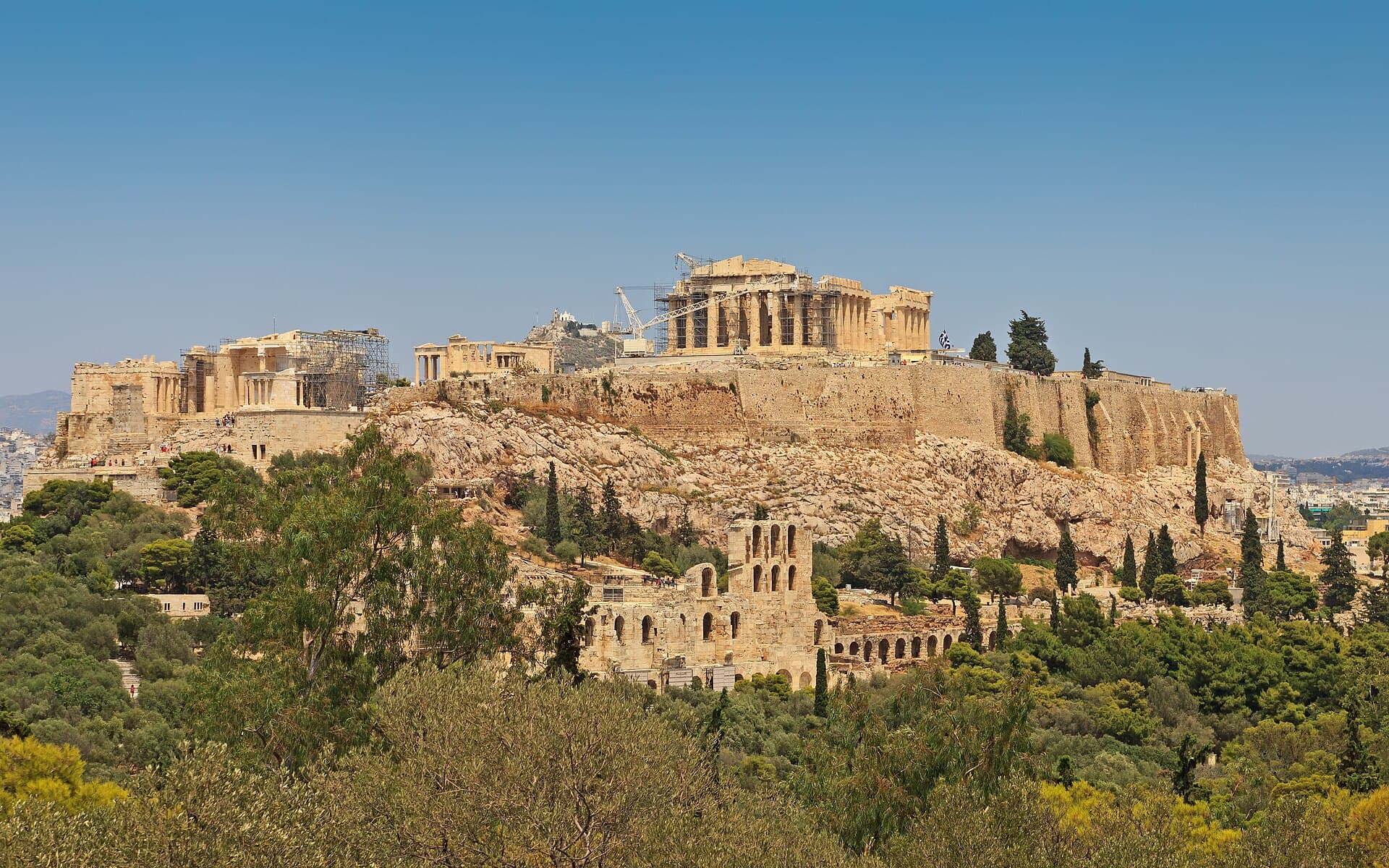
Greece is, almost literally, the intellectual cradle of the Western world. Between the 5th and 4th centuries BC, in a city of fewer than 250,000 inhabitants, Athenians invented democracy, codified philosophy, perfected tragedy and comedy, and laid the foundations of geometry and medicine. The Acropolis and its monuments — the Parthenon, the Erechtheion, the Propylaea — remain the most powerful symbol of that inheritance, but Greece counts 18 UNESCO World Heritage sites in total, from Olympia and Delphi to the Meteora monasteries and the medieval old towns of Rhodes and Corfu.
After antiquity, Byzantium left a deep imprint that still shapes daily life: gilded mosaics, fortified monasteries, and an Orthodox liturgy that structures the Greek calendar far more than people realise. Easter — Orthodox Easter, which doesn't always fall on the same Sunday as the Catholic one — is the most important festival of the year. Candle-lit midnight masses, processions through whitewashed villages and a long Sunday lunch built around roast lamb make experiencing a Greek Easter genuinely unforgettable. Smaller saints' days punctuate the rest of the calendar with local feasts (panigyria), live music and folk dancing that go well into the early hours.
The Greek language itself, one of the oldest still spoken on earth, is a living monument. Learning even a handful of words — kalimera (good morning), efharisto (thank you), yamas (cheers) — is always appreciated. So is an awareness of philotimo, the famously untranslatable Greek concept that fuses honour, generosity and a sense of duty to others. You'll meet it in tiny gestures: a coffee that appears without being ordered, directions sketched on a paper napkin, an invitation to join a stranger's table.
Daily life in Greece happens outside. Cafés fill from breakfast onwards; village squares belong to old men playing tavli (backgammon); dinner rarely starts before 21:00 in summer. The pace is slow on purpose, and that's precisely what visitors looking for a Mediterranean reset come for. Pair this everyday culture with the country's great museums — the National Archaeological Museum in Athens, the Acropolis Museum and the Heraklion Archaeological Museum on Crete — and you have an unusually rich cultural diet. Add the music (from melancholic rebetiko to bouzouki-driven island songs), the traditional dances and a packed summer festival calendar headlined by the ancient theatre of Epidaurus, and Greek culture reveals itself as something far more alive than its postcard image suggests.
Read also
- The Cyclades — Santorini, Mykonos and the white-and-blue archipelago.
- Santorini — The Aegean's most dramatic caldera.
- Mykonos — Glamorous beaches and legendary Cycladic nights.