Europe
Greece
Ancient temples, whitewashed villages and turquoise seas — the Mediterranean in its most mythological form.
- Capital
- Athènes
- Currency
- Euro (EUR)
- Languages
- Grec
- Budget
- From around €90/day/person — comfort tier
Greece at a glance
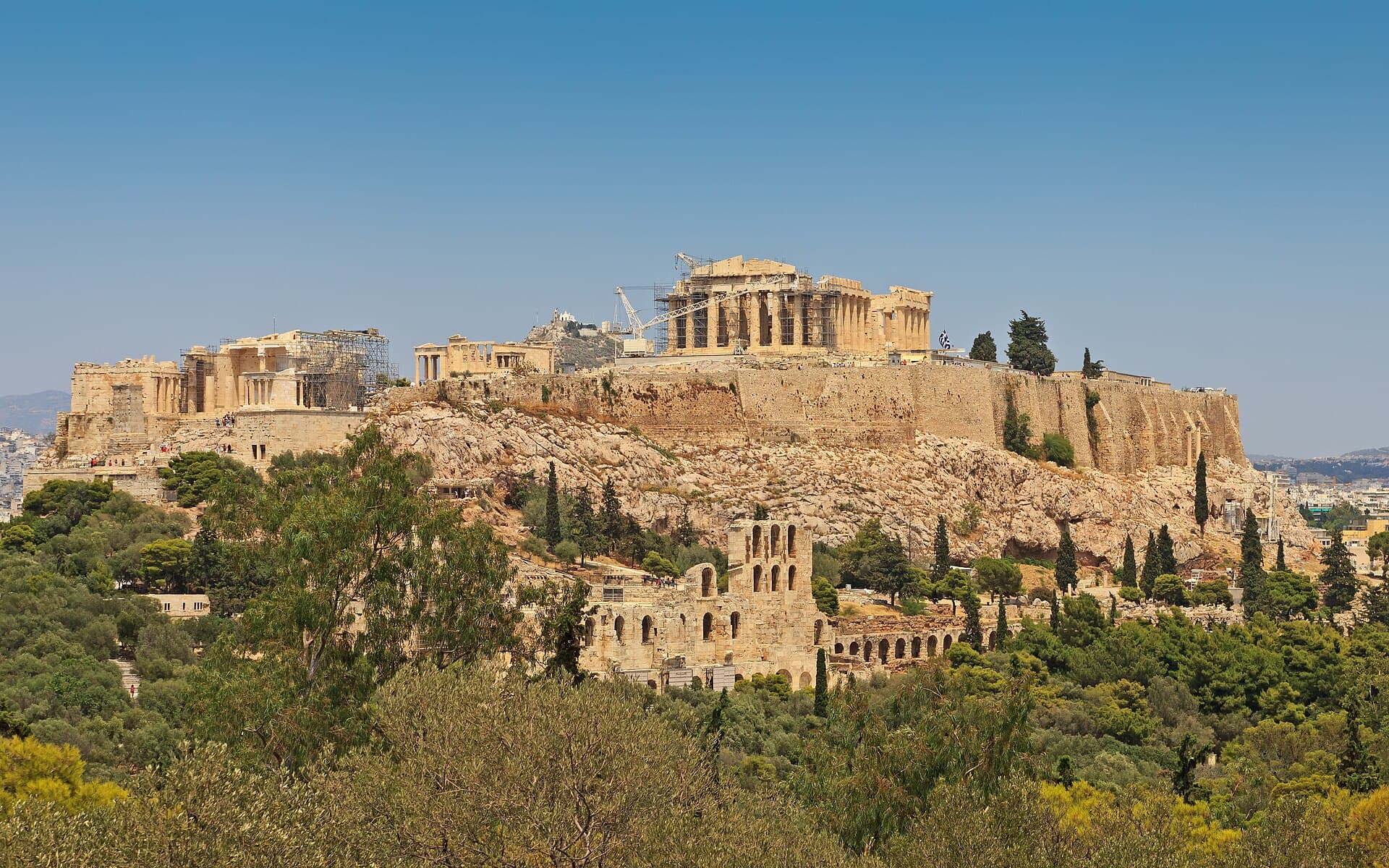
Greece, the cradle of Western civilisation, pairs an ancient heritage like no other — the Acropolis, Delphi, Olympia — with the luminous beauty of its archipelagos. Beyond Athens and the mainland, thousands of islands unfold across an unreal turquoise Aegean Sea, from the white-and-blue Cyclades to the lush, green Ionian isles. Whitewashed hill villages, hidden coves, sun-baked tavernas and a Mediterranean way of life make Greece one of Europe's most spellbinding destinations — and one of the most rewarding to slow down in.
This is a country where mythology is geography. Stand on the Acropolis at dawn and you can trace the city of Athena spilling down towards the Saronic Gulf; sail into Santorini's caldera and you feel the Minoan world still breathing beneath the cliffs. Yet Greece is no museum: it is alive with tsipouro toasts in mountain villages, all-night panigyria on tiny islands, and a generosity rooted in philotimo, the untranslatable Greek sense of honour and welcome. First-time visitors weave Athens with one or two Cyclades, while returning travellers fall for the wilder corners — the Peloponnese, the Dodecanese, Crete's silent mountains. Whether you come for ruins, beaches or moussaka, Greece somehow delivers all three — and a few sunsets you will not forget.
What we love
- ✅Exceptional ancient heritage — Acropolis, Delphi, Olympia, 18 UNESCO sites
- ✅Thousands of islands, each with its own mood
- ✅Turquoise Aegean and Ionian seas, world-class swimming
- ✅Mediterranean cuisine and famously warm hospitality
- ✅EU member with no entry formalities for most European visitors
What to know
- ❌Crowds and very high prices in July and August
- ❌Brutal summer heat and recurring wildfires
- ❌Inter-island ferry logistics need real planning
- ❌Top islands are increasingly affected by overtourism
Explore Greece
Situation
Où se situe Greece ?
Ouvrir la carte en grand sur OpenStreetMap →Frequently asked questions
When is the best time to visit Greece?+
Do I need a visa or passport for Greece?+
How much does a trip to Greece cost?+
How do you get between the Greek islands?+
Which Greek island is best for a first visit?+
Is Greece safe for tourists?+
Can you combine the mainland and the islands in one trip?+
Our verdict
Greece offers a rare blend: an unmatched ancient heritage and an island count that rivals any country on earth. Its strengths — history, turquoise sea, an art of living that has been refined for three thousand years — make it one of the most quietly addictive destinations in Europe. The downside is no secret: July and August bring fierce heat, suffocating crowds and peak-season prices, especially on the Cyclades. Wildfires now scar every summer, and the Meltemi can occasionally turn a calm ferry ride into a stomach-testing adventure.
Our honest take: lean into the shoulder season. Come in May–June or September, base yourself in Athens for two or three nights, then pair it with one — or at most two — islands. Combine a flagship like Santorini with a quieter neighbour such as Folegandros or Naxos, and you'll see why Greece sits on so many travellers' return lists. Eat where the locals eat, drink Assyrtiko by the sea, walk the Acropolis at opening time, and let the ferries dictate the pace. Done this way, Greece is not just a holiday — it's the kind of trip that re-tunes how you think about food, history and unhurried Mediterranean afternoons.

Expert on Greece · 1 contributions