ville
Madrid
The highest concentration of great-painting masterpieces within 500 metres of each other — the Prado–Thyssen–Reina Sofía triangle is unique on earth.
Madrid is a capital city that consistently defies expectations. Less immediately picturesque than Barcelona or Seville, the Spanish capital reveals its charms gradually and then completely. Its flagship asset is staggering: within 500 metres, the museum triangle (the Prado, the Thyssen-Bornemisza and the Reina Sofía) holds one of the most important painting collections ever assembled — Velázquez, Goya, El Greco, Rubens and Titian in the Prado; Picasso, Dalí and Miró (with Guernica as the centrepiece) in the Reina Sofía; the Impressionists and Expressionists in the Thyssen.
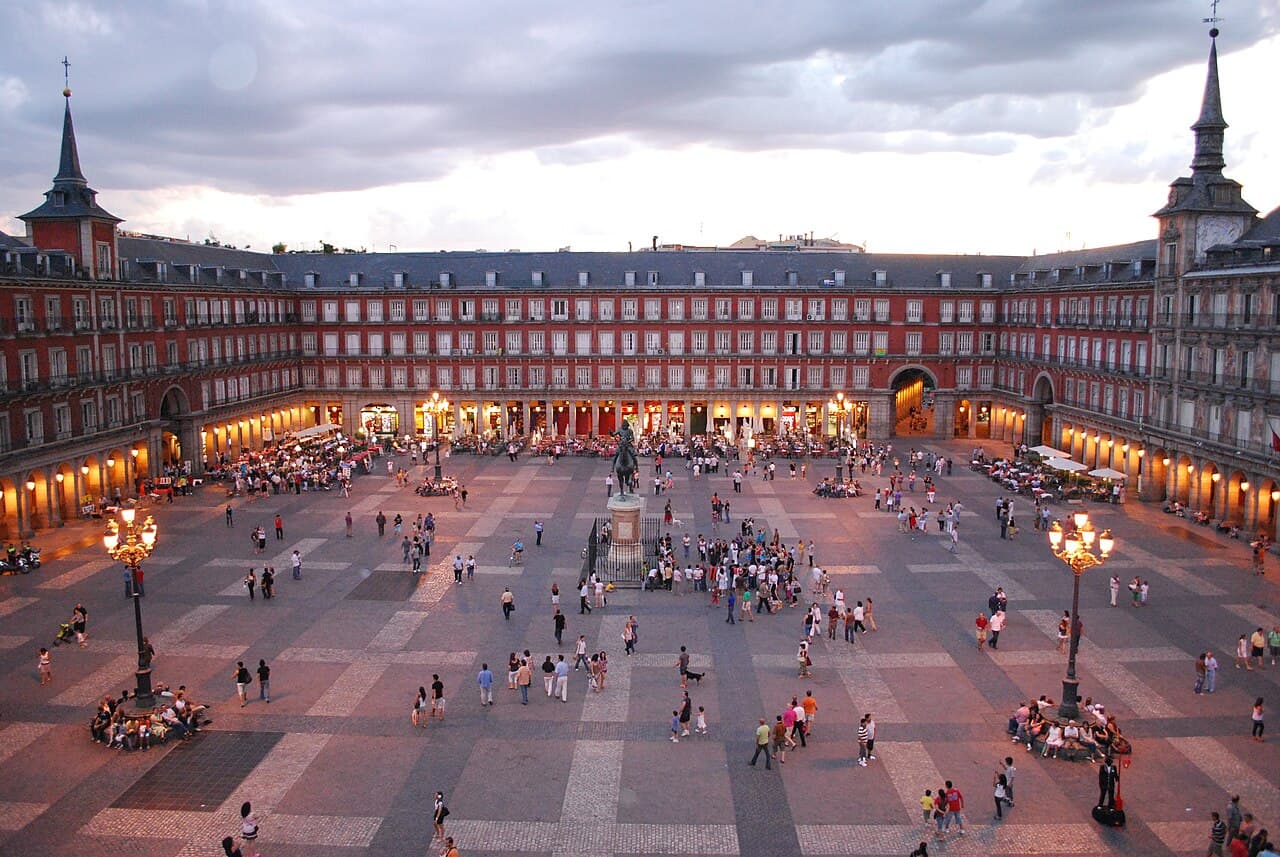
But Madrid doesn't live by its museums alone. This is an approachable, warm and legendarily lively city. The La Latina neighbourhood and its tapas bars, the baroque Plaza Mayor, the Mercado de San Miguel, the bookshops of the Gran Vía, the vintage boutiques of Malasaña and the terraces of Chueca together form a city to be inhabited from market morning through siesta to the small hours of the night.
Madrid is also the gateway to two of Spain's most impressive sites: Toledo (30 minutes by high-speed train, a UNESCO-listed medieval city crammed with El Grecos) and Segovia (30 minutes by AVE, intact Roman aqueduct and a fairytale Alcázar). The Spanish capital is 2h15 from Paris by plane, no visa required, with the euro — and it remains one of Europe's most budget-friendly capitals.
What we love
- ✅Museum triangle without equal on earth: Prado, Thyssen and Reina Sofía within 500 metres of each other
- ✅Authentic and affordable Spanish cuisine — tapas, jamón ibérico, cocido madrileño, churros con chocolate
- ✅Legendary nightlife: Chueca, Malasaña, La Latina — Madrid doesn't seriously sleep
- ✅Exceptional day trips 30 minutes away by AVE: UNESCO Toledo and Segovia's Roman aqueduct
- ✅Better value for money than Barcelona or Paris at the same comfort level
What to know
- ❌Extreme heat in July-August (35-42 °C) — outdoor sightseeing near-impossible at midday
- ❌No sea, no beach — Madrid is 300 km from the nearest coast
- ❌City centre less immediately charming than expected — the rewards take time
- ❌Dense traffic and chaotic driving in the centre
Situation
Où se situe Madrid ?
Ouvrir la carte en grand sur OpenStreetMap →Frequently asked questions
How many days should I plan for Madrid?+
Is the Prado really worth it?+
Should I book the museums in advance?+
Which Madrid neighbourhood should I stay in?+
What is jamón ibérico and where should I eat it in Madrid?+
Is it worth visiting Toledo as a day trip from Madrid?+
How do I get around Madrid?+
Are there free sites in Madrid?+
Our verdict
Madrid is Europe's most underrated capital. Its museum triangle has no planetary equivalent, its street food is among the most satisfying in Europe, and its neighbourhood life — La Latina on a Sunday, the El Rastro flea market, the nights of Chueca — preserves an authenticity that more heavily touristed cities have largely surrendered. The drawbacks are real (extreme summer heat, no sea, a city centre that doesn't show its best face immediately), but Madrid repays generously every hour you invest in it. Come in April-May or October, start with a morning at the Prado, and end with a night in La Latina.
Réserver votre séjour
Liens partenaires — une commission peut nous être reversée, sans surcoût pour vous.
 HébergementAnnulation gratuite
Hôtels & paradores en Espagne
Paradores historiques (monastères, châteaux), boutique-hôtels d'Andalousie, riads de Grenade : l'Espagne au meilleur prix.
ActivitéSans queueActivités en Espagne
Sagrada Familia, Alhambra (réservation obligatoire), tablao flamenco, tour des tapas Madrid, surf Cantabrie.
VolComparateurVols vers l'Espagne
Paris-Madrid, Paris-Barcelone, Paris-Séville : low-cost et compagnies régulières comparés au meilleur prix.
Nearby

"Janvier est le mois le plus calme à Madrid : le Prado, le Reina Sofía et le Thyssen sont quasi vides, les hébergements au plancher. Froid mais sec — une bonne veste suffit. Idéal pour les amateurs de musées sans la pression touristique."
Expert on Madrid · 1 contributions
 Mediterranean Desk — Mowando·Editor