
"Saison sèche idéale, 22°C journée."
Expert on Abu Simbel · 1 contributions
 Africa & Americas Desk — Mowando·Editor
The best periods
The best time to visit Abu Simbel is October to March. The most recommended months are Janvier, Février, Mars, Avril, Mai, Juin, Juillet, Août, Septembre, Octobre, Novembre, Décembre.
Saison idéale — fraîcheur sèche
- ✅Températures supportables (15-30 °C), site quasi sans ombre
- ✅Lumière dorée du désert nubien sur les colosses
- ✅Cérémonies du solstice (22 février et 22 octobre) où le soleil pénètre dans le sanctuaire
- ❌Nuits fraîches en décembre-janvier (8-12 °C) — important pour les départs à 3h du matin
- ❌Affluence sur les créneaux du solstice (réserver très en avance)
Saisons intermédiaires — chaleur croissante
- ✅Tarifs en baisse, sites moins fréquentés
- ✅Encore possible si vous démarrez à 3h du matin et terminez avant 10h
- ❌Chaleur déjà très forte (38-44 °C en milieu de journée)
- ❌Réverbération brutale sur les façades de calcaire et de grès
Été — chaleur infernale
- ✅Tarifs et affluence au plus bas
- ✅Lumière exceptionnellement contrastée
- ❌Chaleur extrême (44-48 °C), site sans aucune ombre
- ❌Risque sanitaire réel (insolation, déshydratation)
- ❌Excursion d'une journée éprouvante même très tôt le matin
Month-by-month climate
Temperatures, rainfall and sunshine in Abu Simbel across the 12 months.
| Jan | Fév | Mar | Avr | Mai | Juin | Jui | Aoû | Sep | Oct | Nov | Déc | |
|---|---|---|---|---|---|---|---|---|---|---|---|---|
| Min | 10° | 11° | 16° | 21° | 24° | 27° | 28° | 29° | 27° | 23° | 17° | 13° |
| Max | 22° | 23° | 29° | 34° | 38° | 41° | 41° | 41° | 39° | 35° | 28° | 24° |
| Mer | — | — | — | — | — | — | — | — | — | — | — | — |
| Pluie | 0mm | 0mm | 1mm | 0mm | 0mm | 0mm | 0mm | 1mm | 0mm | 0mm | 0mm | 0mm |
| Soleil/j | 9.9h | 10.6h | 11.5h | 11.9h | 11.9h | 12h | 11.9h | 11.8h | 11.5h | 11h | 10.7h | 10h |
Tourist crowds
Monthly attendance levels (0 = empty, 100 = saturated).
Frequently asked questions
How do I get to Abu Simbel?+
How long do I need on site?+
When is the solar solstice ceremony?+
Which season for Abu Simbel?+
Do I need a guide at Abu Simbel?+
Can I sleep at Abu Simbel?+
Is the sound and light show worth it?+
Our verdict
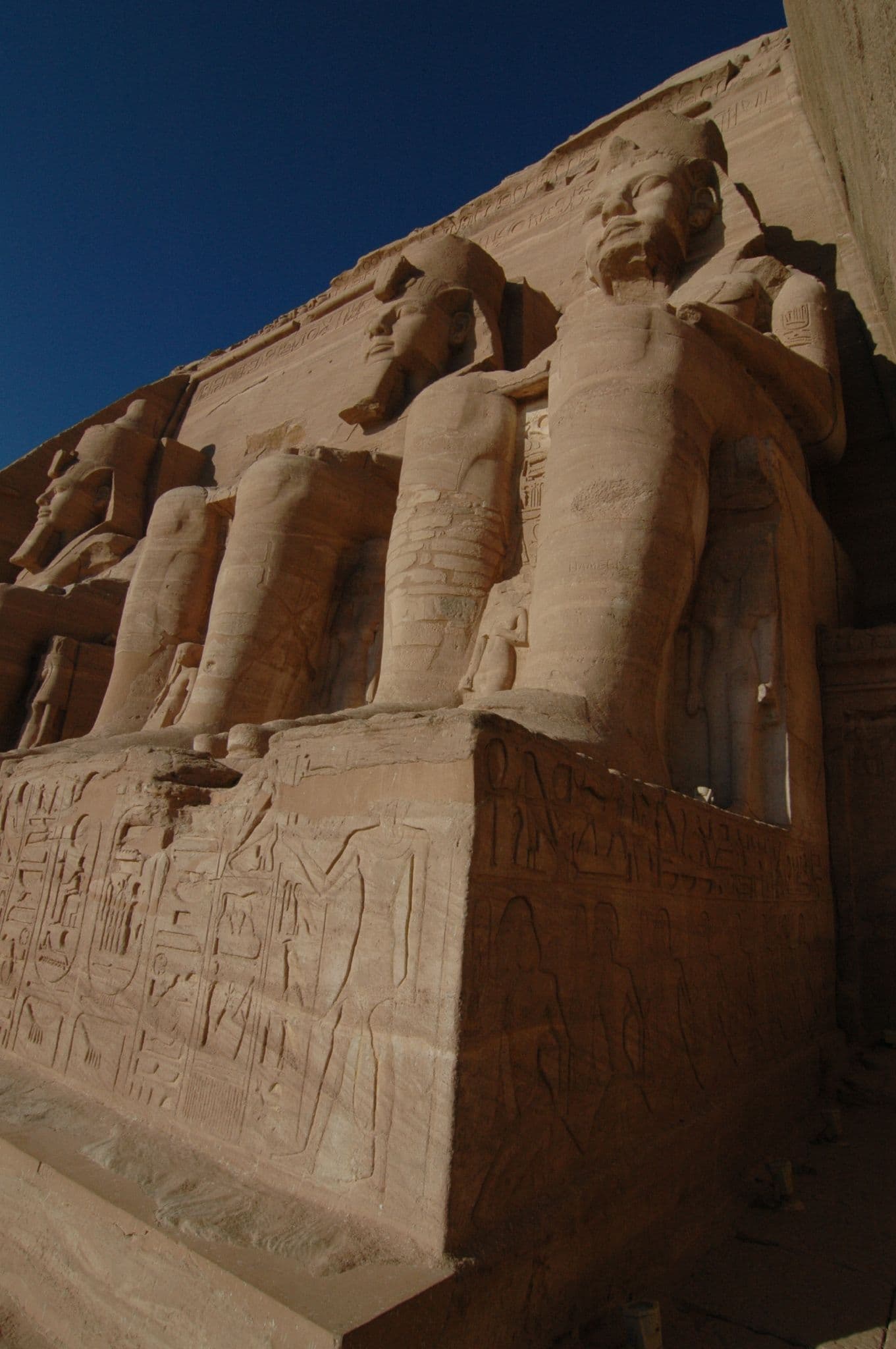
Abu Simbel is one of the three or four great moments of any Egyptian trip, on a par with Karnak, the Giza pyramids and the Valley of the Kings. The logistical effort to get there — 280 km of desert from Aswan, pre-dawn departure, mid-afternoon return — is part of the experience, and the reward is immense: standing before these four 20-metre colossi carved directly into the cliff 33 centuries ago, knowing they were dismantled and rebuilt stone by stone in the 1960s to escape the lake's waters, and imagining Nefertari accompanying her pharaoh-husband in the dim sanctuary next door, is one of those moments that lastingly marks a traveller. Come strictly between October and March, fly if your budget allows, and consider the solstice ceremonies (22 February or 22 October) if your dates align.
Similar destinations