Mowando

Region

Nile Valley

200 kilometres of mythical river between Luxor and Aswan, lined with the greatest pharaonic and Ptolemaic temples of humanity, to be travelled by 4-5 star cruise or traditional dahabiya — the emblematic Egypt experience.

4.90

The Nile Valley between Luxor and Aswan unfolds over 200 km the most extraordinary concentration of ancient monuments in the world. It is here that from the New Kingdom (1550-1077 BC), the pharaohs abandoned the Giza pyramids to build the colossal temples of Karnak and Luxor, and to dig their tombs in the Valley of the Kings and the Valley of the Queens, on the west bank of Thebes. Sixty-two pharaonic tombs have been found in the Valley of the Kings alone, including that of Tutankhamun discovered intact in 1922 by Howard Carter — the greatest archaeological discovery of the 20th century.

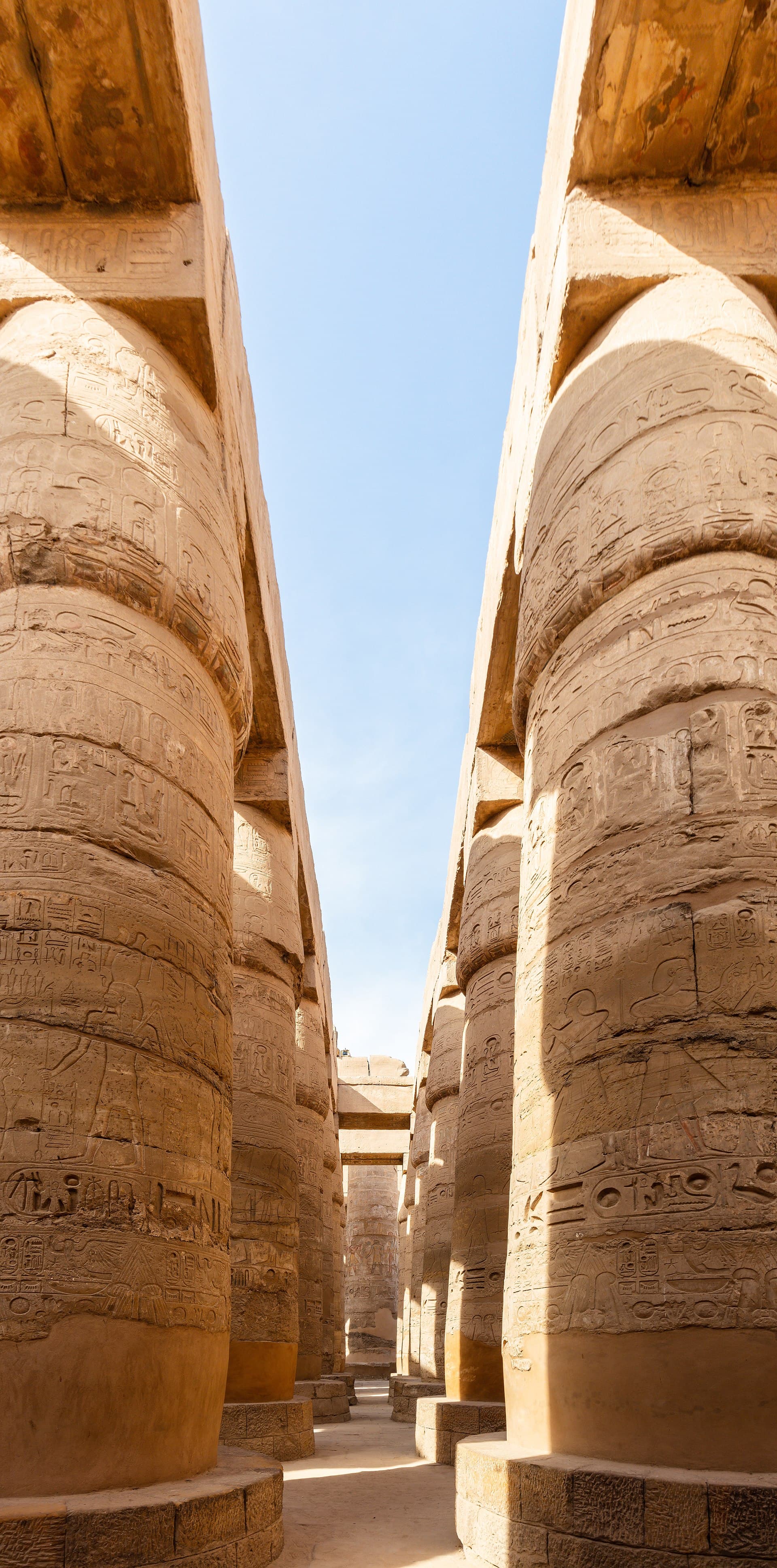
Luxor (ancient Thebes, capital of the New Kingdom) is today a city of 500,000 inhabitants divided by the Nile between the east bank (the living, with the temples of Karnak and Luxor) and the west bank (the dead, with the valleys of the Kings and Queens, the Colossi of Memnon, the funerary temples of Ramses II — the Ramesseum — and of Hatshepsut at Deir el-Bahari). The temple of Karnak is the largest religious complex ever built (123 hectares, 134 columns 23 m high in the hypostyle hall); the temple of Luxor, more intimate, is connected to Karnak by an avenue of sphinxes recently restored and reopened in 2021.

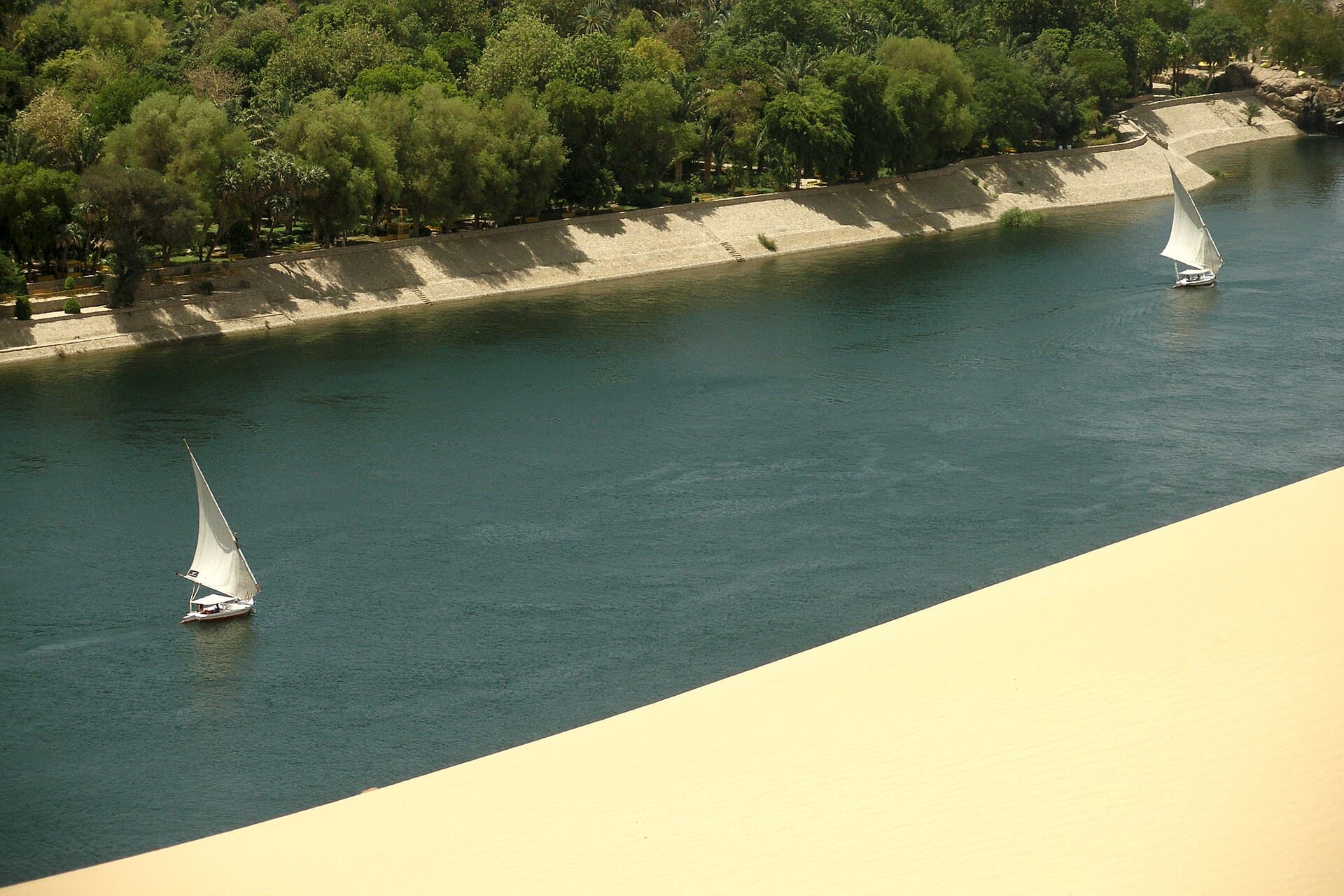
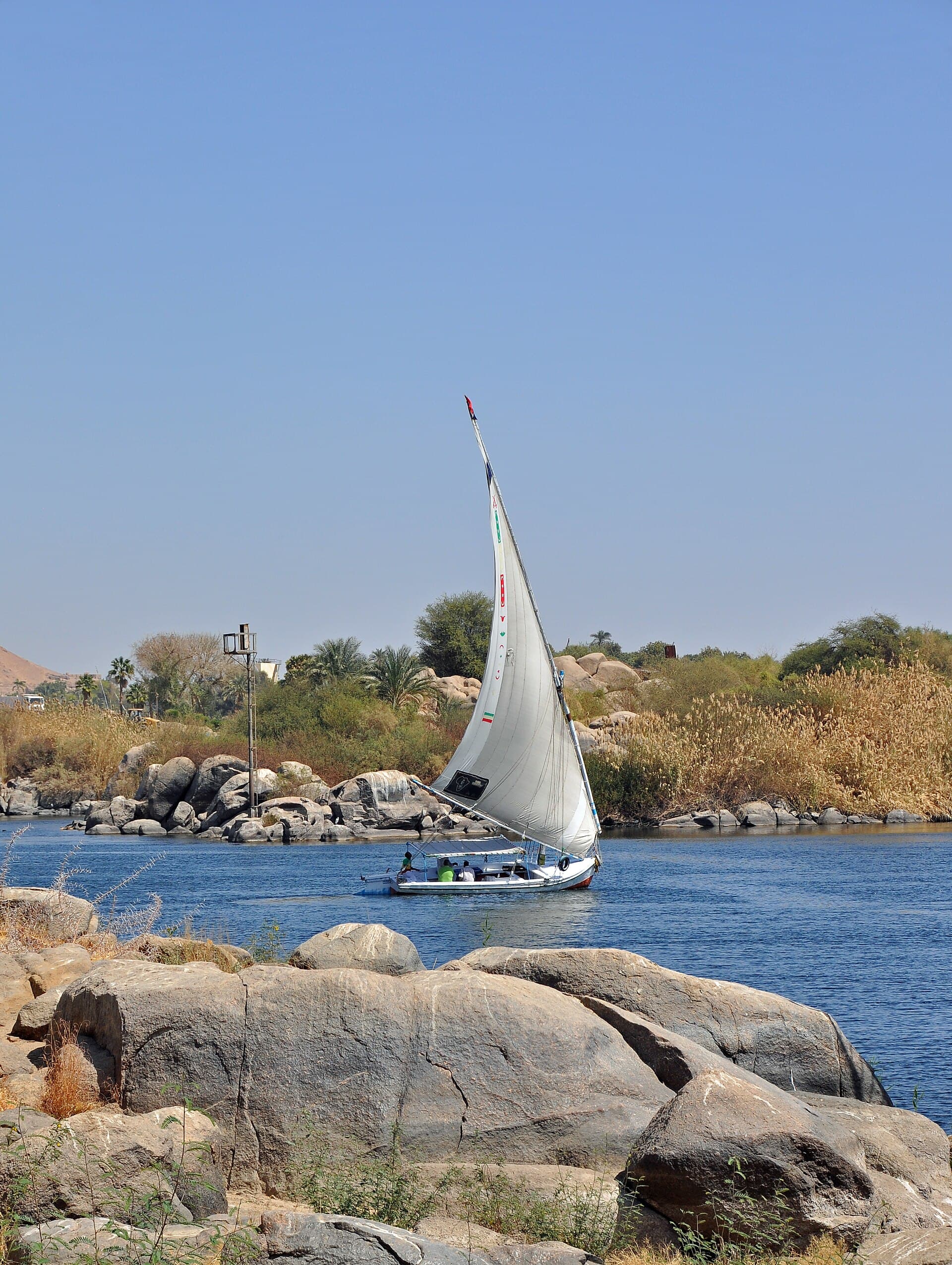
The Nile cruise between Luxor and Aswan (3 to 7 nights depending on the formula) is the emblematic experience of the region. The 4-5 star boats (30-80 cabins, international cuisine, swimming pool on the deck, evening entertainment) sail down or up the river, stopping at the Ptolemaic temples of Edfu (the best preserved in Egypt, dedicated to Horus) and Kom Ombo (double sanctuary Sobek-Haroeris). The high-end alternative is the dahabiya — a traditional sailing boat of 8 to 12 cabins, silent and refined, which allows you to sail off the beaten path and dock in villages that big boats avoid.

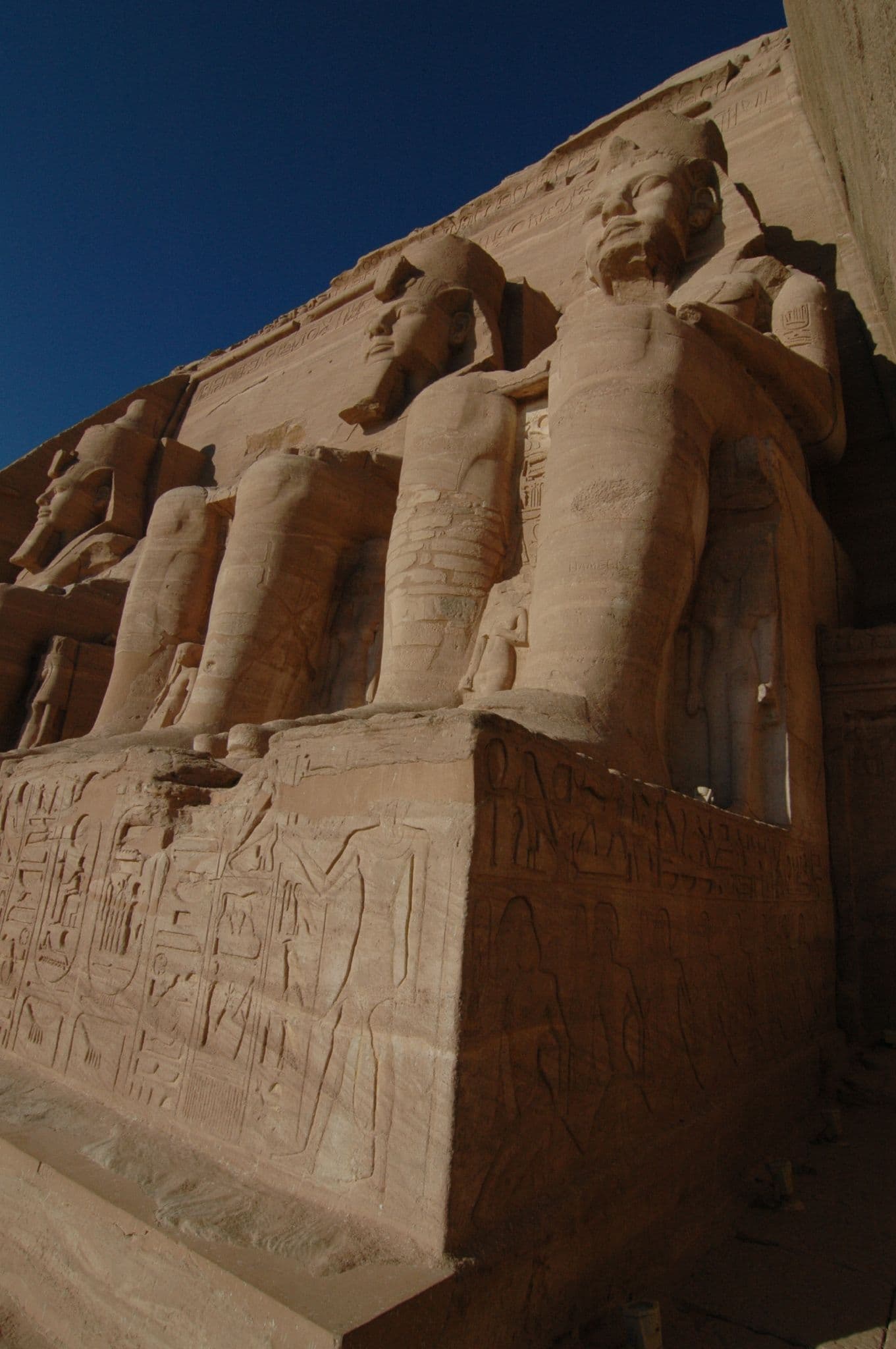
Aswan marks the southern boundary of ancient Egypt, where the Nile narrows between granite rocks that formed the first cataract. More peaceful than Luxor, the city is famous for its Philae temple (saved from the dam waters and rebuilt on Agilkia Island), the Aswan High Dam (built in the 1960s, Lake Nasser the largest artificial lake in Africa) and the legendary Old Cataract Hotel (1899, where Agatha Christie wrote 'Death on the Nile'). It is also the starting point for Abu Simbel, 280 km to the south, where the two colossal temples of Ramses II and Nefertari (13th century BC) were cut into blocks and rebuilt 65 m higher in the 1960s to escape the waters of Lake Nasser — one of the greatest heritage rescue operations in history.

Explore Nile Valley

Spots in the region
Situation

Où se situe Nile Valley ?

Ouvrir la carte en grand sur OpenStreetMap →

Frequently asked questions

How many days do you need to visit the Nile Valley?+
Plan for __at least 5 to 8 days__ for a complete discovery: __3 to 4 nights of cruise__ between Luxor and Aswan (with stops at Edfu and Kom Ombo), __2 days in Luxor__ before or after boarding (Karnak, Luxor temple, Valley of the Kings, Valley of the Queens, Hatshepsut temple, Ramesseum, Colossi of Memnon), __1 day in Aswan__ (Philae temple, high dam, Elephantine Island, felucca ride) and __1 day for Abu Simbel__ from Aswan (1h round-trip plane or 7h round-trip road convoy). Over 10 days, add the necropolis of Dendera and the temple of Abydos north of Luxor.
Classic cruise or dahabiya: which to choose?+
Both have their merits. The __classic cruise__ (3-7 nights Luxor-Aswan, boats of 30-80 cabins, full board formula starting from €100-200/day/person) remains the most emblematic experience — total comfort, optimised stops, English-speaking guide, international atmosphere. Disadvantage: crowds at the most popular sites (up to 300 boats on the Nile in high season) and engine noise. The __dahabiya__ (traditional sailing boat of 8-12 cabins, 5-7 nights, €1,800-3,500/week/person) is the high-end alternative: absolute silence (sail and towing propulsion), more authentic and refined atmosphere, access to sites avoided by big boats, personalised service. For a __first visit__, classic 4-5 star cruise; for a __second visit__ or honeymoon, dahabiya without hesitation.
Do you need a guide to visit Karnak and the Valley of the Kings?+
Essential, without any doubt. The pharaonic sites are of such __iconographic richness__ (hieroglyphs, reliefs, mythological scenes, pharaonic genealogies) that they remain silent without expert interpretation. A good English-speaking guide (qualified Egyptologist) transforms the visit — without a guide, you see beautiful stones; with a guide, you understand the history of Egypt over 3,000 years. Rate: €80-120/day for a private English-speaking guide in Luxor or Aswan. If you are on a cruise, the guide is usually included in the package and accompanies all visits — check qualifications at the time of booking.
Do you really need to go to Abu Simbel?+
__Absolutely yes__. The two temples of Ramses II and Nefertari at Abu Simbel (13th century BC) are among the most impressive ever built — four colossi 20 m high carved directly into the cliff, aligned according to a precise astronomical calculation (the sun illuminates the inner sanctuary twice a year, on 22 February and 22 October). Their rescue in the 1960s — cut into 30-tonne blocks and re-erected 65 m higher to escape the rising waters of Lake Nasser — is one of the greatest heritage projects in history. Access from Aswan: __EgyptAir plane__ (1h round trip, €200-300) or __escorted road convoy__ (3h30 each way, mandatory departure around 4am, €50-80 in organised group). The plane is much preferable for ease and absence of fatigue.
Is Tutankhamun's tomb worth the supplement?+
Yes, but with an important nuance. Tutankhamun's tomb (KV62) in the Valley of the Kings is __relatively small and lightly decorated__ compared to those of Seti I (KV17) or Ramses VI (KV9) — Tutankhamun having died young, his tomb was dug in haste. What justifies the supplement (€12 in addition to the Valley of the Kings ticket) is the __in situ presence of his mummy__, displayed in a climate-controlled glass sarcophagus. He is the only pharaoh whose mummy is visible in his original tomb (the others were moved to the Egyptian Museum and then to the GEM). A unique and moving experience. If your budget is tight, instead favour the __tomb of Nefertari__ (Valley of the Queens, €50 supplement) which is the most beautiful painted tomb in Egypt — polychrome frescoes of extraordinary finesse.
How to get around in Luxor between east bank and west bank?+
Three options. The __road bridge__ (10 km south of the centre) is used by taxis and tourist minivans — count 30-45 min from the east bank to the Valley of the Kings. The __boat taxi__ (felucca or motorised) crosses the Nile in 10-15 min from the docks in the centre (5-15 EGP per person for the public ferry, 100-200 EGP for a private boat taxi). It is the most picturesque and least expensive solution. The __cruise formula__ always includes bus transfers from the boat to the west bank sites. If you stay in Luxor (east bank), book your __private driver__ for the day (€30-50 with air-conditioned car) to optimise the Valley of the Kings + Valley of the Queens + Hatshepsut + Colossi of Memnon circuit.
Is the Philae temple worth the detour in Aswan?+
Yes, __without hesitation__. The Philae temple (dedicated to Isis, goddess of motherhood and magic) is one of the most beautiful and moving Ptolemaic temples in Egypt (4th century BC - 1st century AD). It was __entirely dismantled and rebuilt__ in the 1970s on the neighbouring island of Agilkia, to escape the permanent submersion caused by the Aswan High Dam. Access is by boat from the Shellal pier (10 min by boat, 100 EGP round trip). Favour the __evening sound and light show__ (45 min, in English most days, €25) which illuminates the temple in a magical way. Allow 2-3 hours on site. It is one of the most magical moments of a trip to Aswan.

Our verdict

The Nile Valley is probably the most emblematic and memorable experience of a trip to Egypt. No other place in the world concentrates such a density of pharaonic and Ptolemaic masterpieces over such a short distance. Visit ideally on a 4-7 night Luxor-Aswan cruise with a 4-5 star boat from a reputable operator (Sonesta, Movenpick, Sanctuary) or on a dahabiya for a silent and intimate high-end experience. Optimal period: November to March for comfortable temperatures (20-26 °C). Imperatively add the Abu Simbel excursion from Aswan (by plane 1h or escorted road convoy 3h30, dawn departure). Ideally combine with 3-4 days in Cairo and Giza before or after the cruise for a complete pharaonic Egypt discovery.

Mowando Letter

Once a month: the right destinations for the right season + the best booking windows.

No spam. One-click unsubscribe. Your data is never shared.