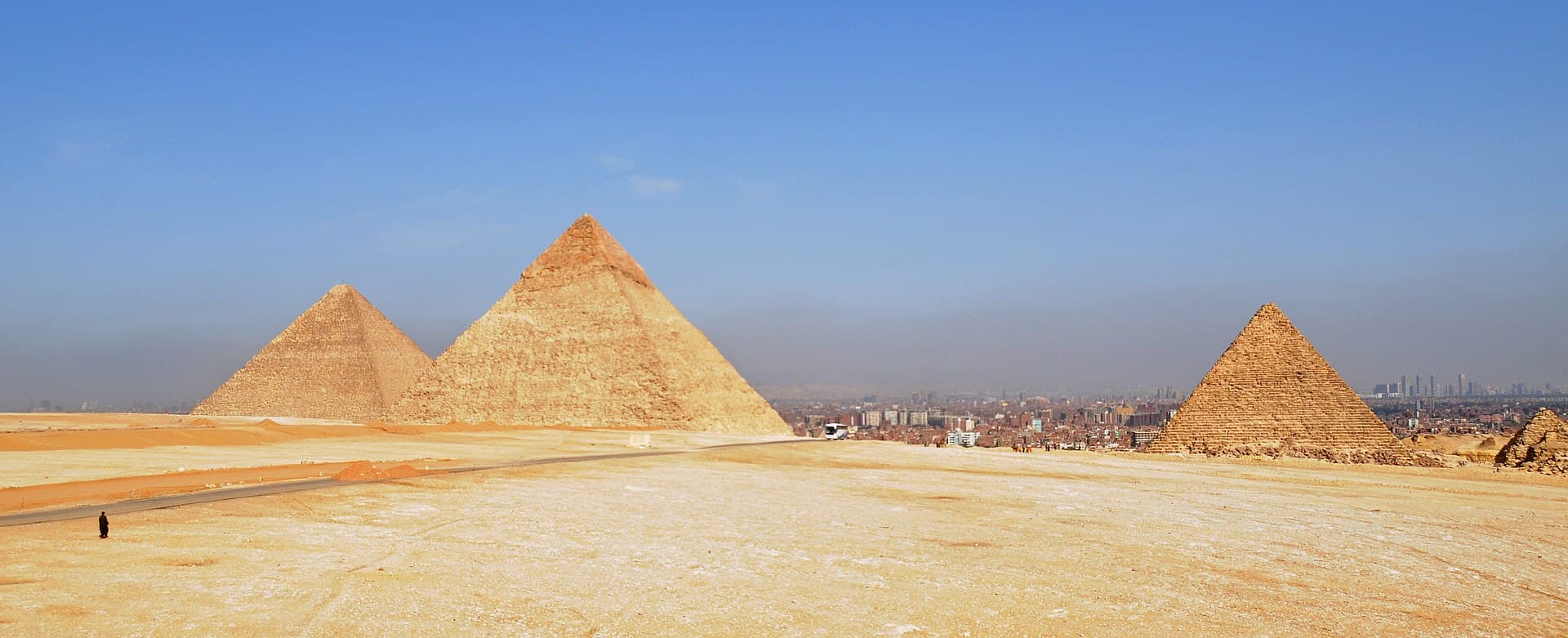
The Cairo and Giza region offers an entirely cultural and urban experience, without any seaside or wild nature dimension. The main sites are organised into four major sets.
The Giza Plateau is the absolute must-see. Arrive at opening (8am) to enjoy the morning coolness and avoid the tour bus crowds that arrive around 10am. The classic visit includes the Pyramid of Khufu (mandatory exterior, interior optional for €22 extra), the Pyramid of Khafre (the only one to retain part of its white limestone casing at the summit), the Pyramid of Menkaure (smaller but often open for interior visit), and the Sphinx (absolutely to be seen from the terrace of the Valley Temple, which offers the most photographed perspective in the world). The evening sound and light show (45 minutes, in English most days, €25) is commented and slightly dated but remains a unique experience to see the pyramids illuminated in the night silence of the desert.
The Grand Egyptian Museum (GEM), 2 km from the plateau, deserves at least 4 hours of visit. The chronological galleries trace 5,000 years of Egyptian history, from predynastic tools to Greco-Roman objects. The highlight: the Tutankhamun gallery which brings together for the first time since 1922 the 5,398 objects from the young pharaoh's tomb, including the gold mask, the three nested sarcophagi, hunting chariots and the complete funerary furniture. The museum offers a multilingual audio guide (English included, €5) and an English-speaking guided tour (to be booked in advance).
Islamic Old Cairo (UNESCO-listed) is best explored on foot over a day. Start with the Ibn Tulun Mosque (9th century, the oldest in Cairo still intact, vast inner courtyard and unique spiral minaret in Egypt). Continue to the Sultan Hassan Mosque (14th century, tallest madrasa of the medieval world with its 36 m vaulted height). Climb to the Citadel of Saladin (12th century) for the Ottoman Mohamed Ali Mosque (recognisable Istanbul silhouette) and the panoramic view over the city. End at the Khan el-Khalili bazaar (14th century), a labyrinth of artisan alleys (coppersmiths, perfumes, spices, carpets) where to stop at the legendary El Fishawy Café (open 24/7 for 250 years, favourite spot of writer Naguib Mahfouz).
Coptic Old Cairo (Misr al-Qadima), to the south, gathers within a few hectares the Roman fortress of Babylon, the Hanging Church (al-Muallaqa, 3rd-4th century, perched on the Roman towers), the Church of Saints Sergius and Bacchus (where the Holy Family is said to have taken refuge during the flight into Egypt), the Ben Ezra Synagogue (one of the oldest in the Middle East) and the Coptic Museum (the largest collection of Coptic art in the world). Allow 2-3 hours on site.
Saqqara, Dahshur and Memphis are visited in a full day from Cairo (8am departure, 5pm return). Saqqara for the Step Pyramid of Djoser and the decorated mastabas, Dahshur for Sneferu's two pyramids (the Bent and the Red, open to interior visit without crowds), Memphis for the open-air museum and the recumbent colossus of Ramses II. An excursion to avoid in mid-summer (extreme heat and zero shade).
Read also
- Cairo, Mother of the World — Citadel of Saladin, Khan el-Khalili bazaar, Coptic Old Cairo, Ibn Tulun Mosque: the complete capital guide.
- Nile Valley: Luxor and Aswan — Karnak, Valley of the Kings, Nile cruise, Abu Simbel: the logical follow-up to Cairo.
- Egypt — Complete country guide: visa, budget, regions to explore and the best time to visit.
- Red Sea — Hurghada, El Gouna, Marsa Alam: world-class diving and all-inclusive resorts.