- Visa
- Not required
- Passport validity
- 6 months
- Safety level
- Modérée
- Recommended vaccines
- Hépatite A, Typhoïde, DTP, Hépatite B (séjours prolongés), Rage (zones rurales prolongées)
Aucun visa préalable n'est nécessaire pour les ressortissants français et européens pour un séjour touristique inférieur à 30 jours. À l'arrivée, une tarjeta de turista (carte de tourisme) d'une valeur de 10 USD est exigée — elle est désormais incluse dans le prix du billet d'avion pour la quasi-totalité des compagnies desservant le pays (Air France, Corsair, Air Europa, Iberia, TUI, etc.). Vérifiez le détail des taxes sur votre billet ; si elle n'y figure pas, achetez-la aux bornes dédiées dans l'aéroport d'arrivée (espèces ou carte).
Un formulaire d'entrée et de sortie électronique (e-Ticket Migración) doit être rempli en ligne dans les 72 heures précédant l'arrivée et précédant le départ — gratuit, accessible sur eticket.migracion.gob.do. Un QR code est généré, à présenter à l'enregistrement et au contrôle frontalier (papier ou téléphone).
Le passeport doit être valide pour la durée du séjour (pas de règle stricte de 6 mois post-retour, mais 6 mois recommandés par sécurité, certaines compagnies aériennes appliquant cette règle). Aucun billet retour n'est exigé en théorie, mais les compagnies aériennes peuvent le contrôler à l'embarquement.
Prolongation possible sur place auprès de la Dirección General de Migración à Saint-Domingue (60-90 jours supplémentaires, 1 000-2 000 RD$). Pour les séjours supérieurs à 30 jours sans démarche, une surtaxe progressive s'applique à la sortie (1 800-10 000 RD$ selon la durée du dépassement) — à payer à l'aéroport.
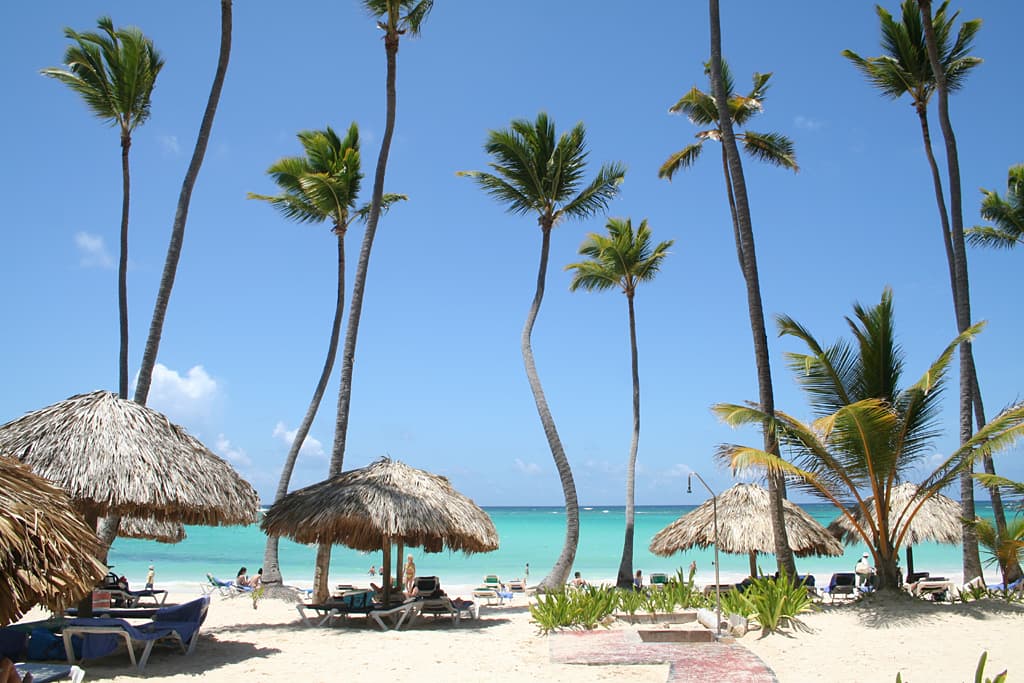
The Dominican Republic is globally safe in tourist zones (all-inclusive resorts, Punta Cana, Bávaro, Samaná, some Santo Domingo tourist zones), but requires heightened vigilance outside — urban crime is real, especially in Santo Domingo and Santiago, and the health risk is higher than the French Antilles.
The main risk for tourists remains opportunistic crime — pickpocketing, grab-and-run robberies (on scooters), non-official taxi scams, rental car break-ins. Avoid walking at night in city centres (Santo Domingo, Santiago, Puerto Plata centre), don't wear visible jewellery, don't display cash or premium smartphones in public, keep passports in hotel safe. All-inclusive resorts are secure 24/7 bubbles, but avoid non-official taxi rides in the evening.
The Santo Domingo colonial zone is safe in daytime but requires nighttime vigilance (stay on busy main streets: Calle Las Damas, Calle El Conde). Working-class neighbourhoods of Cristo Rey, Capotillo, Los Mina in Santo Domingo should be absolutely avoided by tourists. Urban public transport (guaguas, motoconchos) is safe in daytime, avoid at night.
Natural risks are the Dominican specificity. The hurricane season runs from 1 June to 30 November, peaking in August-September — the country sits on the Atlantic hurricane path (Fiona 2022, María 2017, Georges 1998). Take out cancellation-cover travel insurance if travelling during this period. Earthquakes are possible (the country is in an active seismic zone) but rare, last major disaster in 1946.
Health-wise, medical services are correct in major cities (Hospital Hispanic, Centro Médico UCE in Santo Domingo) and excellent in private Bávaro tourist clinics — high costs ($200-500 for a consultation), travel insurance mandatory. Pathologies to watch: dengue, chikungunya, zika (mosquitoes omnipresent year-round, tropical repellent DEET 30% mandatory), traveler's diarrhea (careful eating: avoid ice cubes, raw salads, tap water — prefer sealed bottled water), intense sun exposure (SPF 50 cream, hat).
Tap water is not potable across the territory — drink exclusively sealed bottled water ($1-2/litre, available everywhere). Ice cubes in resorts are made from filtered water and safe; those in local comedores and bars less so. Emergency care is covered by international conventions if you have travel insurance with medical assistance — check before departure. Emergency: 911 (police, ambulance, fire, operators often bilingual Spanish-English at Punta Cana and Santo Domingo).
Read also
- Punta Cana and the East — Bávaro, Cap Cana, Bayahibe: the world capital of all-inclusive and its 30 km of beaches.
- Santo Domingo and the South — The first European city in the Americas (1496), UNESCO colonial zone, historical heart of the New World.
- Samaná — Lush peninsula, Rincón beach, humpback whales January to March, ecotourism and authenticity.
- Puerto Plata and the North — Amber coast, Sosúa, Cabarete world capital of kitesurfing, Pico Isabel de Torres cable car.
- Santo Domingo — UNESCO colonial zone, Fortaleza Ozama, Alcázar de Colón, first cathedral in the Americas.