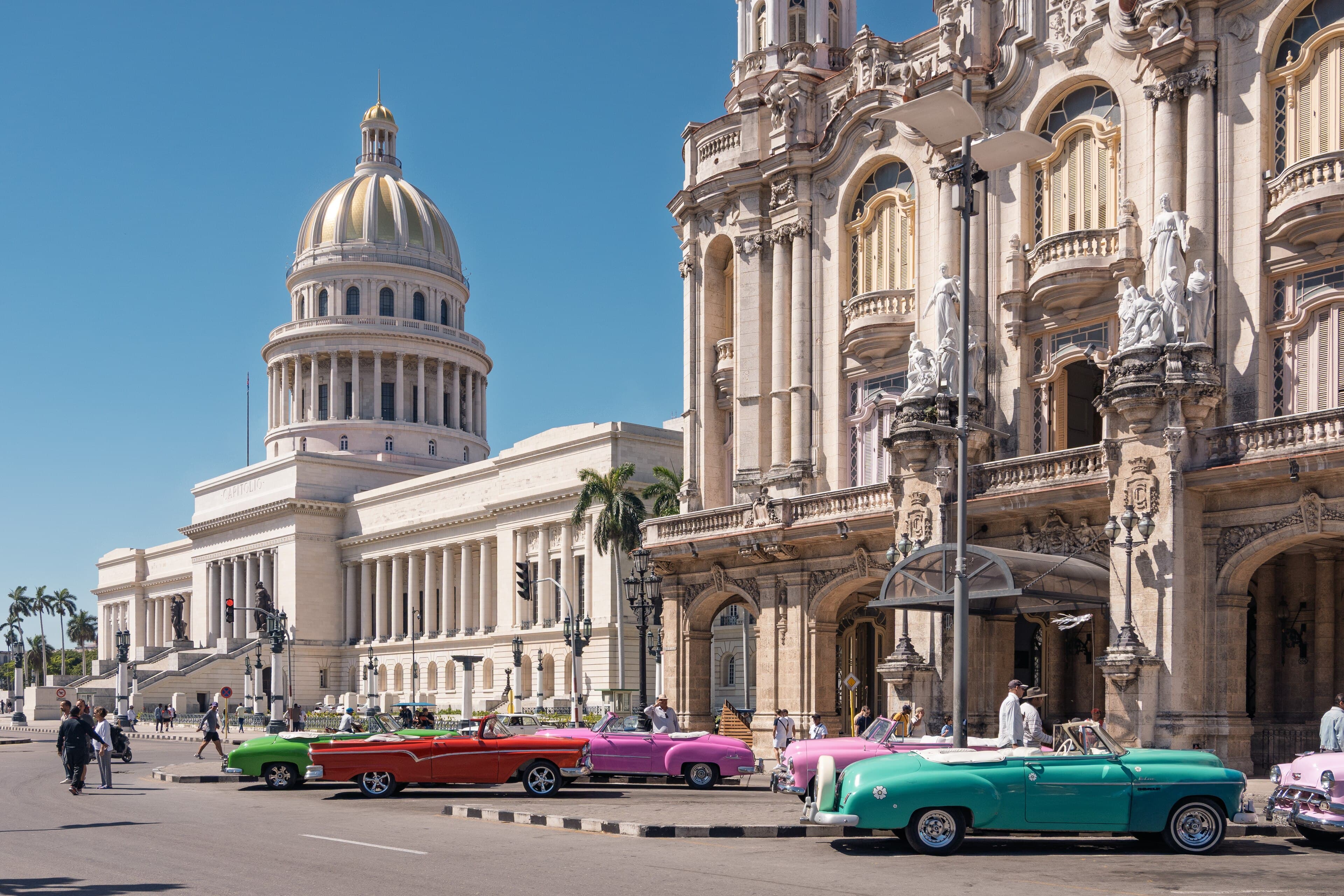
Cuban culture is among the richest and most vibrant in the Caribbean — an exceptional fusion of Spanish colonial heritage, African roots (Yoruba and Bantu slaves brought from the 16th to 19th centuries) and Taíno Amerindian influences. This richness expresses itself in every domain: music, dance, literature, cinema, religion, gastronomy, architecture.
Music is the Cuban cultural signature. Son cubano, born in the eastern mountains in the 19th century, combines African rhythms (clave, bongó) and Spanish harmonic structures (guitar, tres) — it is the direct ancestor of salsa, mambo, cha-cha-cha and most Afro-Caribbean musics. The Buena Vista Social Club (Compay Segundo, Eliades Ochoa, Ibrahim Ferrer, Omara Portuondo, Rubén González) brought this tradition to global attention in the 1990s. Rumba (Afro-Cuban, percussion and chant) and conga (carnival procession dance) complete the musical heritage. Today, timba (modern Cuban salsa) and reggaeton dominate the casa de la música floors.
Dance is everywhere in Cuba — in the casas de la música, on public squares, on the Plaza Mayor steps of Trinidad every evening, in the streets of Havana's Vedado. Learning a few salsa steps (private classes €10-15/hour) before or during your trip transforms the Cuban experience.
Cuba's UNESCO heritage comprises 9 sites: Habana Vieja (Havana colonial centre, 1982), Trinidad and the Valle de los Ingenios (1988), the Castillo del Morro of Santiago (1997), the Viñales Valley (1999), the Desembarco del Granma park (1999), the Alejandro de Humboldt park (2001), the Sierra Maestra coffee cultural landscape (2000), the colonial city of Cienfuegos (2005), the historic centre of Camagüey (2008). Each merits a trip in itself.
Cuban religion is dominated by a unique syncretism between Catholicism (Spanish heritage) and santería (Afro-Cuban religion of Yoruba origin) — Catholic deities are identified with African orishas (Yemaya = Virgin Mary, Shango = Saint Barbara, etc.). The Virgin of El Cobre (patroness of Cuba, syncretised with Ochun) is venerated at the El Cobre sanctuary near Santiago. Santería is practised discreetly but widely by Cubans.
The festive calendar revolves around the Santiago Carnival (3rd week of July, the biggest in Cuba), the Havana Carnival (August), the 1 January celebration (revolution anniversary), the 26 July commemoration (Moncada attack anniversary), the Havana International Jazz Festival (February), the International Trova Festival in Santiago (March).
Read also
- Havana and the West — The UNESCO capital and Viñales Valley: absolute priority for a first Cuban trip.
- Central Cuba — UNESCO Trinidad, Cienfuegos, Santa Clara: the historic colonial and revolutionary heart.
- South-East and Santiago — Santiago de Cuba, Baracoa, Sierra Maestra: the most authentic and African Cuban Oriente.
- Cayos and Beaches — Varadero, Cayo Coco, Cayo Largo: Cuba's paradise beaches in all-inclusive formula.
- Havana, the frozen capital — UNESCO Old Havana, the Malecón, American classic cars, nightly salsa: the Cuban heart.