ville historique
Paraty
One of the __rare UNESCO double-criterion towns__ (cultural + natural, 2019) — baroque historic centre founded in 1667 on the imperial gold route, protected 65 km² bay dotted with 65 islands and 300 beaches, mangroves, artisanal cachaça and preserved Mata Atlântica nature.
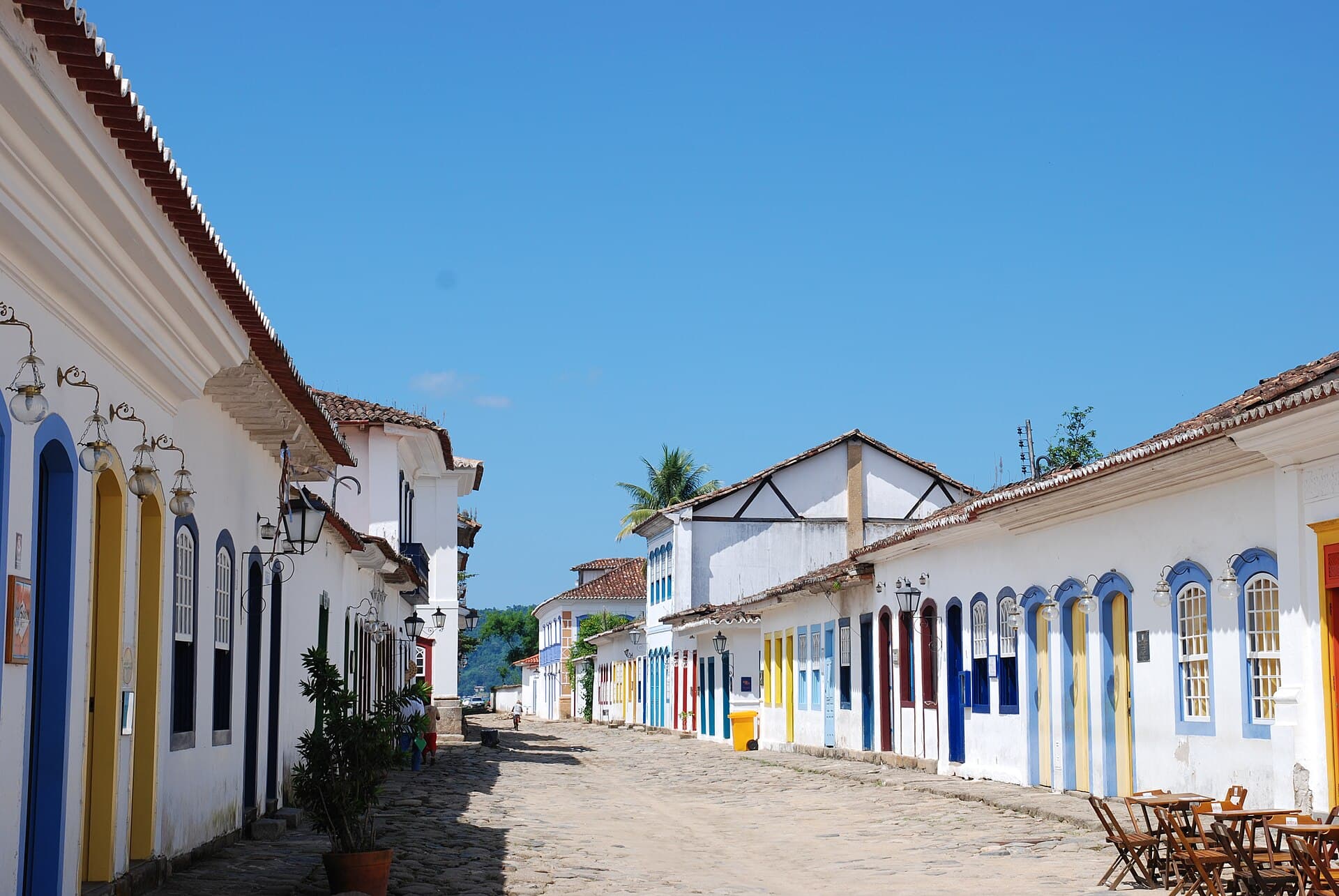
Paraty (officially Paraty, 43,000 inhabitants, 246 km south-west of Rio on the Costa Verde of Rio de Janeiro state) is one of Brazil's most beautiful colonial ensembles — founded in 1667 by Portuguese settlers at the mouth of the Rio Perequê, it became in the 18th century the main export port for gold extracted in the Minas Gerais region via the Estrada Real (royal road, 1,600 km of mules through the Atlantic Forest). In 2019, UNESCO inscribed it on the World Heritage list under the rare double cultural and natural criterion — a distinction shared by fewer than 40 sites worldwide, recognising both its exceptional baroque historic centre and biophysical environment.
The historic centre extends over about 1 km² between sea and river, with its irregular stone-paved streets (cobblestone) designed to resist high tides that deliberately submerge the streets once a month (brilliant colonial self-cleaning system). Buildings are white with doors and windows painted in vivid colours (cobalt blue, soil yellow, brick red, emerald green) — typical Luso-Brazilian baroque colour code. The four churches punctuate the centre: Santa Rita (1722, oldest, dedicated to free mulattos), Nossa Senhora dos Remédios (cathedral, white elite), Rosário (1725, slaves), Dores (1820, white elite). This religious racial segregation reflects the slave society that funded the gold port.
The Paraty bay extends over 65 km² between Joatinga peninsula and Trindade point — protected by the Serra do Mar that plunges directly into the ocean, it shelters 65 islands, about 300 beaches (most accessible only by boat), luxuriant mangroves and coral reefs close to coast. The essential excursion is the schooner outing (€50-80/day) visiting 3-4 beaches and islands with lunch on board, swimming and snorkelling.
The region around Paraty abounds in treasures. Trindade (28 km south, 30 min by car/bus), small beach village still preserved with sublime beaches (Cachadaço, Praia do Meio, Caixa d'Aço — turquoise waters, natural pools, hippie-surfer vibe). Caminho do Ouro (gold trail, 1 km from centre, 4-6h hike on original imperial royal road stones through primary Atlantic Forest, spectacular panoramas, waterfalls). Cachoeira do Tobogã (8 km, natural slide on smooth rock, refreshing bathing). Cachaça Route (Caminho da Cachaça) connecting 23 artisanal distilleries (Engenho d'Ouro, Coqueiro, Pedra Branca, Maria Izabel) — tasting, alembic visits, direct purchase (€10-30/bottle by ageing).
The Paraty gastronomy blends Portuguese colonial heritage, indigenous Tupiniquim roots and African contributions. Specialties: peixe na banana (fish cooked in banana leaf), camarão casadinho (paired shrimp), azul marinho (fish cooked with green banana, indigenous dish), cachaça pure or in caipirinha (Paraty produces some of Brazil's best cachaças thanks to climate and local cane). Centre's restaurants (Banana da Terra, Punto Divino, Casa do Fogo) serve refined cuisine in colonial settings.
What we love
- ✅UNESCO 2019 double criterion (cultural + natural): rare global distinction
- ✅Baroque historic centre founded in 1667, 100% pedestrian, cobblestone and white facades
- ✅65 km² bay with 65 islands and 300 beaches: unforgettable schooner outing
- ✅Trindade 30 min away: preserved hippie-surfer beaches (Cachadaço, Caixa d'Aço)
- ✅Cachaça Route: 23 artisanal distilleries to visit and taste
What to know
- ❌Heavy tropical rains December to March (200-300 mm/month)
- ❌Slippery and uncomfortable cobblestone historic centre (avoid heels)
- ❌Deliberate flooding once a month at high tides (waterproof shoes useful)
- ❌Schooner sometimes cancelled in rainy season (rough sea)
- ❌High-season accommodation (New Year, Carnival, FLIP) to book 6 months ahead
Situation
Où se situe Paraty ?
Ouvrir la carte en grand sur OpenStreetMap →Frequently asked questions
How many days for Paraty?+
How to get to Paraty from Rio?+
What to see in Paraty historic centre?+
Which pousada to choose in Paraty?+
What is the Paraty Cachaça Route?+
Our verdict
Paraty is the chic colonial alternative to Búzios — 2h30 further west on the Costa Verde, it offers a globally unique combination: UNESCO 2019 baroque historic centre founded in 1667 + protected 65 km² bay with 65 islands. Our recommendation: plan 3 nights in Paraty after 3-4 nights in Rio (complete 6-7 day formula). Choose a boutique pousada in historic centre (Pousada do Sandi, Pousada do Ouro, Pousada Pardieiro — €120-300/night) to live the immersive cobblestone experience, or at Pontal for sea views (Pousada Pardieiro Beach). Travel from May to September (dry season), ideally August-September (perfect climate, moderate crowds outside July) or April/October (shoulder season). Don't miss the schooner outing (€50-80/day), a Trindade excursion (preserved beaches, feet-in-water lunch), the Gold Trail (3-4h primary Atlantic Forest hike) and at least one artisanal cachaça tasting.
Nearby

"Janvier : été austral, fortes pluies tropicales, foule maximale, tarifs élevés."
Expert on Paraty · 1 contributions
 Africa & Americas Desk — Mowando·Editor