
Mowando

Climate & seasons

When to visit Pantanal wildlife?

By La rédaction · Updated 6/10/2026

The Editors
The Editorsauteur principal✓ Verified

"Janvier : saison humide, Pantanal inondé, lodges majoritairement fermés."

Expert on Pantanal wildlife · 1 contributions

The best periods

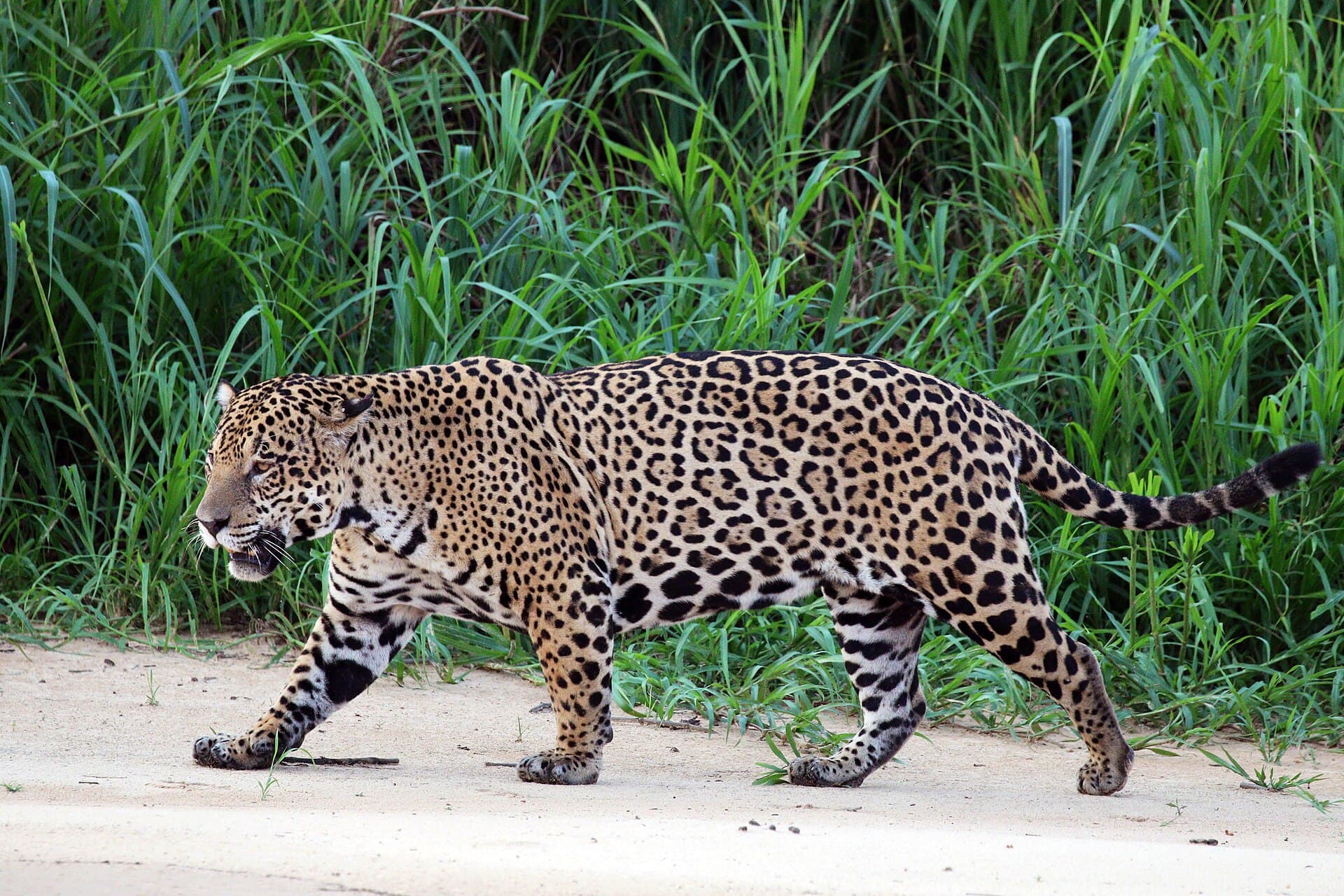
The best time to visit Pantanal wildlife is July to October (dry season, guaranteed jaguar observation). The most recommended months are Avril, Mai, Août, Septembre.

Jui, Aoû, Sep, Oct

Saison sèche — observation faunique optimale

  • Jaguars visibles tous les jours à Porto Jofre, 1-5 individus différents/jour garantis
  • Faune concentrée autour des derniers points d'eau
  • Transpantaneira praticable, lodges accessibles
  • Ciel dégagé, moins de moustiques
  • Pic touristique juillet-août, réserver 6 mois à l'avance
  • Tarifs lodges en hausse
  • Nuits fraîches juin-juillet (10-15 °C)
  • Paysage plus sec, moins photogénique qu'en saison humide
Mai, Juin, Nov

Inter-saison — début/fin de saison sèche

  • Tarifs en baisse, foule réduite
  • Faune encore visible (eaux baissent ou montent doucement)
  • Climat plus doux
  • Verdure éclatante mai-juin et novembre
  • Observation jaguars moins systématique
  • Routes parfois encore boueuses en mai
  • Quelques pluies résiduelles ou précoces
Déc, Jan, Fév, Mar, Avr

Saison humide — à éviter pour observation

  • Paysage spectaculaire : 80 % du Pantanal sous l'eau
  • Verdure éclatante, lumière douce
  • Pas de moustiques en altitude
  • Routes inondées : Transpantaneira impraticable, plupart des lodges fermés
  • Faune dispersée et moins visible
  • Plus de moustiques en plaine, humidité extrême

Month-by-month climate

Temperatures, rainfall and sunshine in Pantanal wildlife across the 12 months.

JanFévMarAvrMaiJuinJuiAoûSepOctNovDéc
Min23°23°23°21°18°14°12°14°17°20°22°22°
Max33°33°32°31°29°27°28°31°33°35°34°33°
Mer
Pluie230mm210mm180mm110mm50mm15mm10mm20mm45mm95mm140mm180mm
Soleil/j5h5h5.5h6.5h7h7.5h7.5h8h8h7.5h7h6h

Tourist crowds

Monthly attendance levels (0 = empty, 100 = saturated).

Jan
35
Fév
30
Mar
30
Avr
40
Mai
55
Jui
70
Jui
95
Aoû
90
Sep
80
Oct
70
Nov
55
Déc
40

Average flight prices

Average round-trip Paris → Pantanal wildlife by month.

Jan
$1,404
Fév
$1,512
Mar
$1,296
Avr
$1,080
Mai
$972
Jui
$1,188
Jui
$1,404
Aoû
$1,404
Sep
$1,296
Oct
$1,188
Nov
$1,188
Déc
$1,404

Frequently asked questions

When is the best time to see Pantanal jaguars?+
July to October (dry season, low waters) — it's the only recommended period to observe jaguars. The Porto Jofre region (Rio Cuiabá, end of Transpantaneira) guarantees on average 1-5 different jaguars/day during this period. August-September: absolute observation peak (wildlife concentrated around last water holes, very active jaguars). July: Brazilian tourist peak (school holidays), heavy crowds but excellent conditions. October: end of dry season, still excellent, declining crowds. Wet season (December-April): 80% of Pantanal underwater, wildlife dispersed over vast areas, most lodges closed, jaguars much harder to observe. Our recommendation: September-October for best observation/crowd/rate balance.
How many days for the Pantanal?+
Minimum 3 nights/4 days for decent experience (including domestic flight: D1 Rio-Cuiabá + lodge transfer, D2-D3 activities, D4 return). Ideal 4-5 nights/5-6 days itinerary: allows multiple jaguar boat safari sessions (essential — luck doesn't always smile in one day), walking hikes, horse safari, night observation. 5 nights allow combining 2 different lodges (1 more ornithological like Araras Eco Lodge, 1 jaguar-specialised at Porto Jofre). 1 week for enthusiasts (North + South Pantanal combination). Classic combination: Pantanal (4 nights) + Iguazu (2 nights) for 7-day complete nature trip (Iguazu is 1h30 flight from Cuiabá).
North or South Pantanal: which to choose for jaguars?+
North Pantanal (Mato Grosso, Cuiabá base)jaguar specialty. The Porto Jofre region (end of Transpantaneira) is world-famous for wild jaguar observation density — 1-5 different individuals/day guaranteed in dry season from boats traversing Rio Cuiabá and tributaries. Specialised lodges: Jaguar Ecological Reserve (€500-700/night full board with daily jaguar boat safari included), Pousada Rio Mutum (€300-450/night), Pouso Alegre (€350-500/night, giant anteater reference), Araras Eco Lodge (€300-400/night, ornithology). South Pantanal (Mato Grosso do Sul, Campo Grande base) — focus on global ecotourism and traditional fazendas, possible jaguar observation but less systematic than Porto Jofre. Recommended for first ecotourism trip or travellers seeking fazenda authenticity. Lodges: Caiman (world ecotourism reference since 1985, €400-600/night), Refúgio Ecológico Caiman (€600-800/night high-end), Fazenda San Francisco (€200-350/night). Conclusion: for jaguars, undoubtedly North Pantanal at Porto Jofre.
How to get to Pantanal and trip cost?+
Pantanal is accessible exclusively by domestic flight from rest of Brazil. North Pantanal: flight to Cuiabá (CGB) from Rio (2h30, €150-300 return, Latam/Gol/Azul), São Paulo (2h, €130-280), Brasília (1h30, €100-220). From Cuiabá, private transfer included in lodges (3-6h drive — Porto Jofre is 250 km via Transpantaneira, 5-6h drive). South Pantanal: flight to Campo Grande (CGR) from Rio (2h30, €150-300), São Paulo (1h45, €130-280). From Campo Grande, private transfer to lodge (2-4h). Total budget for 5 days/4 nights in Pantanal: domestic flight €150-300, 3-4 nights premium lodge €900-2,000, special jaguar boat safari excursions €200-400 (optional, often included), meals (generally included full board). Total: €1,500-3,000/person all-inclusive. For luxury experience: Refúgio Ecológico Caiman (€600-800/night) or Jaguar Ecological Reserve premium (€700/night with included jaguar safaris) — up to €4,000-5,000/person for 5 days.
What gear to bring to Pantanal?+
Essential list for Pantanal stay. Clothes: long-sleeve t-shirts and light pants neutral colours (khaki, beige, green — no bright colours that scare wildlife), fleece and beanie for nights/morning safaris (June-July 10-15 °C), shorts for day, mandatory wide-brim hat, polarised sunglasses (essential on water to observe wildlife), swimsuit (lodge pools, rare swimming), flip-flops or sandals for lodge, closed walking shoes for hikes (wet terrain, small predators). Protections: SPF 50 sunscreen (extreme UV), DEET 30% mosquito repellent (essential — evening, hikes), after-sun balm, eye drops if light-sensitive, wet wipes. Observation gear: binoculars (essential — 8x42 or 10x42 recommended, without them you'll miss half the wildlife), camera with telephoto (300-500 mm minimum for jaguars from boat, ideal for wildlife photography), rechargeable batteries and charger (lodges have limited electricity). Medical: mandatory yellow fever vaccination certificate, antimalarial prophylaxis if remote areas, personal medications, antidiarrheals, disinfectant. Practical: passport, copies, BRL cash for tips (€5-10/day for guides, expected), Brazil eSIM (Manaus and Cuiabá have network, lodges Wi-Fi limited or absent — welcome disconnection).

Our verdict

The Pantanal is probably South America's best wildlife observation destination and one of the world's best for big fauna — wild jaguar observation density unmatched (1-5 individuals/day guaranteed at Porto Jofre). Our recommendation: choose North Pantanal via Cuiabá for jaguar experience (Porto Jofre stay, 3-4 nights at specialised lodge Jaguar Ecological Reserve or Pouso Alegre, €500-700/day all-inclusive with jaguar boat safaris included). Optimal period: July to October (dry season, maximum observation). Avoid December-April (wet season). Book 3-6 months ahead for premium lodges. Budget €1,500-3,000/person for 5 days all-inclusive. Yellow fever vaccine mandatory (10 days before departure). Combine with Iguazu (1h30 flight from Cuiabá) for a 100% nature 6-7 day trip. The Pantanal is physically less demanding than the Amazon but requires equal anticipation.

Similar destinations

Mowando Letter

Once a month: the right destinations for the right season + the best booking windows.

No spam. One-click unsubscribe. Your data is never shared.