ville
Manaus
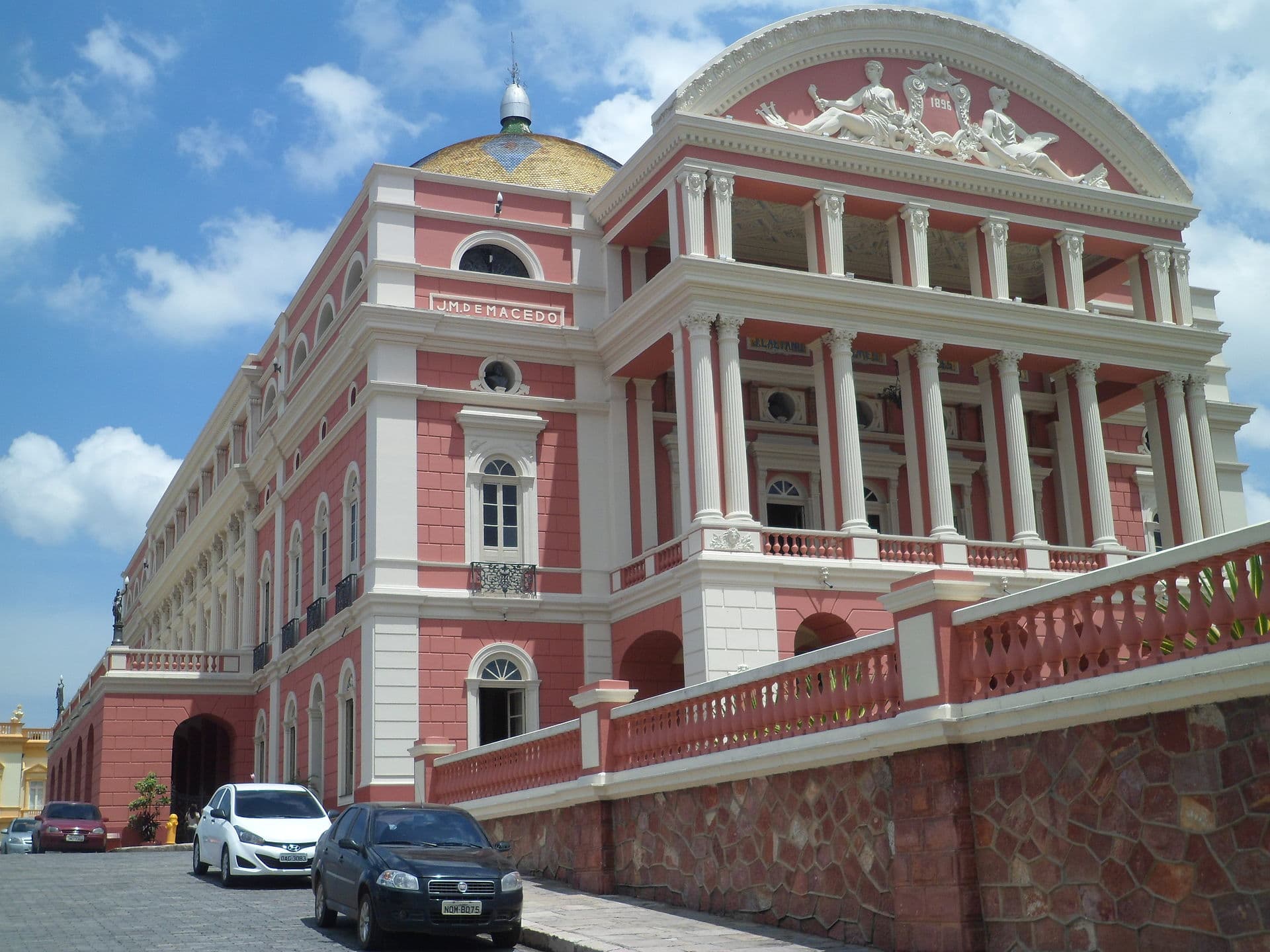
The __gateway__ to the Brazilian Amazon — Theatro Amazonas (1896, Belle Époque opera house inherited from the rubber boom), Encontro das Águas (meeting of Rio Negro black waters and Rio Solimões brown waters over 10 km), Rio Negro eco-lodges and the world's largest rainforest to explore.
Manaus is the capital and gateway of the Brazilian Amazon — 2.2 million inhabitants, capital of Amazonas state, at the heart of the Amazon basin 1,500 km from the Amazon mouth. Founded in 1669 by Jesuits as Fort São José da Barra do Rio Negro, it was transformed by the rubber boom in the late 19th century (1879-1912) — when Brazil was the world's sole producer of hevea brasiliensis (rubber tree), before seeds were surreptitiously stolen by Henry Wickham in 1876 and planted in Malaysia and Sri Lanka, ending the Brazilian monopoly.
At its peak around 1900-1912, Manaus was one of the world's richest cities — nicknamed "Paris of the Tropics", it had South America's first electric grid (before Rio and São Paulo), running water, telephone, tramway, opera houses and Belle Époque palaces built by European architects with imported materials. The Theatro Amazonas, opera house inaugurated December 31, 1896, is the most spectacular heritage of this era — Carrara marble (Italy), Murano chandeliers (Italy), French maple and mahogany parquet (Provence), coloured mosaic roof (60,000 glazed tiles from Lorraine representing the Brazilian flag), pink-painted façade. Guided tour €15, daily opening, excellent opera programming with annual Festival Amazonas de Ópera in April-May (tickets €20-60).
The rubber boom collapsed in 1912 (Malaysian plantations had become more efficient) and Manaus entered a long recession until its revival in the 1960s-70s thanks to the Zona Franca de Manaus (industrial free zone created 1967 to stimulate Amazon development). Today Manaus is an industrial centre (electronics, motorcycles), but above all the logistical base for Amazon ecotourism — departure point for Rio Negro lodges (1-3h fast boat), river cruises and excursions to indigenous peoples.
The city itself has only limited tourist interest__ (degraded urbanism beyond a few historic buildings, stifling climate, variable safety by neighbourhood). 1-2 days suffice to see Theatro Amazonas, Mercado Municipal Adolpho Lisboa (1882, Belle Époque market), Palacio Rio Negro (1903, rubber baron residence, free), Encontro das Águas (3h boat excursion €30-50), and Ponta Negra (urban Rio Negro beach with restaurants, evening vibe).
Real Amazon activities happen from eco-lodges located 1-3h boat ride from Manaus, mainly on the Rio Negro (acidic black waters, few mosquitoes) or Rio Juma (white waters). Typical programmes: 3-5 nights full board (€300-500/night/person) with daily activities (jungle hike, pirogue in igarapés, pink dolphin observation, piranha fishing, night excursion, caboclo community visit). Recommended lodges: Anavilhanas Jungle Lodge (Novo Airão, world's largest archipelago, €300-450/night), Juma Amazon Lodge (Rio Juma, iconic floating lodge, €350-500/night), Mirante do Gavião (Novo Airão, contemporary design, pink dolphins, €400-600/night).
What we love
- ✅Theatro Amazonas (1896): Belle Époque opera house inherited from rubber boom, architectural jewel
- ✅Encontro das Águas: meeting of Rio Negro black waters and Rio Solimões brown waters over 10 km
- ✅Gateway to Rio Negro lodges: 1-3h fast boat, ultimate ecotourism experience
- ✅Numerous domestic flights from Rio, São Paulo, Brasília (3-4h, €250-400 return)
- ✅Unique Amazonian cuisine: tacacá, pato no tucupi, pirarucu, exotic fruits (açaí, cupuaçu)
What to know
- ❌City with no major urban interest: 1-2 days suffice, degraded urbanism outside historic centre
- ❌Demanding tropical climate: 30-35 °C with 80-90% humidity year-round, sometimes exhausting
- ❌Health risk: mandatory yellow fever vaccine (10 days before departure), endemic dengue
- ❌Variable safety: vigilance in some neighbourhoods at night
- ❌High cost of domestic flights (Rio-Manaus €250-400 return) and premium lodges (€300-500/night)
Situation
Où se situe Manaus ?
Ouvrir la carte en grand sur OpenStreetMap →Frequently asked questions
How many days in Manaus?+
Which lodge to choose on Rio Negro?+
Need vaccines for Manaus and Amazon?+
How to get to Manaus from Brazil?+
What to taste in Manaus, Amazonian cuisine side?+
Our verdict
Manaus is the unmissable gateway to the Brazilian Amazon — useful and necessary but without major urban interest in itself. Our recommendation: plan 1-2 nights in Manaus for Theatro Amazonas, Encontro das Águas and Amazonian gastronomy, then continue with 3-5 nights in a Rio Negro eco-lodge (Anavilhanas, Juma, Mirante do Gavião — €300-500/night full board with transfers, meals and guided excursions). Travel from July to November (dry season, low waters, accessible trails) for classic hiking and wildlife observation experience, or from February to May (high water season, flooded forest) for river cruises and photography. Yellow fever vaccine mandatory (10 days before departure), DEET 30% mosquito repellent essential, travel insurance with repatriation strongly recommended. Combine Manaus + lodge (5-6 nights total) with Rio (4 nights) and Iguazu (2 nights) for a complete 12-14 day Brazilian trip. The Brazilian Amazon isn't a stay: it's an initiation to the world's largest rainforest massif.
Nearby

"Janvier : saison des hautes eaux, pluies abondantes, croisières fluviales possibles."
Expert on Manaus · 1 contributions
 Africa & Americas Desk — Mowando·Editor