Region
Med Coast
The Turkish Riviera: 500 km of beaches, coves and seaside resorts between the Mediterranean Sea and the Taurus range, dotted with some of the world's best-preserved Lycian and Roman ruins.
The Turkish Mediterranean Coast, nicknamed the Turkish Riviera (Türk Rivierası) or Turquoise Coast, stretches over 500 km from the Gulf of Antalya in the west to the Syrian border in the east. This region concentrates the country's most beautiful beaches, Turkey's most developed seaside resorts and remarkable Lycian and Roman heritage. Bordered to the north by the Taurus range (Toros Dağları, up to 3,070 m) which plunges directly into the sea at some places, it offers spectacular landscapes combining pine-forested mountains, rocky coves and golden sand beaches.
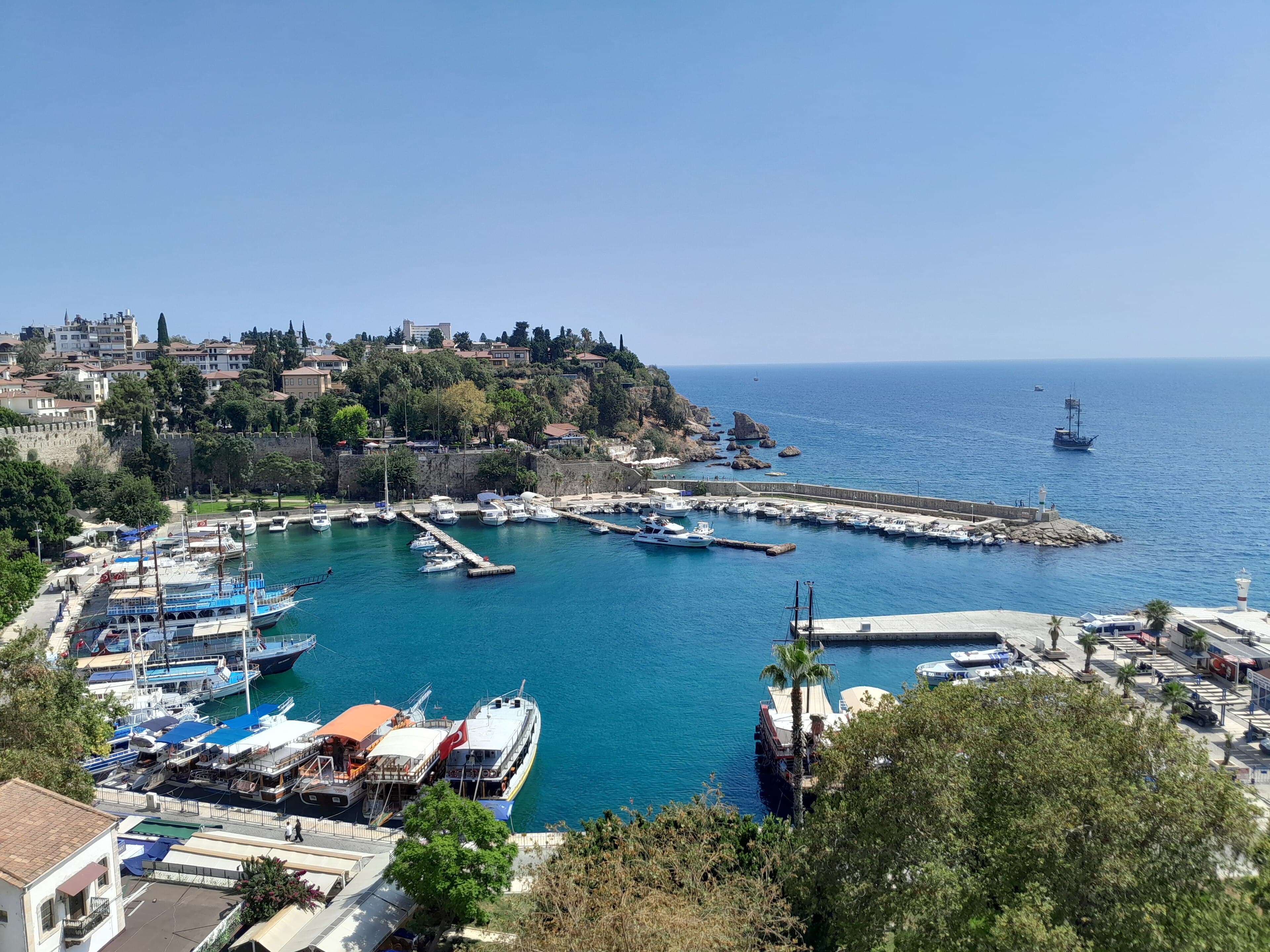
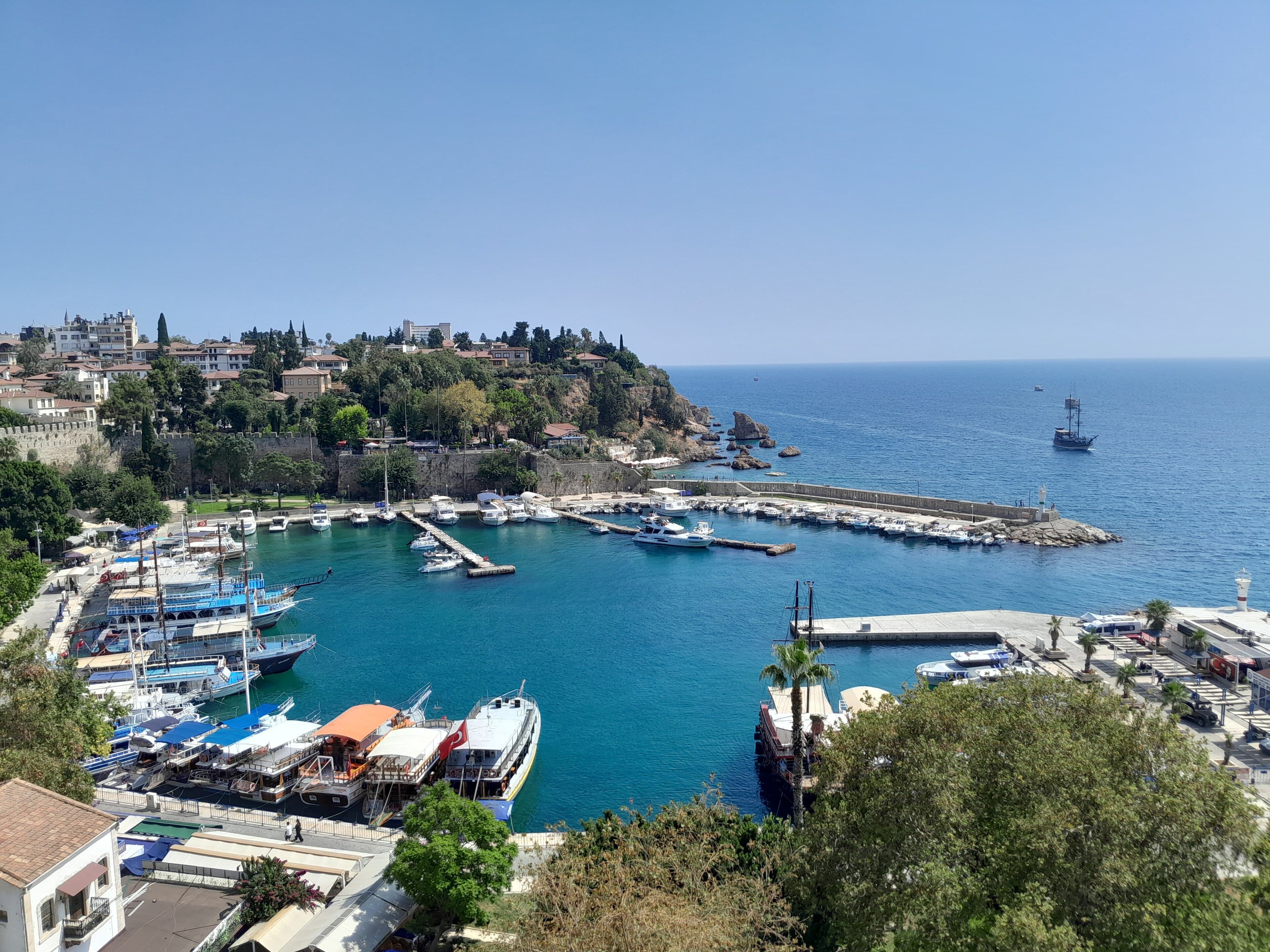
Antalya, the regional capital, is Turkey's eighth city (2.5 million inhabitants with suburbs) and the main tourist gateway of the south. Its old town (Kaleiçi), enclosed within Roman and Seljuk walls, is a maze of paved alleys, wooden Ottoman houses, monumental gates (Hadrian's Gate) and minarets, overlooking a Roman port transformed into a marina. The city then extends onto the plateau dominating the sea from 30-40 m cliffs, and houses two major urban beaches: Konyaaltı (to the west, sand and pebbles, 5 km, mountain backdrop) and Lara (to the east, fine sand, resort hotels). The Düden Waterfalls (40 m high, dropping directly into the sea) add an exceptional natural attraction.
East of Antalya, Side is an ancient Greek city (7th c. BC) that preserves an impressive ancient theatre, a temple of Apollo by the sea (the most photographed image in the region at sunset) and a Byzantine enclosure wall. The modern town has become a chic and family-friendly seaside resort. Further east still, Alanya and its Seljuk fortress perched on a rocky spur. West of Antalya, Kemer is a modern seaside resort nestled in the Taurus pine forests, starting point for hikes on the Lycian Way (Likya Yolu, 540 km of marked trail between Fethiye and Antalya — one of the world's most beautiful trails according to the Sunday Times). Olympos is a hippie village set among Lycian ruins, with its famous Chimera (Yanartaş, eternal flames bursting from the rocks since antiquity). Phaselis deploys its ancient ruins on three bays with turquoise waters inaccessible other than on foot.
Explore Med Coast
Spots in the region
Situation
Où se situe Med Coast ?
Ouvrir la carte en grand sur OpenStreetMap →Frequently asked questions
How many days do you need to visit the Mediterranean Coast?+
Antalya or Side: which to choose?+
What to see near Antalya as an excursion?+
What is the Chimera of Olympos (Yanartaş)?+
How to get to the Mediterranean Coast from Istanbul?+
Should you choose an all-inclusive hotel?+
What is the Lycian Way (Likya Yolu)?+
Our verdict
The Turkish Mediterranean Coast is the country's prime beach destination — 500 km of magnificent beaches, top-tier hotel infrastructure, major ancient sites and the Taurus range as backdrop. One week is the ideal format for a pure beach stay; 10-14 days allow combining beaches and culture (ancient sites of Aspendos, Termessos, Side, Phaselis; Antalya old town; Düden Waterfalls; Lycian Way hiking). Avoid July-August if seeking authenticity — Side, Kemer, Antalya's massive touristification can be disconcerting. Prefer May-June or September-October to combine warm sea, manageable crowds and reasonable prices. The region combines perfectly with Istanbul (3 days) and Cappadocia (3 days) for a classic 12-14 day trip.