Region
Northern Thailand
From Bangkok's glittering skyline to Chiang Mai's ancient stupas, Northern Thailand reveals the deepest soul of the Land of Smiles.
Northern Thailand covers the cultural and historical face of the kingdom: at one end, the megacity of Bangkok — a city of extremes where glass skyscrapers rub shoulders with millennium-old temples and floating markets — and at the other, Chiang Mai, the northern capital, a city of some 300 temples ringed by forested mountains and hill-tribe villages.
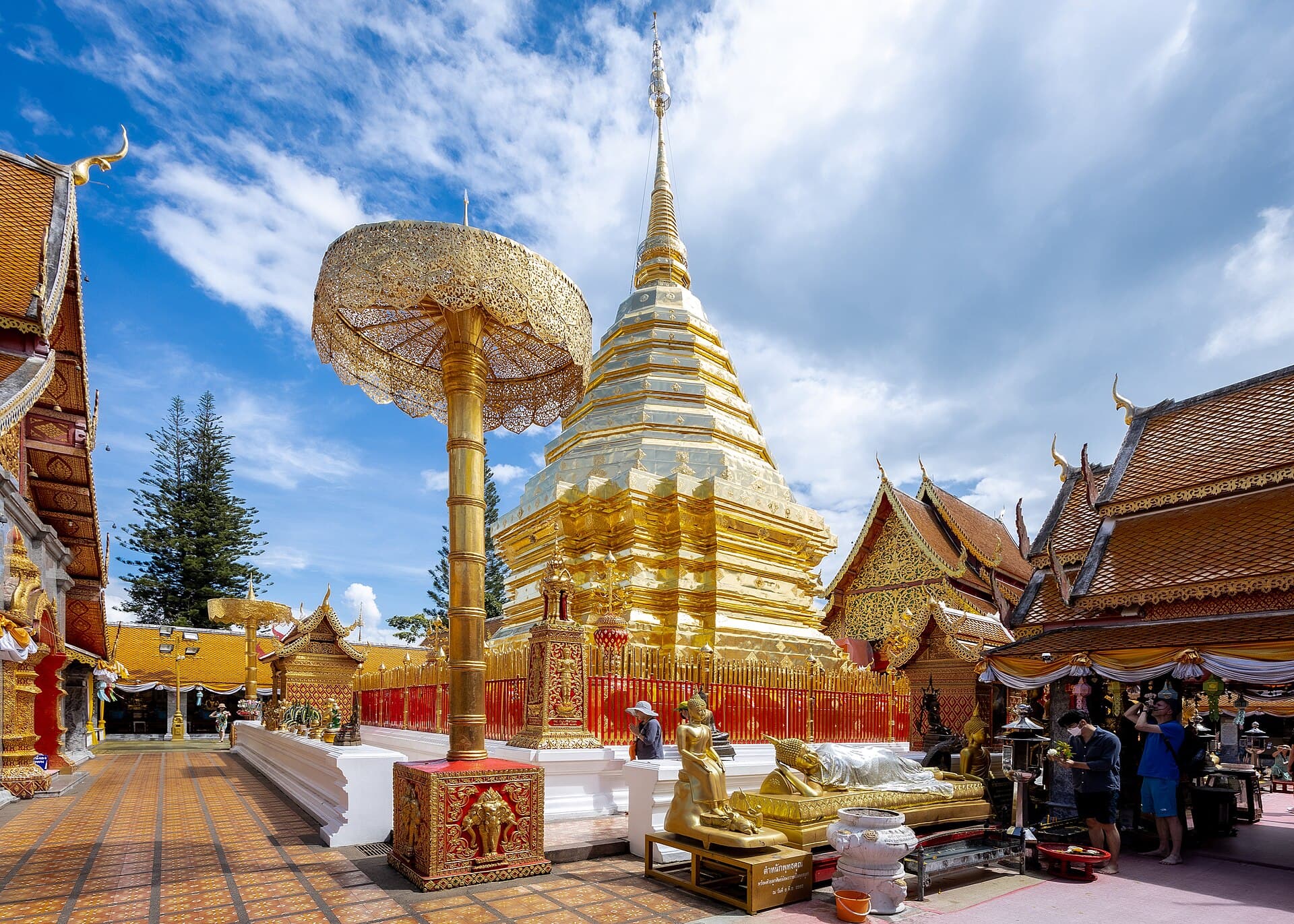
Between these two poles, the region concentrates a cultural richness that few countries pack into so small an area. Wat Pho and Wat Phra Kaew in Bangkok, Doi Suthep crowning the hills above Chiang Mai, the UNESCO-listed ruins of Ayutthaya — each site adds a chapter to the long story of the Kingdom of Siam. The food, the night markets, the cooking schools, the meditation retreats and the forest treks make Northern Thailand as rewarding for the cultural traveller as for the outdoor enthusiast.
This is also where most first-time visitors begin their love affair with the country: Bangkok offers the dazzling, sometimes overwhelming first impression, and Chiang Mai delivers the gentler, slower follow-up. Many travellers arrive intending to stay three days in each and quietly extend to a week, drawn in by the rhythm of a region that still treats hospitality as a craft.
Situation
Où se situe Northern Thailand ?
Ouvrir la carte en grand sur OpenStreetMap →Frequently asked questions
How many days do I need in Northern Thailand?+
Chiang Mai vs Bangkok — which should I prioritise?+
When is the best time to visit Chiang Mai?+
How do I get from Bangkok to Chiang Mai?+
Can I visit Ayutthaya from Bangkok in a day?+
Are treks in Chiang Mai suitable for all fitness levels?+
Do I need to cover up to visit temples in Northern Thailand?+
What's the best way to get around Bangkok?+
Our verdict
Northern Thailand is the beating cultural heart of the kingdom. The complementarity between the urban frenzy of Bangkok and the mountain serenity of Chiang Mai traces the ideal itinerary for both first-timers and seasoned returners. Two to three weeks are enough to grasp the essence of the region, provided you resist the urge to see everything — better to linger over a night market or a meditation temple than to tick off sights in a rush.
Our take: build your trip around mornings (temples, markets, treks) and evenings (street food, rooftops, river boats), and let the heat of midday be an excuse for a long lunch and a slow massage. Northern Thailand rewards depth, not breadth. Come between November and February for the best weather window, book Yi Peng accommodation in Chiang Mai a full season ahead, and remember that the most lasting memories rarely come from the must-see list.