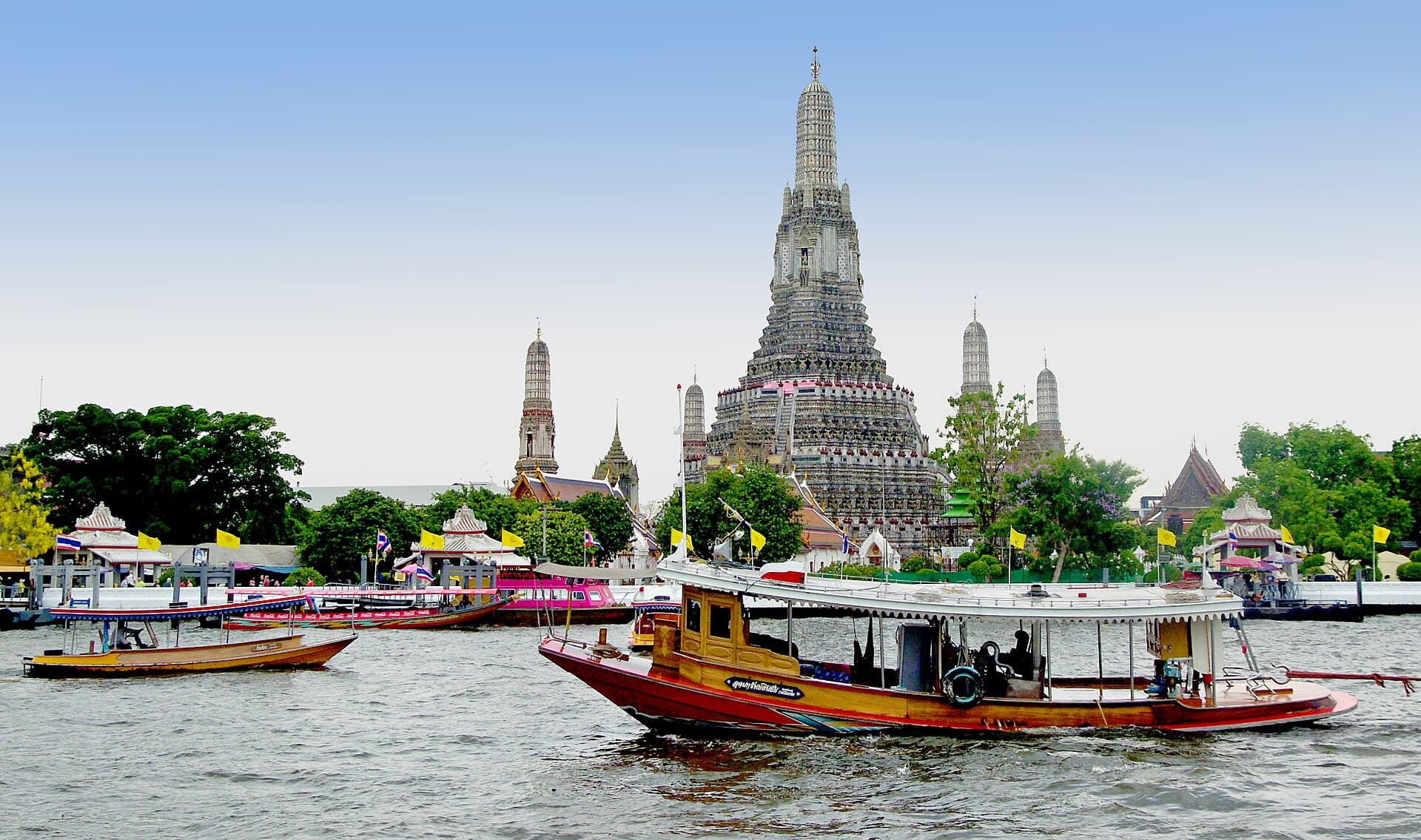
Thai culture is profoundly shaped by Theravada Buddhism, practised by more than 94% of the population. The country's 40,000-odd temples (known as wats) are far more than tourist sights: they are living community spaces where saffron-robed monks begin their daily alms round at dawn and where lay devotees lay down lotus offerings and incense throughout the day. Begin to understand Thai Buddhism, and you begin to understand Thailand itself.
The concept of sanuk — taking pleasure in whatever one is doing — is a cardinal Thai value. It accounts for the apparent lightness with which Thais handle setbacks, their sense of humour and their famously persistent smile. The principle of kreng jai (the wish not to inconvenience or hurt others) shapes much of social interaction: Thais avoid direct confrontation and will often nod in apparent agreement rather than openly contradict. For the visitor, the lesson is simple — requests delivered with a smile and a polite turn of phrase consistently yield better results than blunt directness.
The monarchy occupies a sacred place in Thai society. Lèse-majesté laws are strictly enforced, and any criticism of the royal family — however offhand — can lead to severe legal consequences. Portraits of the king are ubiquitous in public spaces, on banknotes and in hotel lobbies. Visitors are expected to show appropriate respect when these representations are present.
Temple dress codes: shoulders and knees must be covered to enter any Buddhist place of worship. Sarongs and loaner T-shirts are typically available at the entrance of the major temples (Wat Pho and Wat Phra Kaew in Bangkok, Doi Suthep in Chiang Mai). Remove your shoes before entering any room containing a Buddha image — this is an absolute rule. Never point your feet at a statue or a monk, and women should not touch a monk nor hand an object directly to one.
The Thai festival calendar is rich. Songkran (Thai New Year, mid-April) sees entire streets transformed into joyous water battles; Loi Krathong (November, full-moon night) sees thousands of small flower-and-candle rafts (krathongs) set adrift on the rivers and canals; Yi Peng in Chiang Mai, on the same night, sends paper lanterns rising into the sky. These festivals are sights of rare beauty, and reason enough on their own to time a trip.
Read also
- Bangkok and the North — temples, markets and Thai culture — From the boiling capital to Chiang Mai's misty summits, the cultural heart of Thailand.
- Southern Thailand — beaches, islands and the Andaman Sea — Phuket, Krabi, Koh Phi Phi: the kingdom's most iconic beaches and islands.
- Bangkok, the gilded megacity — Buddhist temples, street food and nightlife in the Thai capital.
- Phuket, the great southern island — Andaman beaches, nightlife and excursions to the Phi Phi Islands.