
Expert on Spain · 1 contributions
 Mediterranean Desk — Mowando·Editor
- · Couples looking for culture, gastronomy and sea in one trip
- · Experienced travellers covering classic Spain once and for all
- · Friend groups comfortable with trains and shifting pace
April, May, June, September, October
The right call at 15 days: 3 nights Barcelona, 3 nights Madrid, 3 nights Seville, 2 nights Granada, 2 nights Palma. Five stops, zero rushed transfers — the AVE handles the long distances, the domestic Seville–Granada–Palma hop closes the loop in under 1h.
Day by day
- 1Day 1
Arrival in Barcelona — first evening in El Born
Land at El Prat (BCN). Aerobus from Terminal 1 or 2 to Plaça Catalunya (35 min, €6.75) or R2 Nord train (45 min, €4.60, slower but cheaper). First reflex: drop bags and walk — no monuments tonight.
The El Born neighbourhood is the best Barcelona base: 3-4-star hotels at €90-120/night, walking distance to the Gothic Quarter, Barceloneta and Eixample. Dinner of patatas bravas and pimientos de padrón at a tapas bar on calle del Parlament. First glass of vermouth or cava — the Barcelona ritual starts on Day 1 evening.
Tips- · T-Casual 10-trip card at €12.15: covers metro, bus and R2 train — far cheaper than single tickets at €2.55.
- · Avoid hotels on Las Ramblas: noisy, overpriced, and the street is notorious for pickpockets.
- 2Day 2
Barcelona: Sagrada Família and Eixample modernism
Sagrada Família reservation is mandatory — queues without a ticket exceed 2h in high season. Skip-the-line + tower access: €32-35, 9am slot recommended. The Nativity facade, the hyperboloid column forests, the nave stained glass — allow 2h on site.
Modernist afternoon in the Eixample: Casa Batlló (€35, reservation recommended), or the facade of Casa Milà La Pedrera (€25) two streets away. Lunch at Cervecería Catalana (tapas at noon, unavoidable but fast queue, €18-22/person). Sunset aperitif at the Bunkers del Carmel — panoramic view over Barcelona from the old anti-aircraft battery, free, 30 min by bus.
Tips- · Sagrada Família tower: the Evangelists tower overlooks the Eixample; the Nativity tower faces the sea — choose based on the view you want.
- · Casa Batlló runs a night visit (Magic Nights, €39) with video mapping on the facade — spectacular but pricey.
- 3Day 3
Barcelona: Gothic Quarter, Barceloneta and Montjuïc
Morning in the Barri Gòtic: cathedral (free in the morning, €7 afternoon), Plaça Reial, medieval lanes. The Museu Picasso (€12, reservation recommended) occupies Gothic palaces in El Born — collection of early works and Las Meninas (45 reinterpretations).
Lunch at Mercat de la Boqueria (grilled sardines, jamón ibérico, fresh fruit) or in a Barceloneta restaurant for a fideuà. Afternoon: cable car or funicular up to Montjuïc — Laribal gardens, Fundació Joan Miró (€12), and the fortress for harbour views. Final Barcelona evening at a wine bar in the Gràcia neighbourhood.
Tips- · La Boqueria: avoid lunch between noon and 2pm — inflated prices and peak tourist crowds. Go at 10am for the atmosphere and fresh produce.
- · The Montjuïc funicular is covered by the T-Casual — cheaper than the cable car (€11.90 round-trip).
- 4Day 4
AVE Barcelona → Madrid, Paseo del Arte afternoon
AVE Barcelona Sants → Madrid Atocha, 2h30, €40-80 booked 2-3 weeks ahead. Recommended departure 8-9am to arrive in Madrid late morning. Drop bags at the hotel — recommended neighbourhood: Barrio de las Letras (between the Prado and Reina Sofía) or Malasaña.
Afternoon on the Paseo del Arte: the Prado Museum (€15, reservation recommended, Velázquez, Goya, El Greco — allow 2h30) or the Reina Sofía Museum (€12, Picasso's Guernica, Spanish surrealists — 2h). An arrival afternoon is ideal for one of the two. Dinner in the streets around Plaza de Santa Ana — pintxos, croquetas, jamón 5J.
Tips- · Buy the AVE on Renfe.com or Trainline — Promo and Promo+ tickets at €40-55 sell out fast, especially on weekdays.
- · The Madrid Public Transport Card at €10.30 (zones A+B1) covers metro, bus and Cercanías — valid 30 days.
- 5Day 5
Madrid: Prado or Reina Sofía, Retiro and Malasaña
The museum not visited the previous day in the morning. Prado opens at 10am, Reina Sofía also at 10am (free on Mondays after 7pm and weekends after 1:30pm — arrive 30 min early for the queue). Devote the whole morning: the major works deserve the time.
Lunch at the Mercado de San Miguel (quality tapas, €12-20) or in a bodega in the La Latina neighbourhood. Afternoon in Parque del Retiro (free, Palacio de Cristal, rowing lake). Evening exploring Malasaña — vermouth bars, vinyl record shops, alternative terraces. Late dinner at 10pm — Madrid dines after 9:30pm.
Tips- · Reina Sofía is free on Monday evenings after 7pm — ideal for seeing Guernica queue-free.
- · Book tables in Madrid: popular restaurants fill up after 9pm at weekends — use TheFork or book directly 2-3 days ahead.
- 6Day 6
Madrid: Royal Palace, Plaza Mayor and flamenco evening
Morning at the Palacio Real (€12, reserve on the official site — queue without a ticket reaches 1h in summer): 3,418 rooms, 50 open to visitors, the Throne Room and royal apartments. The baroque facade overlooks the Sabatini Gardens (free, Sierra de Guadarrama views on clear days).
Plaza Mayor next: Spain's largest square (17th century), homogeneous red-brick architecture, arcaded chocolaterías. Lunch at Sobrino de Botín (the world's oldest restaurant according to Guinness, founded 1725 — oak-oven roast suckling pig, €25-35, reservation essential). Evening flamenco show at Corral de la Morería or Cardamomo (€35-50, including 1 drink — book 2-4 days ahead).
Tips- · The Palacio Real is free for EU citizens in the late afternoon (4-6pm in winter, 6-8pm in summer) — same queue but fully free.
- · Madrid flamenco: prefer tablaos in the historic centre over shows in Lavapiés — more consistent quality and more authentic sound.
- 7Day 7
Toledo day trip from Madrid
Toledo is 30 min from Madrid by AVE (€13-18) from Atocha — the medieval city of three cultures (Christian, Jewish, Muslim) rises on its promontory above the Tagus. Arrive around 10am after a 9:15am departure.
Essential walking circuit: Toledo Cathedral (€10, the sacristy holds El Greco and Goya), the Cristo de la Luz mosque-synagogue (€3), the Jewish quarter, Monastery of San Juan de los Reyes (€2.80). Lunch of carcamusas (local pork stew, €12-15) in an old-town bodega. Afternoon: viewpoint from the mirador del Valle (10 min by taxi or 40 min on foot from centre). Return to Madrid in the evening, light dinner before tomorrow's AVE to Seville.
Tips- · Toledo on weekdays: the city is noticeably less crowded Tuesday-Wednesday. On weekends, groups from Madrid start arriving by 11am.
- · The AVE train makes a comfortable same-day return trip. Buy both A/R tickets together on Renfe.com for the best fares.
- 8Day 8
AVE Madrid → Seville, arrival in Andalusia
AVE Madrid Atocha → Sevilla Santa Justa, 2h30, €45-90 depending on time slot and advance booking. Recommended departure 9-10am to enjoy the Seville afternoon. Recommended hotel: Santa Cruz neighbourhood (most central, 5 min walk from the cathedral) or Triana (more local, on the other bank of the Guadalquivir).
Arrive around noon-1pm. After a lunch of salmorejo and jamón in a city-centre bodega, first steps in the Santa Cruz neighbourhood — white alleyways, orange trees in bloom, hidden patios. Sunset aperitif on the terrace at Plaza de España (1929, monumental azulejo decor, free entry). Seville is first discovered on foot — the Andalusian heat sets the rhythm: siesta, walk, tapas.
Tips- · Book the AVE Madrid → Seville at least 2 weeks ahead: Promo tickets on this route sell out fast.
- · Seville in April-May: Feria de Abril and Semana Santa push hotel prices to 2-3× normal — book 3-4 months ahead or budget accordingly.
- 9Day 9
Seville: Cathedral, Alcázar and Giralda
The non-negotiable Seville day. Cathedral + Giralda (booking mandatory, €11, opens at 11am): the world's largest Gothic cathedral, Columbus's tomb, the ramp climb up the Giralda (no stairs) for views over the tile rooftops and Alcázar.
Alcázar (booking mandatory, €13.50, time slots sell out fast): 14th-century Mudéjar palace, stucco and mosaic decor rivalling Granada, the rear gardens are an oasis. Allow 2h30 between cathedral and Alcázar.
Lunch at the Mercado de Triana (local side, market food, €10-15). Evening in the Macarena neighbourhood — authentic Sevillian bars, spontaneous flamenco in the tascas.
Tips- · Alcázar: morning slots (9:30-11am) offer the best light in the courtyards and gardens — book 5-7 days ahead in high season.
- · Seville Cathedral is free on Mondays from 2:30-6pm for EU residents — significant queue but fully free.
- 10Day 10
Free day in Seville: Triana and panoramic views
A day without a fixed programme. Morning: cross the Triana bridge to explore the other bank of the Guadalquivir — the Triana neighbourhood, birthplace of flamenco, ceramics and Seville's gypsy quarter. Visit the Ceramics Museum at Castillo San Jorge (€4) or simply stroll through the tile workshops on calle Alfarería.
Lunch of tortillita de camarones (prawn fritters, local speciality) at a popular Triana bar. Afternoon at the Metropol Parasol (Las Setas, €5): the world's largest wooden structure, panoramic terrace 17m above the old town. Farewell dinner in Seville at a Judería restaurant — last glass of fino on the terrace before departing for Córdoba tomorrow.
Tips- · Metropol Parasol at sunset: arrive 30 min before closing for crowd-free photos with the last light on the cathedral.
- · Triana is the best neighbourhood for authentic Sevillian handmade ceramics — prices are 30-40% lower than in the touristy Santa Cruz quarter.
- 11Day 11
Córdoba stopover: Mezquita + AVE to Granada
Train Seville → Córdoba (45 min, €15-20) in the morning, then Córdoba → Granada (2h, €20-30) early afternoon. Córdoba works well as a 4-5h strategic stopover.
The single priority: the Mezquita-Cathedral (€13, reservation on the official site — the forest of 856 bicolour jasper and granite columns remains one of Europe's most stunning architectural spaces). Visit early morning (9am opening), before the heat and tour groups. Lunch of berenjenas con miel (fried aubergine with cane honey) and salmorejo cordobés at a bar in the Judería neighbourhood, Andalusia's narrowest lanes. Afternoon: train to Granada. Dinner with free tapas at a Granada city-centre bar — a tradition unique in Spain.
Tips- · The Mezquita is free from 8:30-9:30am for morning prayer — free entry but respectful attire required, no guided tours at this time.
- · Granada: in many bars, each drink comes with a free tapa — head to streets Navas or Elvira for this tradition.
- 12Day 12
Granada: the Alhambra (morning) and the Albaicín (evening)
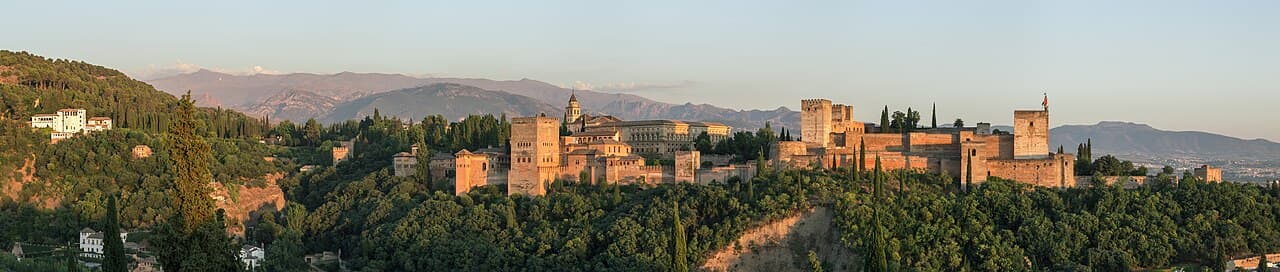
The most anticipated day of the trip. Alhambra (reservation MANDATORY 3-4 weeks ahead minimum, €19): Nasrid Palace tickets sell out within minutes of going on sale. Recommended morning slot (8:30 or 9am) for the Nasrid Palaces (Palacios Nazaríes) — the Ambassadors' Hall, the Court of Lions, the stucco and tilework in all their intricacy. Allow 5h for the full complex (Nasrid Palaces + Alcazaba + Generalife).
Lunch at a restaurant with views over the Alhambra from the Albaicín — the Moorish neighbourhood opposite. Afternoon and evening: stroll through the Albaicín lanes to the Mirador de San Nicolás (iconic view of the Alhambra late in the day, spectacular sunset). Dinner of tagine or pastilla at a Moroccan restaurant on Calle Calderería Nueva.
Tips- · Alhambra tickets: log on to alhambra-tickets.es exactly at 8am (Spanish time) 3 months ahead — Nasrid tickets sell out in under 5 minutes.
- · If Nasrid tickets are sold out: the gardens-only ticket (€7) covers the Alcazaba and Generalife — not the interior palaces but the views remain splendid.
- 13Day 13
Free day in Granada: Sacromonte and local gastronomy
A calmer morning after Day 12's effort. Visit Sacromonte — Granada's cave-dwelling Gypsy neighbourhood, clinging to the cliff facing the Alhambra. Cave houses still shelter families and flamenco caves. Walk up in 20 min from the Albaicín — panoramic views over the snow-capped Sierra Nevada in winter.
Granada Cathedral + Capilla Real (€5 each): the tombs of Ferdinand and Isabella, the Catholic Monarchs who ordered the Reconquista. Lunch of pionono (small syrup-soaked cake, speciality from nearby Santa Fe) and habas con jamón dish at a popular restaurant on Placeta del Camino. Free afternoon for shopping at the Alcaicería craft market (silks, spices, ceramics). Pack bags for tomorrow's Palma flight.
Tips- · Flamenco show in Sacromonte: the Zambra caves are touristy but authentic — book 2-3 days ahead, prices €20-30.
- · The Sierra Nevada is accessible from Granada by bus in 45 min (€10 round-trip) — skiing or hiking depending on season for an extra half-day.
- 14Day 14
Flight Granada → Palma de Mallorca, arrival in the Balearics
Domestic flight Granada GRX → Palma PMI (1h, €40-80 depending on airline and advance booking) — Vueling and Iberia Express serve the route. Arrive in Palma in the morning depending on the flight.
Check in to the hotel — the most recommended neighbourhood is Palma's historic centre (Casc Antic), walking distance from the cathedral, Palau de l'Almudaina and the Born bodegas. Afternoon exploration: Catedral de Santa Maria (€8, interior reconfigured by Gaudí between 1902 and 1914, spectacular stained glass), Palau de l'Almudaina (€7), and a stroll along the Passeig des Born. Dinner of pa amb oli (oil-and-tomato bread with local cold cuts) at a Mallorcan restaurant in the Casc Antic.
Tips- · Book the Granada → Palma flight 2-3 weeks ahead: Spanish domestic routes are cheap with advance booking but rise sharply within a week.
- · Palma Cathedral is best seen from outside, from Parc de la Mar: reflection in the basin, afternoon light on the flying buttresses.
- 15Day 15
Palma: Serra de Tramuntana and departure
Last day depends on flight time. If the flight is late afternoon or evening: morning excursion to the Serra de Tramuntana — UNESCO mountain range, the hilltop village of Valldemossa (45 min from Palma) where Chopin wintered in 1838-39, and Deià (1h10 from Palma). Scenic road hugging the coastal cliffs.
Return to Palma for lunch (giant ensaimada with crema, €4-6, Mallorcan speciality). For Son Sant Joan airport: EMT bus 21 from Plaça d'Espanya (€5, 25 min) or taxi (€15-20). Arrive at least 2h before the flight for continental departures from PMI. Last souvenir to bring back: a box of travel-packaged ensaimadas or a bottle of Hierbas de Mallorca (local herbal liqueur).
Tips- · Valldemossa on weekdays before 10am: the Charterhouse where Chopin lived is nearly empty, tour groups arrive from 11am.
- · Departing from PMI: Palma airport is one of Europe's busiest in summer — arrive 2.5h ahead in July-August, security queues can exceed 45 min.
Other durations
Frequently asked questions
Can this 15-day itinerary be done entirely without a car?+
What total budget should I plan for 15 days in Spain at a mid-range level?+
What is the best season for this itinerary?+
How do I book Alhambra tickets in advance?+
Is it better to spend more time in Barcelona or Seville?+
Our verdict
This 15-day Spain itinerary is the definitive loop for anyone who wants to embrace Spain in all its diversity in one coherent trip. The AVE turns the long internal distances into painless transitions, and the Granada → Palma flight opens onto an unexpected seaside finale after the intensity of Andalusia. Five faces of one country: Modernist Barcelona, imperial Madrid, medieval Toledo, Moorish Andalusia, and the Mediterranean Balearics.
Three things to watch: Alhambra reservations to be made 3 months in advance (Nasrid tickets sell out within minutes), AVE tickets to buy 2-3 weeks ahead for Promo fares, and neighbourhood choices for accommodation — El Born in Barcelona, Barrio de las Letras in Madrid, Santa Cruz in Seville, Albaicín in Granada, Casc Antic in Palma. These five neighbourhood calls make the entire difference between a standard trip and a memorable one. Spain is the European country best savoured on foot, early in the morning and late at night.
Read also
- When to visit Spain — Climate and best seasons by region, from Andalusia to the Balearic Islands.
- Spain budget — How much to plan per day depending on cities, comfort level and season.
- All Spain itineraries — From 7 to 21 days: comparison of formats and advice on which to choose.
Written by La rédaction · Updated 5/29/2026
Spain