Palma organises itself around several complementary poles.
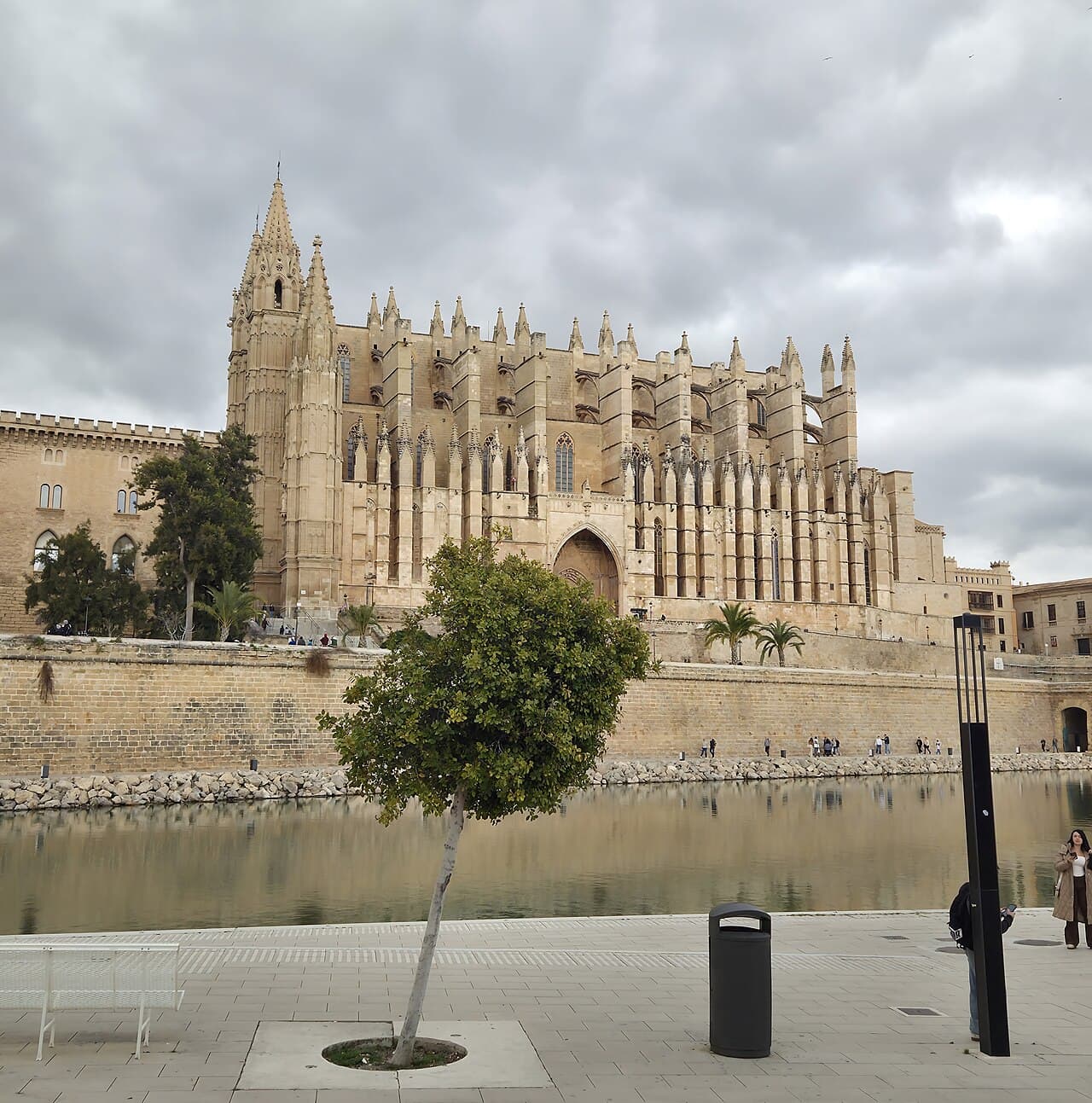
The cathedral and ramparts pole is the absolute priority for any first visit. La Seu cathedral (13th-17th century, with Gaudí's interior work 1904-1914) is accessed through the side entrance on Carrer del Palau Reial. The adjacent Almudaina Palace, a former Arab fortress converted into a Gothic palace, is the official Mallorcan residence of the Spanish royal family: the state rooms, the Saint Anne chapel and the terraced gardens above the Parc de la Mar justify the entry fee (€7). The Llotja — a 15th-century Gothic exchange with twisted columns, attributed to Guillem Sagrera — is Palma's other outstanding civil medieval monument; it hosts temporary exhibitions.
The Es Baluard contemporary and modern art museum (2004, architecture incorporating the old bastions of the city walls) holds a quality permanent collection (Miró, Picasso, Barceló) and exceptional views over the bay from its terrace. The Museu de Mallorca (in a 17th-century palace) traces the island's history from prehistory to the modern age. The Casal Solleric, on the Passeig del Born, is an 18th-century Baroque palace converted into a contemporary art centre with free admission.
Gastronomy is an essential thread. The Mercat de l'Olivar (Plaça de l'Olivar, Monday-Saturday 7am-2.30pm) concentrates the best of Balearic production: fresh ensaimades, sobrasada de Mallorca (PGI-protected), island cheeses, fish and seafood from local fishermen, Mediterranean fruit and vegetables. The Santa Catalina neighbourhood, immediately west of the old town, is Palma's trendy gastronomic district — vermouth bars, market-cuisine restaurants, Binissalem wine cellars.
Day trips from Palma are numerous. The vintage train to Sóller (1912 wooden carriages, 45 min, €35 return) is an attraction before you even arrive at Sóller's charming port. Valldemossa (17 km, 30 min), where Chopin and George Sand spent the winter in the charterhouse in 1838-39, is Mallorca's most visited village. Banyalbufar (30 km, 40 min) displays the finest dry-stone terraces of the Serra. The beach of Es Trenc (45 km, 50 min) is Mallorca's largest and most preserved natural beach — 4 km of white sand, posidonia dunes, turquoise water.
Read also
- The Balearic Islands — Mallorca, Ibiza, Menorca and Formentera — complete guide to the Spanish archipelago.
- Spain — Complete country guide: entry requirements, budget, when to visit, regions.
- Barcelona — Sagrada Família, Gaudí and nightlife — the Catalan capital, 3 hours by ferry.
- Andalusia — Seville, Granada, Córdoba and the beaches of the Costa del Sol.