
Mowando

Climate & seasons

When to visit Réunion?

By La rédaction · Updated 6/7/2026

The Editors
The Editorsauteur principal✓ Verified

Expert on Réunion · 1 contributions

The best periods

The best time to visit Réunion is May to November (austral winter, dry and temperate).

Mai, Juin, Jui, Aoû, Sep, Oct, Nov

Hiver austral — la grande saison réunionnaise

  • Saison sèche et tempérée : 20-26 °C sur la côte, 12-20 °C en altitude, ciel clair
  • Baleines à bosse visibles depuis la côte ouest de juin à octobre (sorties bateau exceptionnelles)
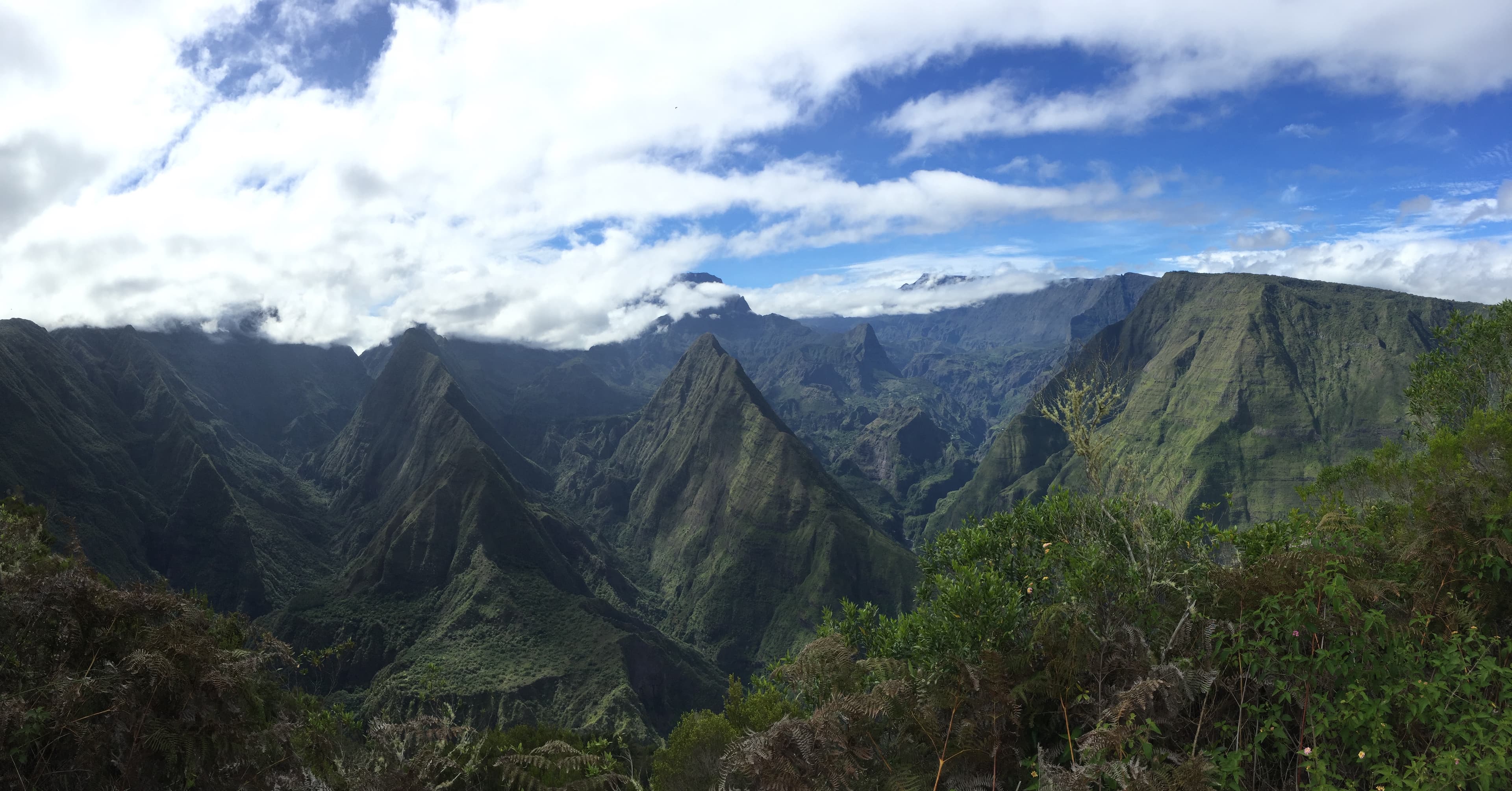
  • Randonnées dans les cirques et au Piton de la Fournaise dans des conditions idéales (sentiers secs, brouillard plus rare)
  • Lagon turquoise sur la côte ouest (Saint-Gilles, L'Hermitage) avec eau à 23-25 °C
  • Nuits fraîches en altitude — moins de 5 °C possible à Maïdo ou à la Plaine-des-Cafres en juillet-août
  • Forte affluence pendant les vacances scolaires métropolitaines (juillet-août) et locales
  • Vols Paris-Réunion à leurs tarifs les plus élevés en juillet, août et décembre
Déc, Jan, Fév, Mar, Avr

Été austral — saison chaude et cyclonique

  • Mer chaude (26-28 °C) idéale pour la baignade et la plongée
  • Végétation tropicale luxuriante, cascades en plein débit
  • Fruits tropicaux à profusion : mangues, litchis, ananas Victoria, fruits de la passion
  • Saison cyclonique (officiellement novembre à avril, pic janvier-mars) : risques de tempêtes intenses, parfois plusieurs jours de fermeture des sentiers
  • Forte humidité, températures pouvant atteindre 32-34 °C sur la côte avec sensation lourde
  • Pluies fréquentes, brouillard quasi permanent dans les cirques en après-midi

Climate by destination

The climate varies sharply from one region to another. See the month-by-month detail — temperatures, sea, crowds and flight prices — on each destination's 'when to go' page.

Frequently asked questions

Do I need a passport or visa for Réunion?+
Réunion is a French overseas department: no visa is required and a valid French national ID card is sufficient for French nationals. EU citizens can enter with an ID card or passport. For other nationalities, the entry rules applied are those of mainland France (Schengen visa if relevant). A passport remains recommended, especially if you plan a stopover or excursion to Mauritius or Madagascar.
When is the best time to visit Réunion?+
The best period is the austral winter, from May to November: dry season, temperate temperatures (20-26°C on the coast), clear skies, optimal hiking in the cirques. It's also the humpback whale watching season (June-October). Avoid January-March, in the heart of the cyclone season: risks of intense storms, closed trails, almost permanent fog in the Highlands. December and April are acceptable shoulder seasons.
How many days do you need to visit Réunion?+
Plan a minimum of 10 days for a balanced discovery: 2 days west coast and lagoon (Saint-Gilles, L'Hermitage), 2 days volcano and Wild South (Piton de la Fournaise, Saint-Philippe), 3 days in the cirques (Cilaos by car, Mafate on foot with a night in an îlet), 1 day Saint-Denis and East, 2 days buffer to recover or explore further. With 14 days, you can add a GR R2 hiking loop (cross-island trek, 7-10 days) or themed excursions (paragliding at Saint-Leu, diving at Saint-Gilles, helicopter over Mafate).
How to get to Réunion?+
Direct flight Paris-Saint-Denis (Roland-Garros, RUN) in 11 hours, operated by Air Austral (Réunion's flag carrier), Air France, Corsair and French Bee. Fares vary widely: €600-800 return in low season, €1,200-1,500 in high season (July-August, Christmas holidays). Book 3 to 6 months ahead for the best prices. Possibility to combine with Mauritius (Air Mauritius flight 45 min) or Mayotte (Air Austral). No direct low-cost flights from Europe.
Is Réunion dangerous because of sharks?+
The shark risk is real but circumscribed. Since 2011, several fatal attacks have led to a prefectoral order banning swimming and surfing outside protected lagoons on the west coast. Inside the lagoon of Saint-Gilles, L'Hermitage, La Saline and Étang-Salé, protected by a coral reef, swimming is safe and authorised. Outside the lagoon, strictly respect municipal orders and flags. Zones supervised by the Marine Reserve and the Reinforced Shark Watchers (VRR) at Saint-Leu, Boucan Canot and Roches Noires allow supervised activities.
Should I rent a car in Réunion?+
Yes, a car is essential to explore the island. Public transport (Car Jaune) exists but is insufficient for a tourist trip. Rental costs €30-50/day for a small car, to be booked in advance in high season (July-August). National and departmental roads are very well maintained, but driving can be challenging in the cirques (Cilaos's 400-bend road, Maïdo forest road). For Mafate, no car: access is only on foot (4 to 8 hours of walking) or by helicopter from Saint-Gilles or Saint-Pierre.
What is the typical cuisine of Réunion?+
Réunion Creole cuisine is a flavourful mix. The emblematic dish is the carry: meat or fish simmered with turmeric (safran-pays), garlic, onion, ginger, served with rice, grains (lentils, red beans) and rougail (a spicy tomato or green mango condiment). Rougail saucisse, samosas (Indian heritage), bonbons piment (spicy lentil fritters), ti'jacques boucanés and vegetable achards are essentials. Best paired with a glass of rhum arrangé (rum macerated with fruits and spices) as an aperitif. Good places: cirque table d'hôtes, Saint-Paul covered market (Friday-Saturday) and Saint-Pierre (Saturday).

Our verdict

Réunion is probably one of the most singular destinations in the French portfolio — an intense island where volcanic nature is at its peak, where Creole culture delivers on every promise, and where the logistical comfort of a French department allows frictionless exploration. This is not a beach destination: it is an adventure and immersion destination, earned through 11 hours of flight and a significant budget, but one that rewards every kilometre walked. Come between May and November to escape the cyclones, plan at least ten days to do justice to the island's diversity, and book a night in an îlet of Mafate accessible only on foot — it is one of the most memorable experiences French tourism still offers.

Mowando Letter

Once a month: the right destinations for the right season + the best booking windows.

No spam. One-click unsubscribe. Your data is never shared.