ville historique
Colonial Zone
The unique heritage density of a city founded in 1496 — first cathedral, first university, first viceroyal palace in the Americas and the oldest European military fortress still standing in the Americas.
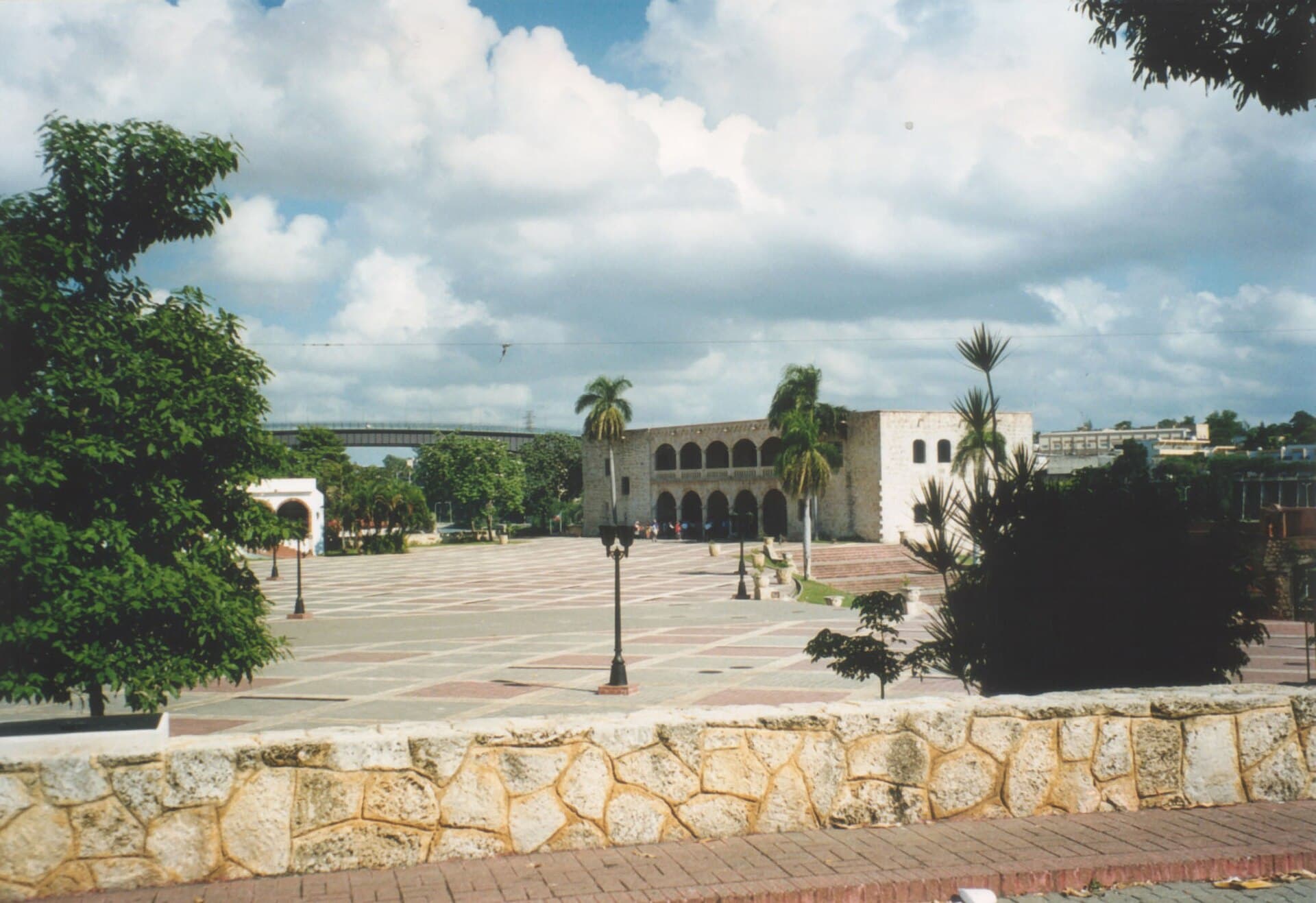
Santo Domingo (Santo Domingo de Guzmán) is officially the first European city permanently established in the Americas, founded in 1496 by Bartolomé Columbus, Christopher's younger brother. It is also the capital of the Dominican Republic (3 million inhabitants with the Greater Santo Domingo metro area, the first city and largest metropolis in the Caribbean). Its Zona Colonial (Ciudad Colonial, 5 km² on the west bank of the Ozama river), UNESCO-listed since 1990, preserves exceptional heritage density: the first cathedral in the Americas (Catedral Primada de América, 1512-1540, Gothic-Renaissance style, initial tomb of Christopher Columbus before transfer to Seville), the first hospital (San Nicolás de Bari, ruins), the first university (Universidad de Santo Tomás de Aquino, 1538, founded 138 years before Harvard), the first viceroyal palace (Alcázar de Colón, 1510, residence of Diego Columbus, Christopher's son, today a colonial arts museum), the oldest European military fortress in the Americas still standing (Fortaleza Ozama, 1502-1505, Torre del Homenaje), and the first paved street in the Americas (Calle Las Damas, 1502).
The Zona Colonial explores on foot in 2-3 days — a maze of paved alleys lined with pastel colonial façades (yellow, ochre, pink, blue), museums, cathedrals, baroque churches (ruined San Francisco, La Mercedes, Santa Bárbara, Las Mercedes), shaded squares. Plaza Colón (in front of the cathedral, with Christopher Columbus statue) and Plaza España (in front of Alcázar de Colón, lined with seafront restaurants) are the neighbourhood's two lungs of social life. Calle El Conde (pedestrian shopping street) crosses the Zona Colonial east to west over 1.5 km, and Calle Las Damas (1502, the continent's first paved street) is its historic north-south axis.
Santo Domingo is also the Dominican Republic's cultural capital. Intense nightlife (merengue-bachata-salsa clubs at Jet Set, Onno's, Lulú), top Dominican gastronomy (Mesón D'Bari, Pat'e Palo, Adrian Tropical, La Briciola), shopping (Mercado Modelo for crafts, Acropolis and Blue Mall for international brands), rich museums (Museo del Hombre Dominicano for the pre-Columbian Taíno collection, Museo de las Casas Reales for colonial heritage). The Faro a Colón (1992, controversial cross-shaped monument housing the supposed tomb of Christopher Columbus) east of the Ozama river rounds out the historical visit.
The pitch is clear: Santo Domingo is the essential cultural and historical dimension of a Dominican trip, essential to combine with a beach stay for a complete experience. Plan 2-3 nights in the Zona Colonial to grasp the site's historical richness — charming boutique hotels in restored colonial buildings (Hostal Nicolás de Ovando MGallery, Casas del XVI, Hodelpa Nicolás de Ovando) at €130-280/night, authentic B&Bs at €40-100/night.
What we love
- ✅Unique heritage density: UNESCO Zona Colonial, first cathedral, first university, first viceroyal palace in the Americas
- ✅Calle Las Damas (1502), first paved street in the Americas, preserved atmosphere
- ✅Charming boutique hotels in restored colonial buildings (Casas del XVI, Nicolás de Ovando)
- ✅Dense cultural life: museums, festivals (Jazz, Carnival), merengue-bachata music scene, gastronomy
- ✅Versatility: easily combined with Punta Cana (3h), Bayahibe (2h) or Samaná (3h)
What to know
- ❌Safety to watch outside the Zona Colonial: certain sensitive neighbourhoods (Cristo Rey, Capotillo)
- ❌Intense and noisy traffic in the capital (3 million inhabitants)
- ❌Surrounding beaches (Boca Chica, Juan Dolio) average compared to Punta Cana or Bayahibe
- ❌Numerous cruise passengers in high season (December-February)
Situation
Où se situe Colonial Zone ?
Ouvrir la carte en grand sur OpenStreetMap →Frequently asked questions
How many days for Santo Domingo?+
Is Santo Domingo safe for tourists?+
What are the must-see sites?+
Where to stay in the Zona Colonial?+
What restaurants in Santo Domingo?+
Our verdict
Santo Domingo is the essential cultural stop of a Dominican trip — the first European city in the Americas (1496) deserves a 2-3 day detour in itself. The UNESCO Zona Colonial is one of Latin America's finest heritage concentrations. Our advice: always combine with Punta Cana or Bayahibe (5-7 beach nights) for a balanced 10-14 day trip. Stay in the Zona Colonial itself (boutique hotels €80-180/night or authentic B&Bs €40-70/night) to feel the magic at night. Visit Alcázar de Colón, the cathedral, Fortaleza Ozama and royal museums in the morning, wander Calle Las Damas and Calle El Conde in the afternoon, dine on Plaza España at sunset and end the evening to merengue in a local club. Favour November-April for optimal weather, avoid July-October (heat, humidity, hurricanes).
Nearby

"Janvier : climat parfait pour explorer la Zona Colonial, 28 °C en journée, soirées fraîches. Haute saison touristique, pic de croisiéristes."
Expert on Colonial Zone · 1 contributions
 Africa & Americas Desk — Mowando·Editor