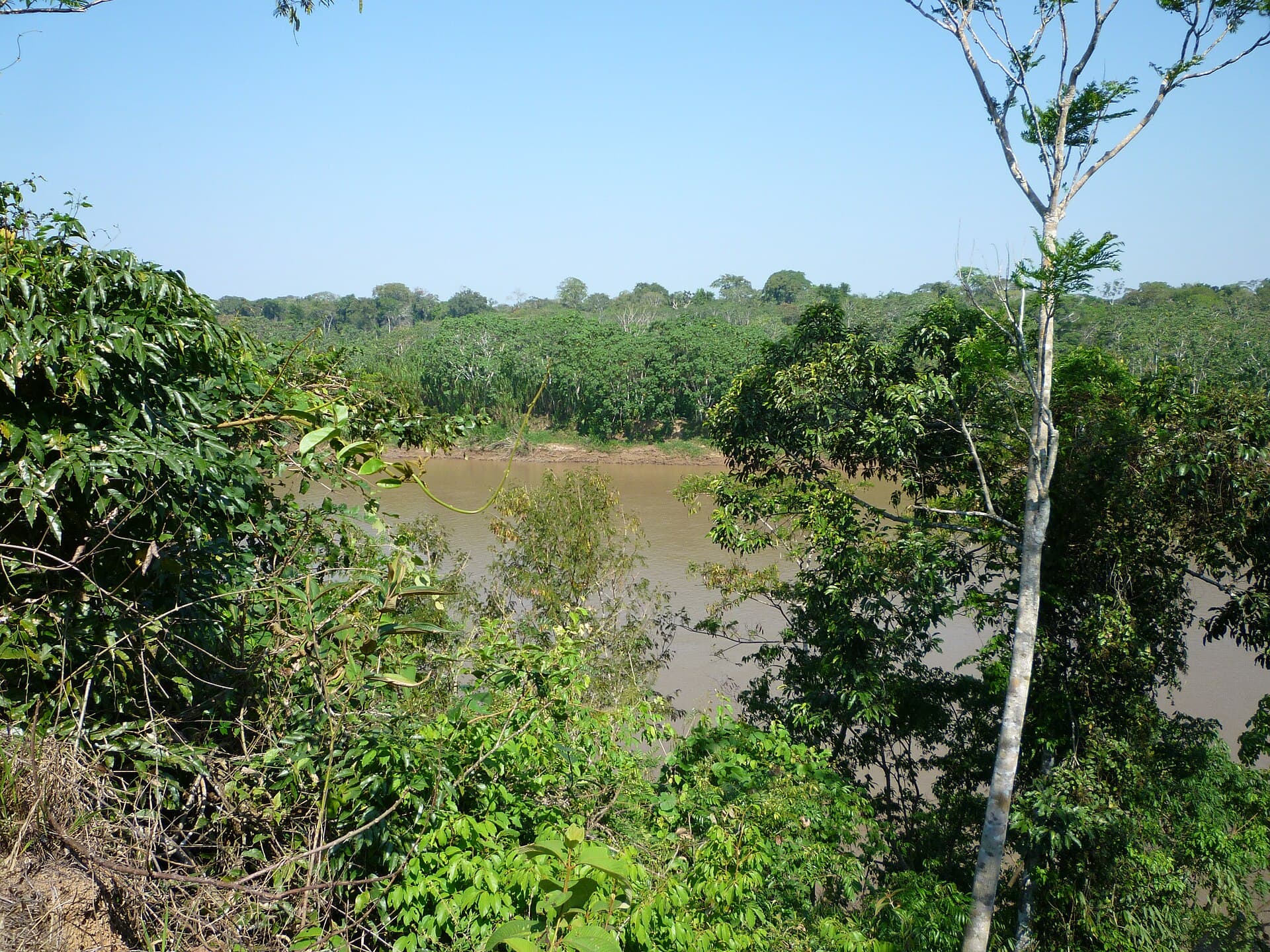
The Peruvian Amazon covers 60% of the national territory — i.e. 770,000 km², equivalent to Germany and France combined. It's the world's second largest portion of Amazon rainforest after Brazil (which holds 60% in total), and one of the planet's richest biodiversities: over 1,800 bird species (one-third of world diversity), 500 mammals, 4,200 butterflies, 1,200 reptiles and amphibians, and probably several million insect species still to discover. The region remains largely preserved — only 5% of Peruvian Amazonian territory is exploited versus 20% in Brazil, despite growing pressure from illegal gold mining and agriculture.
The region subdivides into three main tourist gateways with very distinct personalities. Iquitos and the Amazon River (north-east, on the real Amazon River) is the historical and urban Amazon — 500,000-inhabitant metropolis, founded by Jesuits in 1757, prospered in the early 20th century thanks to the rubber boom (1880-1912, azulejo manors, Casa de Fierro signed by Gustave Eiffel), accessible only by plane or cargo boat. It's here travellers discover the Amazon pink dolphins (boto rosado), indigenous communities (Yagua, Bora), the Belén floating quarter and its legendary shamanic market. Puerto Maldonado and Tambopata reserve (south-east) is the Amazon gateway #1 for Peru-Machu Picchu travellers — direct access from Cusco in 50 min flight. Manu National Park (UNESCO 1987) is the wildest and most inaccessible Amazon, reserved for adventurous travellers.
The Tambopata National Reserve (275,000 hectares) and the adjacent Bahuaja-Sonene National Park protect one of the world's largest biodiversities. Ecotourism lodges line the Tambopata River and Madre de Dios River — between 1 and 7 hours of motorized boat from Puerto Maldonado. Iconic ones: Inkaterra Reserva Amazonica (Relais & Châteaux, most prestigious), Posada Amazonas (joint venture with Ese'eja Infierno community), Refugio Amazonas, Tambopata Research Center (deepest, observation of spectacular parrot clay licks — collpas where hundreds of parrots gather each morning to ingest mineral-rich clay). Rates €400-1,200/person for 3 nights all-inclusive.
Manu National Park (1.7 million hectares from Andes 4,000 m to lowland Amazon 300 m, covering all ecosystems) is one of the world's richest natural sanctuaries. Over 1,000 bird species recorded (10% of world diversity on 0.01% of land surface), jaguars, spectacled bears (only South American ursid, endangered), Amazonian giant otters, Peruvian cock-of-the-rock (national bird). Complex access (10-12h road from Cusco + 2 days boat) — reserved for adventurous travellers with substantial budget (€1,200-2,500/5-7 nights) and available time.
Read also
- Peru — Complete country guide: visa, currency, regions, best time to visit.
- Cusco and Machu Picchu — The cultural must-see — to combine with Tambopata for complete Peru in 14-21 days.
- Lima and the Pacific coast — The world culinary capital and the southern desert triptych.
- Arequipa and Titicaca — The White City, Colca Canyon and the sacred lake at 3,812 m.