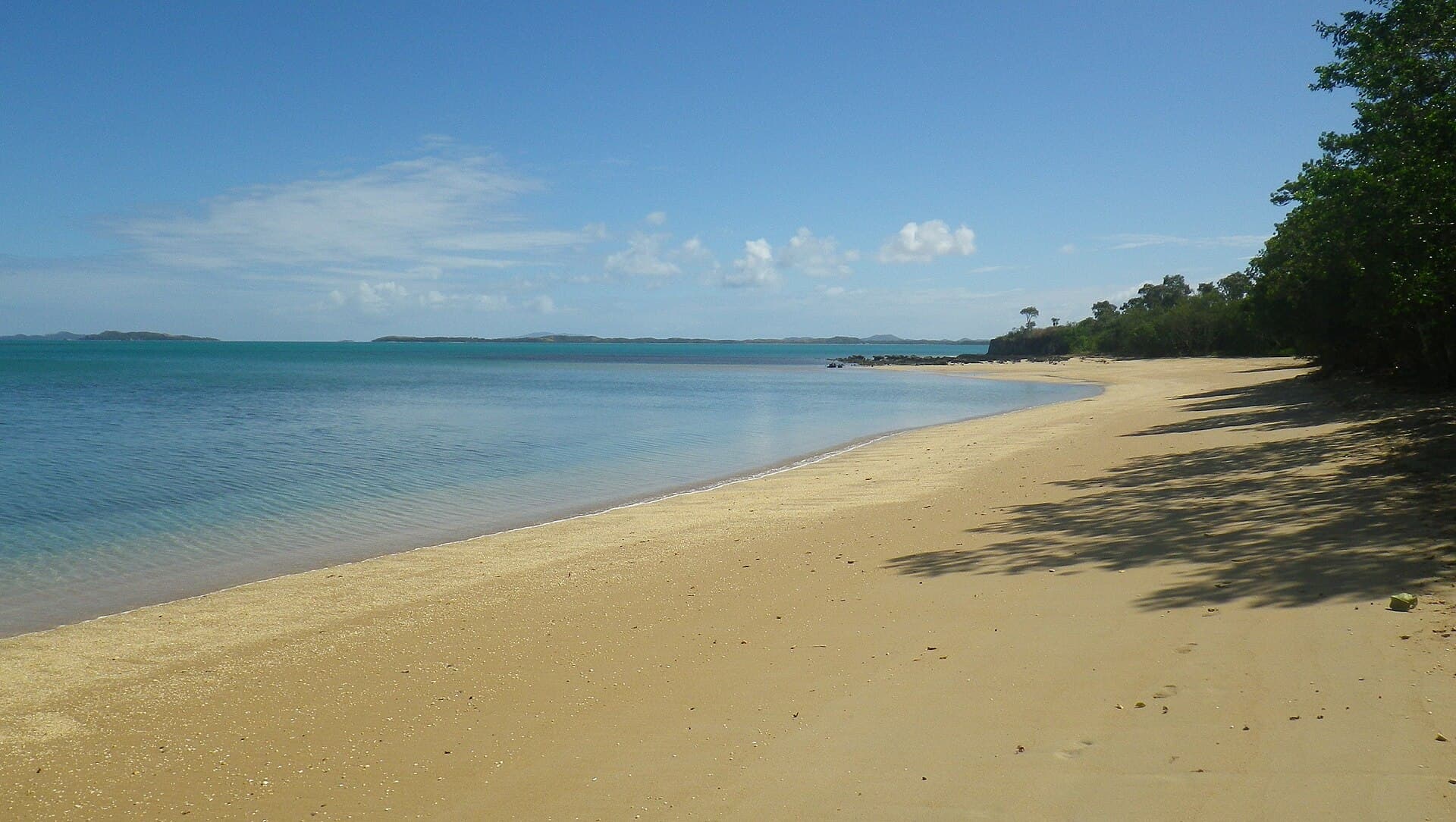
Region
Grande Terre
Grande Terre is a 'miniature continent' of 16,372 km² combining the capital Nouméa (a third of the population), deserted beaches on the west coast (Bourail), a central range topping at 1,628 m (Mont Panié), and the richest portion of the UNESCO World Heritage lagoon.
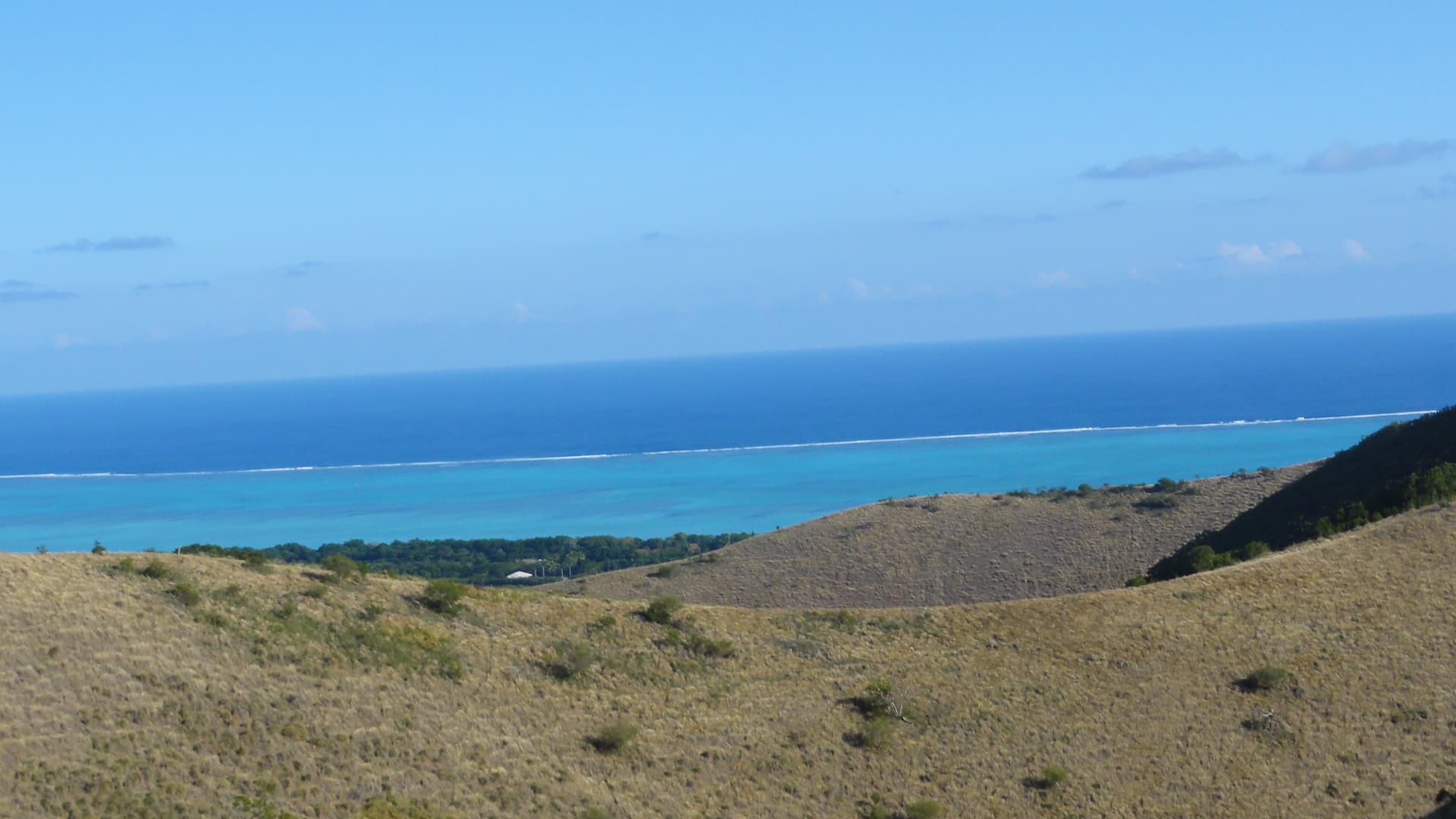
Grande Terre is New Caledonia's main island, the fourth-largest in the South Pacific after the two New Zealand islands and New Guinea. With its 16,372 km², it stretches 400 km north to south and 50-70 km wide, crossed by the central range — a mountain axis culminating at Mont Panié (1,628 m) and Mont Humboldt (1,618 m). This spine separates two radically different coasts: the west coast (dry, savanna, livestock, white-sand beaches) and the east coast (humid, tropical forest, Kanak tribes, waterfalls).
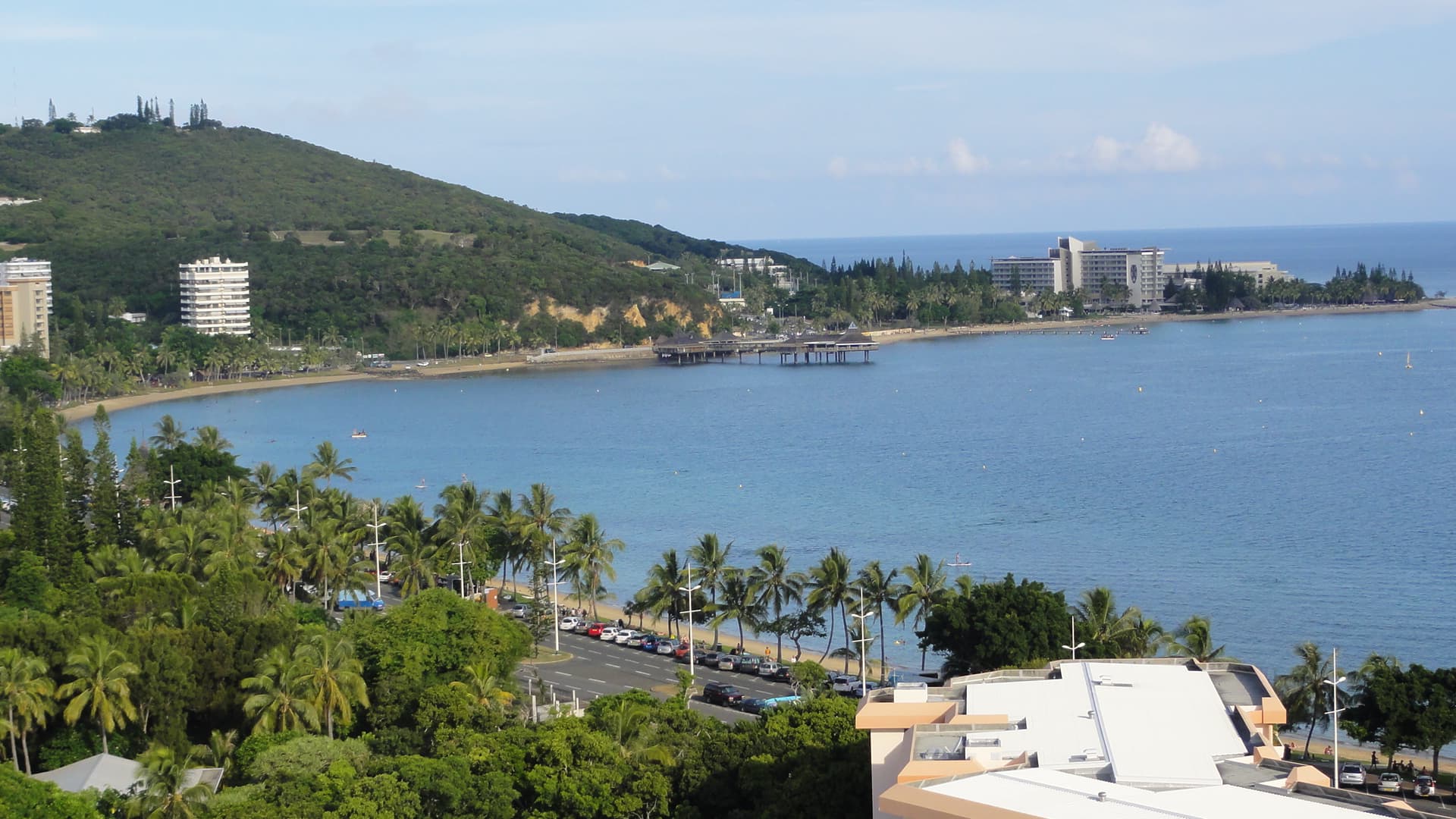
The capital Nouméa, on the south-west tip, concentrates nearly a third of the territory's population (around 100,000 inhabitants intra-muros, 180,000 in Greater Nouméa). It is a French South Pacific city with colonial architecture (Place des Cocotiers, Saint-Joseph cathedral), its Port Moselle market (one of the finest markets in the South Pacific), museums (New Caledonia museum, maritime museum), and its contemporary emblem: the Tjibaou Cultural Centre designed by Renzo Piano in 1998, a tribute to the Kanak independence leader assassinated in 1989. The Nouméa beaches — Anse Vata (1.5 km long beach, seafront restaurants), Bay of Citrons (protected lagoon ideal for family swimming) — are the most frequented on the territory.
Beyond Nouméa, Grande Terre reveals itself as a true miniature continent with contrasting ecosystems. The west coast unfolds its niaouli savanna landscapes, cattle ranches (the famous Caledonian broussards), wild beaches (Poé, Roche Percée beach in Bourail), and its colonial heritage. The Caledonian Grand Sud, south of Nouméa, offers a striking mining landscape: red lateritic soil, artificial lakes (Yaté lake), drowned forests (Blue River Provincial Park, 9,045 hectares of humid forest, sanctuary of the cagou — emblematic endemic bird). The east coast crosses Kanak tribes, waterfalls (Tao, Tiwaka), and tropical rainforest. The north of Grande Terre (Koumac, Poum) is wilder and more preserved.
Explore Grande Terre
Spots in the region
Situation
Où se situe Grande Terre ?
Ouvrir la carte en grand sur OpenStreetMap →Frequently asked questions
How many days do I need on Grande Terre?+
What are the must-sees in Nouméa?+
Is the Blue River Park worth visiting?+
What to see and do in Bourail?+
When to watch humpback whales in New Caledonia?+
Our verdict
Grande Terre is the unavoidable gateway to New Caledonia: this is where the La Tontouta international airport arrives, where the capital Nouméa is located with its infrastructure and gastronomy, where the spectacular nature of a 'miniature continent' unfolds. Plan a minimum of 4-5 days on Grande Terre in a 14-day itinerary: 2 nights in Nouméa, 1-2 nights in the Grand Sud (Blue River Park, humpback whales in season), 1-2 nights on the west coast in Bourail. Prioritise September-November for the best conditions.