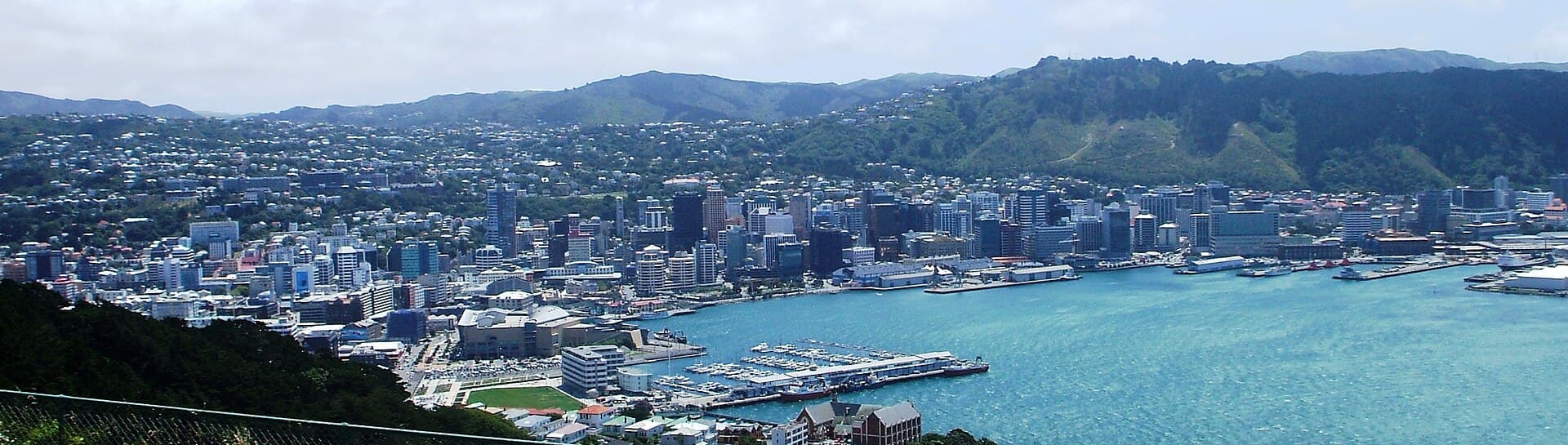
The Wellington region is best visited from November to April (austral spring-summer-autumn). Temperatures of 15-22 °C by day, long days, vibrant atmosphere, many festivals (New Zealand Festival March, CubaDupa March, Wellington on a Plate August). It's also the perfect season for Wairarapa and Cape Palliser excursions.
But Wellington has a particularity: it's statistically the windiest capital in the world (average wind speed 27 km/h year-round), even in summer. Plan a windbreaker year-round — 50-80 km/h gusts are frequent, sometimes painful for walking around town and likely to cancel the Interislander ferry to Picton.
The Wellington winter (June-August) is cold (8-15 °C by day), rainy and windy. Little pleasant for outdoor excursions (Cape Palliser, Martinborough) but the cultural scene stays vibrant — cafes, craft beer pubs, independent cinemas, galleries, winter festivals (Wellington on a Plate gastronomic in August, Jazz Festival in June). Hotel rates drop 30-40% compared to summer. It's an interesting season for pure urban culture lovers.
Spring (September-October) and autumn (April-May) offer interesting compromises — milder climate, reduced crowds, intermediate prices.
Read also
- Wellington — Capital, Te Papa Museum, Cuba Street, coffee and craft beer scene among the world's best.
- North Island — Auckland, Rotorua, Hobbiton, Tongariro: the populated, geothermal half of the country.
- South Island — Queenstown, Milford Sound, Aoraki/Mt Cook: the wild, alpine half, accessible by ferry.
- New Zealand — Complete country guide: 2 islands, NZeTA formalities, budget, best period.