Region
South Island
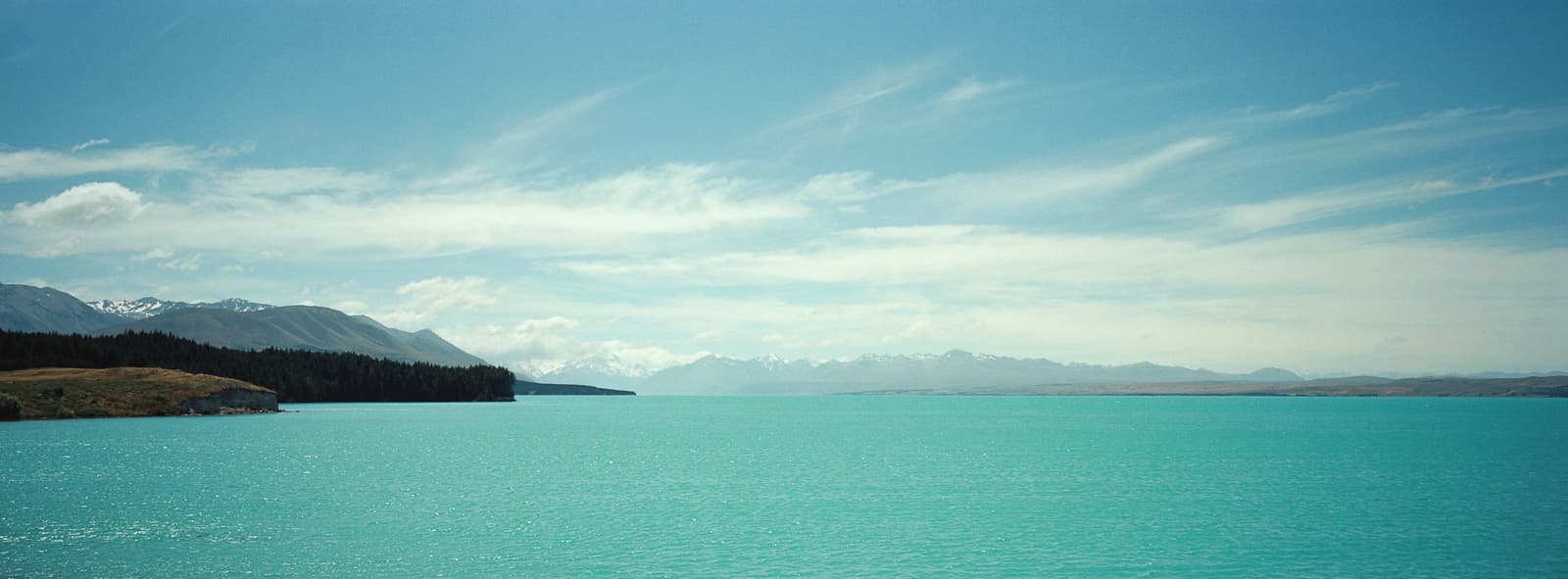
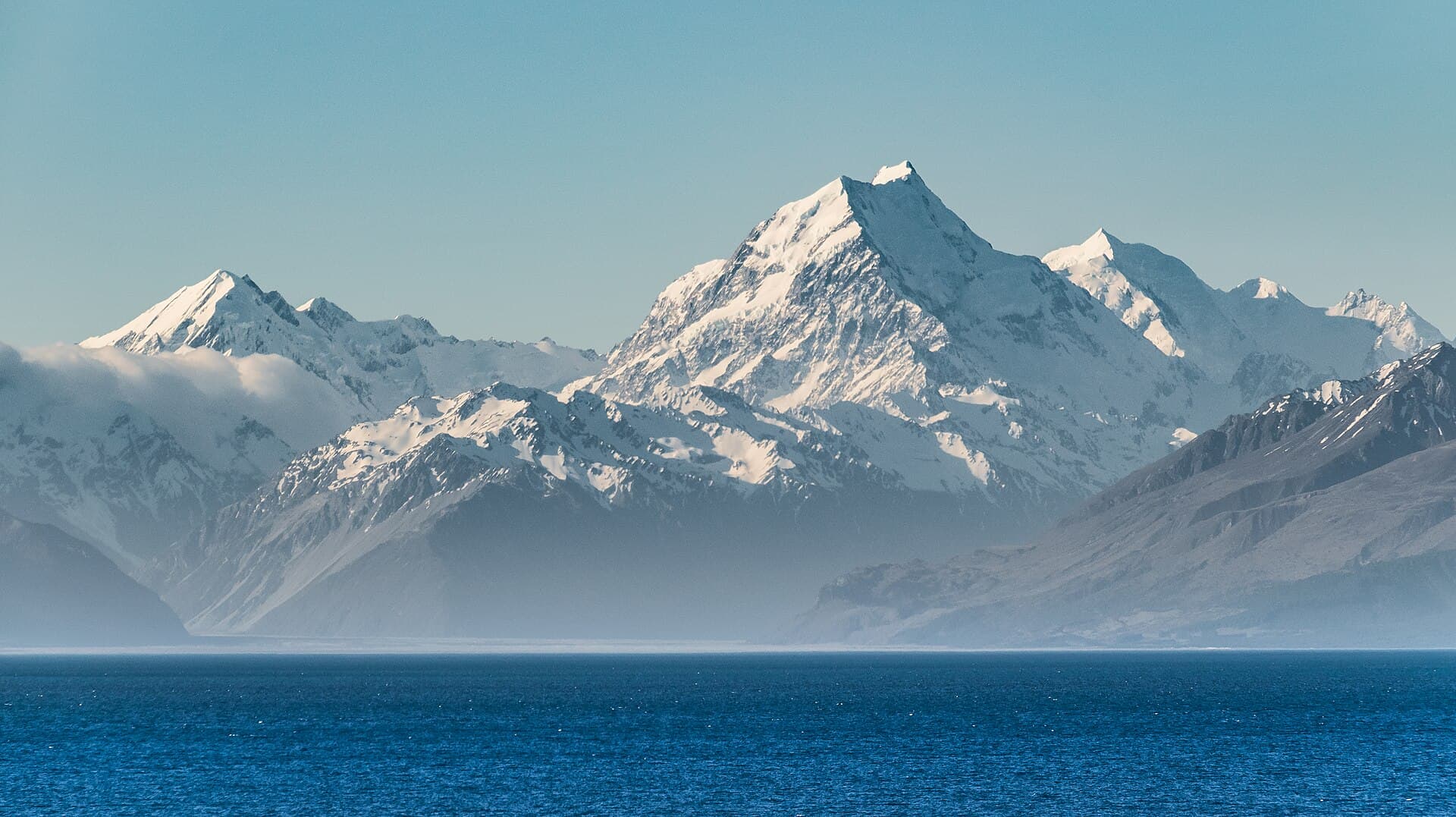
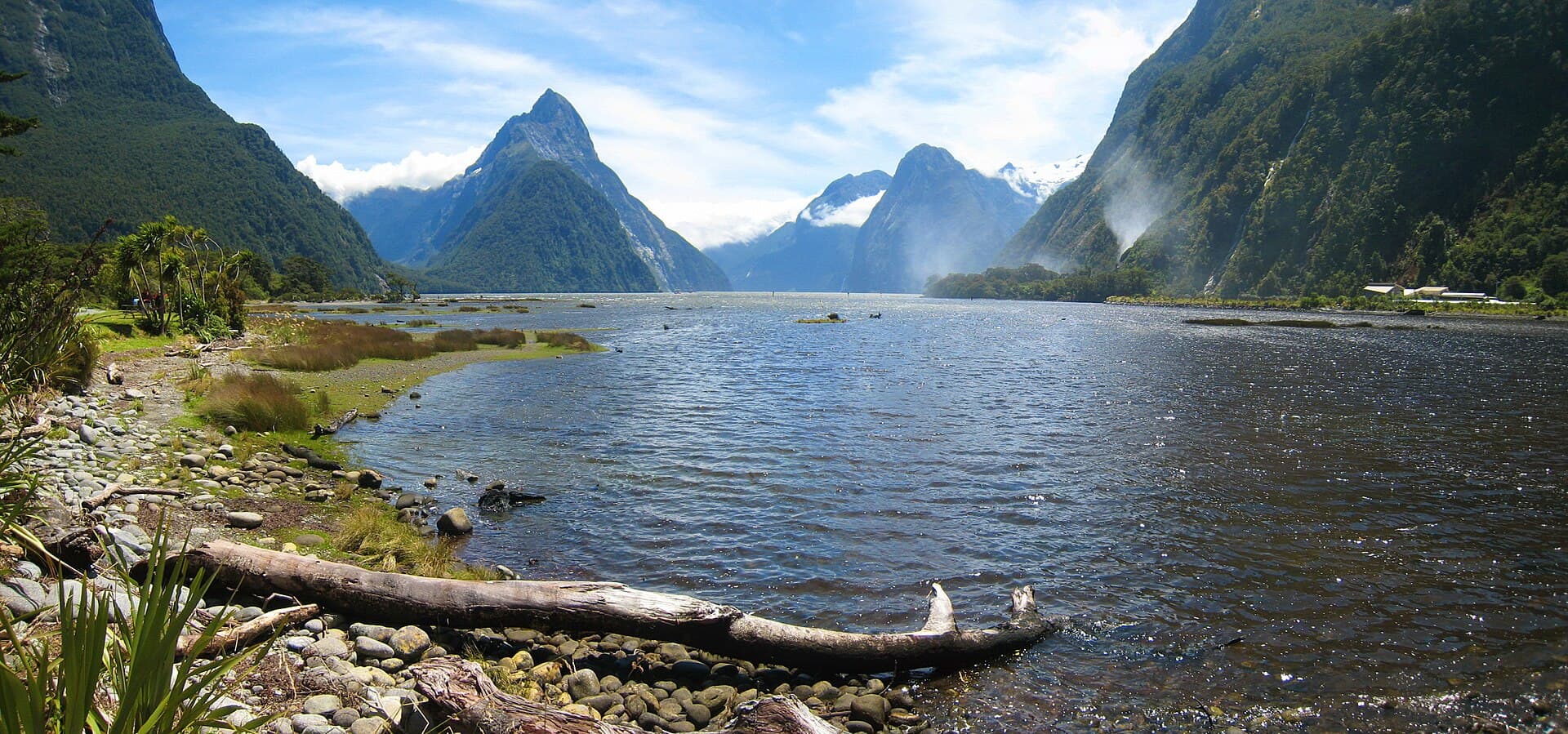
The South Island concentrates New Zealand's most spectacular landscapes: Milford Sound fjords (UNESCO), Southern Alps summits (Aoraki/Mt Cook 3,724 m), Franz Josef and Fox glaciers, turquoise lakes (Tekapo, Pukaki, Wanaka), Queenstown the world capital of adrenaline.
The South Island (Te Waipounamu in Māori, 'the waters of jade') is the largest but least populated of New Zealand's two islands — 1.2 million inhabitants on 150,437 km² (the equivalent of England + Scotland), giving a density of just 8 inhabitants/km² that makes it one of the world's least densely populated territories. It is also the more spectacular half of the country: a concentrate of cinematic landscapes across a diverse geography combining wild coasts, glacial valleys, millennial fjords and alpine ranges.
The geography is dominated by the Southern Alps range that stretches 500 km north-south, parallel to the west coast. It peaks at Aoraki/Mount Cook (3,724 m), the country's highest summit — its Māori name Aoraki means 'cloud piercer'. More than 3,000 peaks exceed 1,500 m, more than 150 exceed 2,000 m. The range is still actively forming (tectonic uplift of 7 mm/year) on the Alpine Fault which could trigger a major earthquake in the coming decades. Several hundred glaciers descend from the range — the best known are the Tasman Glacier (27 km, the longest in New Zealand), Franz Josef Glacier and Fox Glacier (the only two glaciers in the world descending into temperate rainforest, at just 250 m elevation).
The West Coast is one of the wettest regions in the world (5,000-7,000 mm/year at Milford Sound, vs 600 mm/year in Paris) — a hyperhumid climate that creates the temperate rainforest of Westland and Fiordland, a globally unique ecosystem. The Fiordland National Park (12,519 km², 5th largest national park in the world, UNESCO World Heritage since 1990 within Te Wāhipounamu South-West New Zealand) hosts the most iconic fjords: Milford Sound (the most visited), Doubtful Sound (3 times bigger but more remote), Dusky Sound. To the north of the range, the Abel Tasman National Park offers one of the country's most beautiful coasts — golden beaches, turquoise waters, 60 km Great Walk trail.
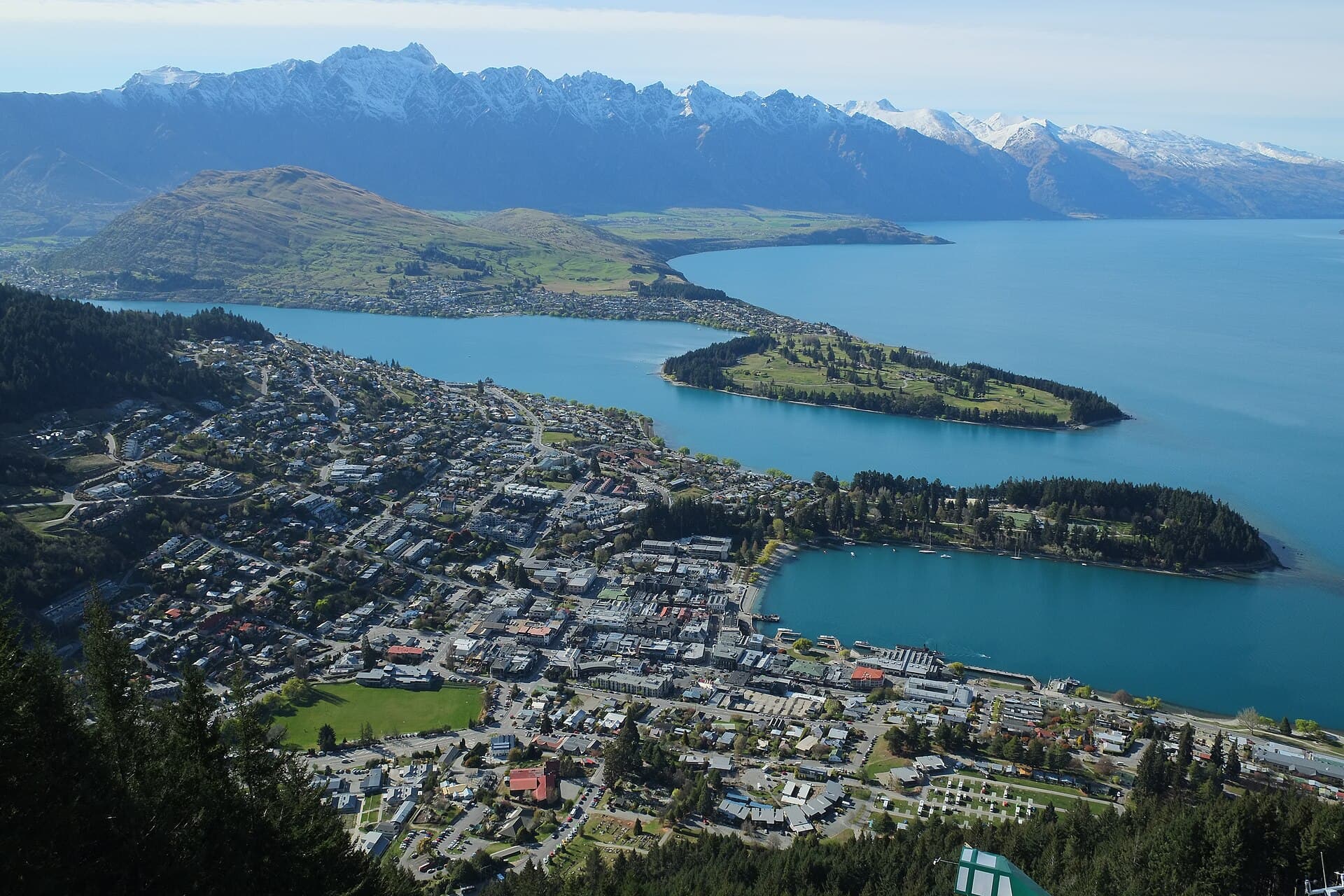
Cities are few and modest. Christchurch (380,000 inhabitants) is the largest city on the South Island, capital of the Canterbury region — nicknamed 'the most English city outside England' before the devastating February 2011 earthquake (magnitude 6.3, 185 deaths) which destroyed the historic centre, in progressive reconstruction. Dunedin (130,000 inhabitants, Scottish heritage — its name is the old Gaelic name for Edinburgh), Queenstown (only 15,000 inhabitants but world capital of extreme sports), Nelson (gateway to Abel Tasman), Invercargill (south) punctuate the island. The Marlborough region (around Blenheim) produces the world's most recognised Sauvignon Blanc, and Central Otago (around Queenstown and Wanaka) the planet's most southerly Pinot Noir.
The South Island is also the heart of extreme sports: Queenstown has been the undisputed world capital of outdoor adrenaline since the invention of modern bungee jumping by AJ Hackett on Kawarau Bridge in 1988. Jet boat on the Shotover River, skydive (the world's highest commercial jump at Queenstown 18,000 ft / 5,500 m), heli-ski in winter, paragliding, rafting — the town shines from its shore of Lake Wakatipu and attracts adventure lovers from around the world.
Explore South Island
Spots in the region
Situation
Où se situe South Island ?
Ouvrir la carte en grand sur OpenStreetMap →Frequently asked questions
Combien de jours faut-il pour visiter l'île Sud ?+
Faut-il absolument faire le Milford Sound ?+
Comment accéder à Aoraki/Mt Cook et faut-il y dormir ?+
Que vaut Queenstown en dehors des sports extrêmes ?+
Franz Josef ou Fox Glacier : lequel choisir ?+
Quand visiter l'île Sud pour les Great Walks ?+
Christchurch ou Queenstown comme point de départ ?+
Our verdict
The South Island is the more spectacular half of New Zealand — it is here that the cinematic landscapes that built the country's legend converge: Milford Sound fjords, Aoraki/Mt Cook, Franz Josef and Fox glaciers, turquoise Tekapo and Wanaka lakes, Queenstown world capital of adrenaline. For a first trip to New Zealand, it is the essential stop — if you had to pick a single island, this would be it. Plan a minimum of 8-9 days on site: Christchurch (arrival), Aoraki/Mt Cook (1 night), Queenstown (3 nights with day excursion to Milford Sound), West Coast (Franz Josef Glacier, 1 night), Marlborough Sounds/Abel Tasman (2 nights), return. In 14 South Island-only days, add Dunedin, Otago peninsula (penguins), Wanaka, Routeburn Track. Prioritise austral summer (December-March) for Great Walks or autumn (March-April, our favourite) for golden light and falling rates.