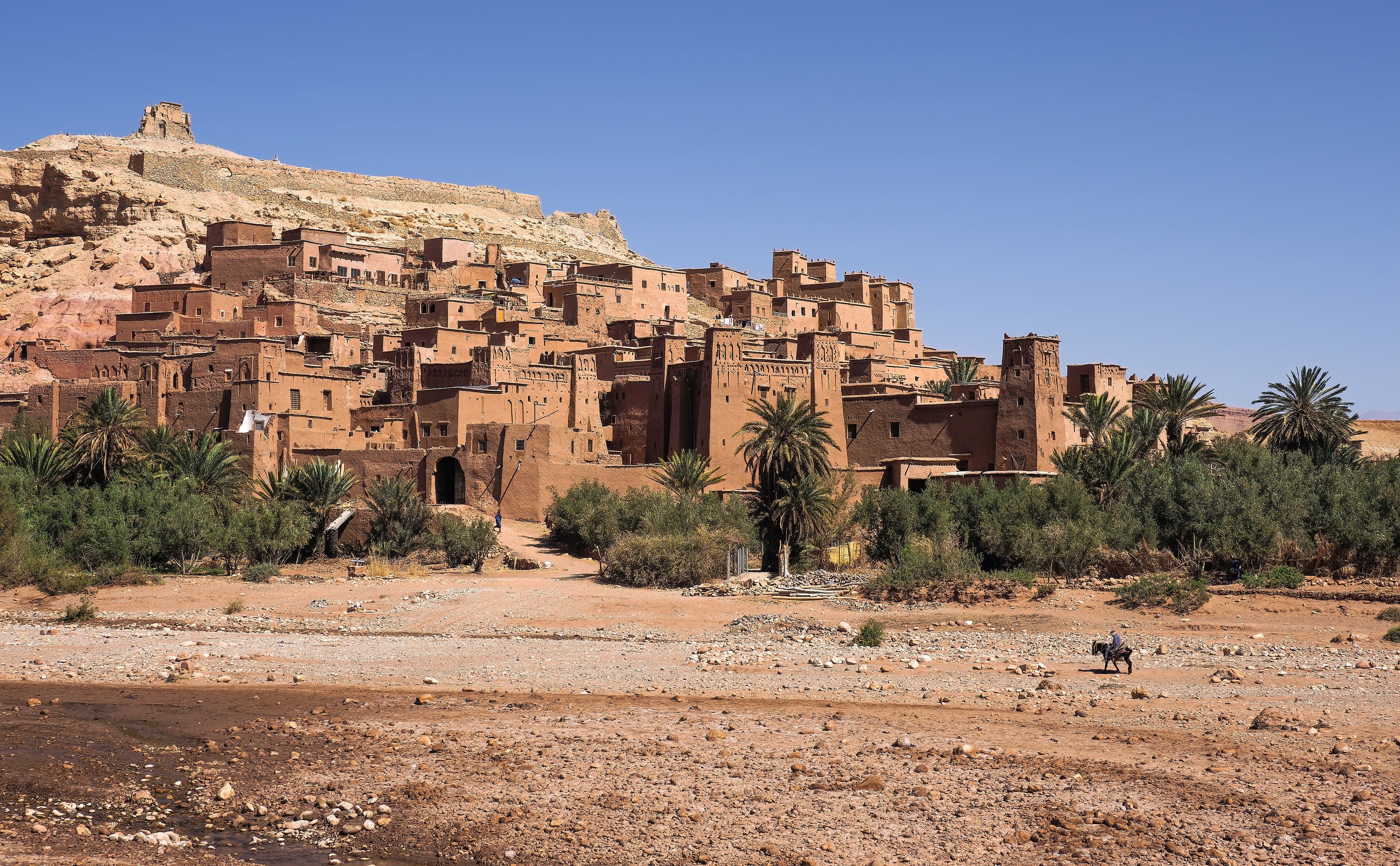
Morocco's identity is woven from a thousand-year mosaic of Berber (Amazigh), Arab, Andalusian, sub-Saharan African and Jewish influences. This layering shapes everything: classical Arabic and Amazigh share official status, darija (Moroccan colloquial Arabic) is the language of the street, and French remains widespread in education, business and administration — English is gaining ground fast in the tourism sector. Cities in the north such as Tetouan carry a clear Spanish imprint. For visitors, this natural multilingualism makes daily interactions remarkably smooth across Morocco.
Morocco is the land of the imperial cities: Marrakech, Fes, Meknes and Rabat have each in turn served as capital, and their medinas concentrate an extraordinary architectural heritage. Fes el-Bali, considered the oldest still-inhabited medina in the world, is essentially an open-air museum. The country counts nine UNESCO sites. The Berber dynasties (Almoravids, Almohads) and the Sharifian dynasties (Saadians, Alaouites) left palaces, medersa and monuments that punctuate ten centuries of history. Visiting Morocco without setting foot in at least one imperial city would mean missing the heart of the story.
Islam structures the rhythm of daily life: the five calls to prayer, Friday devotions and the holy month of Ramadan shape the calendar. Modest dress is appreciated near religious sites and in medinas (shoulders and knees covered). Traditional crafts — zellige, carpets, tanned leather from Fes, brassware, embroidery — are a source of national pride passed down across generations. Gnawa music, chaâbi rhythms and Berber percussion fill squares and festivals year-round, from the Gnawa Festival in Essaouira each June to the Sacred Music Festival in Fes.
The single trait that strikes every visitor to Morocco is the sense of hospitality: offering mint tea, inviting a stranger to share a meal or escorting you across the medina to find your riad belong to a genuine art of welcome. A few habits help: return the salam with a smile, accept the tea, ask before photographing people, and use your right hand for eating and greeting. The calendar is also dotted with moussems — popular festivals celebrating a local saint or harvest — which offer some of the most authentic windows into the country.
Read also
- The Marrakech-Safi region — Marrakech, the High Atlas and the coast of Essaouira.
- The Fes-Meknes region — Fes, Meknes and the Roman site of Volubilis.
- Marrakech, the Red City — Medina, souks and riads at the foot of the Atlas.