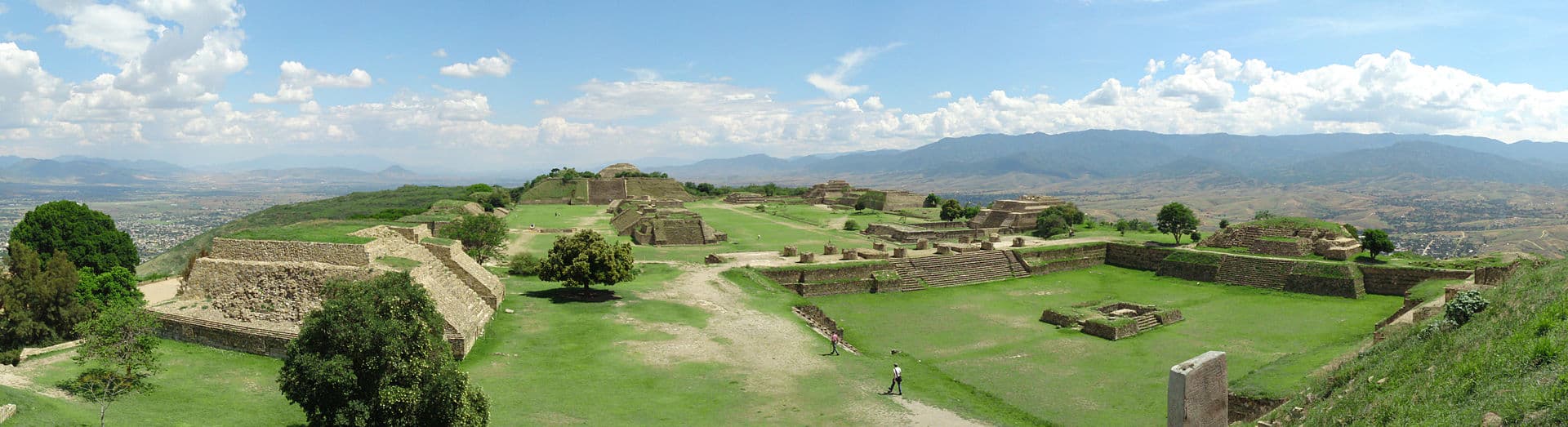
Oaxaca concentrates its treasures in a remarkably compact radius — most central sites are walkable — and in the villages of the surrounding valleys, reachable in 20 to 90 minutes.
The Zócalo and historic center form the first compulsory chapter. The Basilica of Our Lady of Solitude (patron of Oaxaca) and the Santo Domingo convent-museum stand out for some of the most lavish Baroque interiors in Mexico: the relief-carved gilded family tree of Saint Dominic above the entrance vault of Santo Domingo is a masterpiece. The Museum of Cultures of Oaxaca (inside the Santo Domingo convent) houses the treasure from Tomb 7 of Monte Albán — gold, obsidian and jade jewelry of the Mixtec civilization — one of the richest archaeological finds in the Americas. The Benito Juárez market (two blocks from the zócalo) sells local craftwork, cheeses (quesillo, requesón), chiles and medicinal herbs.
The Mercado de Abastos (the wholesale market, 2 km from the center) is a total experience: the largest traditional market in the region, frequented primarily by locals and Zapotec villagers from the surrounding valleys. Here you'll find chapulines (grasshoppers grilled with lime and chile, a Oaxacan specialty), tasajo (smoked dried beef), moles in bulk, and the comedores that serve local breakfast from 6 a.m. Best visited on a Saturday for the open-air extension.
The artisan villages are the other half of the Oaxacan experience. Teotitlán del Valle (30 km, 40 min) is the village of Zapotec rugs: entire families weave on ancestral looms, using wool naturally dyed with cochineal, indigo and local plants. Visit the workshops directly to see the full process and buy at fair prices. San Bartolo Coyotepec (15 km) is the village of barro negro, the polished black clay — a technique unique in the world, transmitted by the master potter Rosa Real. Atzompa produces the green ceramics. The petrified waterfalls of Hierve el Agua (70 km, a full day excursion) are a unique geological formation: calcium 'waterfalls' frozen in relief on the mountainside, with a natural pool overlooking the valley — one of the most beautiful viewpoints in the state.
The dining scene in Oaxaca extends well beyond the mole reputation. Restaurants like Casa Oaxaca (Alejandro Ruiz), Levadura de Olla (Thalia Barrios García) and In Situ Mezcalería have lifted the city into international rankings. But the most authentic tlayudas are still found at the Mercado 20 de Noviembre, where aproned women grill tasajo and quesillo to order over charcoal embers.
Read also
- Mexico City, the capital with a thousand faces — 50 minutes away by plane: the Anthropology Museum, Frida Kahlo, Teotihuacán and street tacos.
- Central Mexico — Complete guide: Mexico City and Oaxaca, itineraries and regional logistics.
- Mexico travel guide — Entry requirements, budget, safety and best months to visit Mexico.