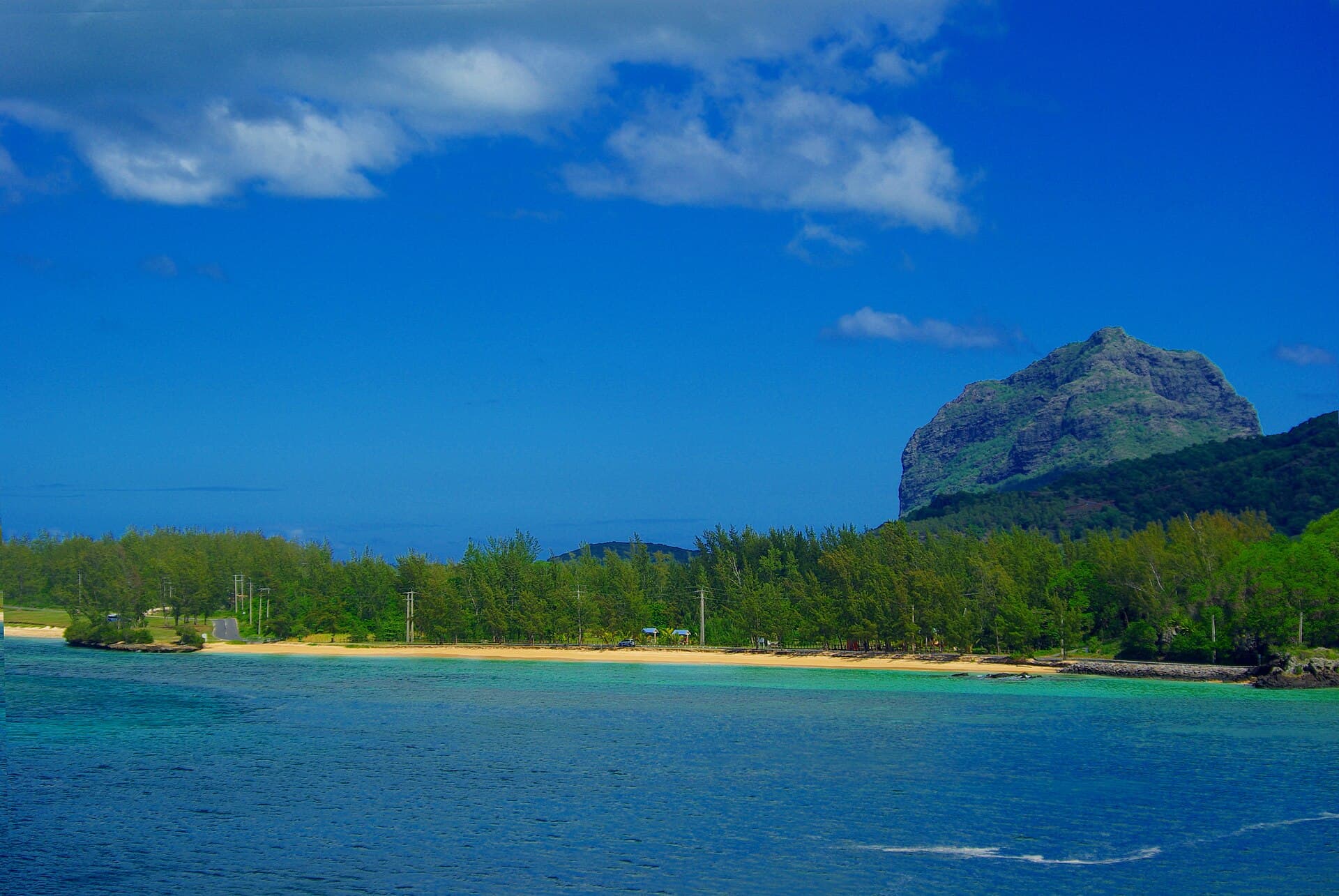

"Plein été austral : chaleur, lagon à 28° et fortes pluies — la saison cyclonique débute."
Expert on Mauritius · 1 contributions
 Africa & Americas Desk — Mowando·Editor
- · Travellers seeking depth, not speed
- · Couples or friends alternating beach, trekking and culture
- · Return visitors to Mauritius who did 7 days on the west coast
May, June, July, August, September, October, November
The right split for 10 days: 3 nights west coast (Flic-en-Flac / Tamarin), 1 night south-west, 1 night interior, 2 nights south-east coast (Blue Bay / Mahébourg), 2 nights east coast (Belle Mare), 1 night north (Grand Baie / Trou aux Biches). Rental car essential from day one — without it, half the programme becomes unreachable.
Day by day
- 1Day 1
Arrival at SSR Airport — settling on the west coast (Flic-en-Flac / Tamarin)
Land at Sir Seewoosagur Ramgoolam (SSR) International Airport, on the island's south-east coast. Straight out of baggage reclaim: collect the rental car at the terminal counter (€25-35/day, left-hand drive like the UK). The drive from SSR to Flic-en-Flac (about 55 km) skirts the coast before crossing the island via the M1 motorway — allow 55-70 minutes without traffic, a little longer in the evening. A direct taxi would run MUR 1,000-1,200 (€22-26), but with luggage and a 10-day programme to cover, the rental car pays for itself on the very first trip.
Check in at Flic-en-Flac or Tamarin: two ideal bases for the west coast. Flic-en-Flac, a long white-sand strip sheltered by a lagoon, has the widest choice of accommodation (guesthouses from €80/night, boutique hotels at €150-200). Tamarin is more village-like, popular with expats and surfing families. After an 11-hour flight from Paris, tonight's goal is simple: check-in, cold shower, light dinner.
Dinner tonight at Le Coco Beach in Flic-en-Flac — terrace facing the lagoon, grilled fish and octopus curry, MUR 500-900 per person. Sunset from the beach: Mauritius faces due west, the sky turns orange over the Indian Ocean with nothing between you and Réunion on the horizon.
Tips- · Collect the car before leaving the terminal: Europcar, Budget and Sixt desks are in the arrivals hall, not in the outer car park.
- · Flic-en-Flac or Tamarin: if you're a couple and value quiet, choose Tamarin; for more restaurant and supermarket options, Flic-en-Flac is more practical.
- 2Day 2
West coast beaches + dawn dolphin trip
Wake at 5:30am — that's the price of the island's finest marine encounter. Spinner and bottlenose dolphin pods frequent Tamarin Bay in the morning before heading offshore; several local operators (Tamarin harbour) offer boat trips for MUR 800-1,200 (€17-26) per person, departures between 6am and 6:30am. Non-negotiable ethical rule: choose boats that cut the engine 30m from the dolphins and don't chase the pod — the best sightings last 30-45 minutes with this approach.
Back ashore by 9am for a late breakfast on Tamarin beach (Creole bakeries, MUR 150-300). Then drive north along the coast: La Preneuse and Rivière Noire (Black River) with its colourful fishing boats, great village atmosphere off-season. Picnic or lunch at Le Café des Arts in Tamarin — art café feel, fresh salads and Franco-Creole dishes (MUR 700-1,100), shaded terrace.
Free afternoon on Flic-en-Flac beach: snorkelling in the lagoon (coral reefs 100-200m from shore, parrotfish, moray eels, starfish) or simply doing nothing. Reef-safe sunscreen required. Second sunset from the beach — it's free and never gets old.
Tips- · Dolphin trips: leave before 6:30am — after 9am the dolphins dive and head offshore. Never book more than 24h ahead: operators cancel if seas are rough.
- · Sunscreen in the lagoon: oxybenzone formulas have been banned in Mauritius since 2020 — buy a mineral sunscreen (zinc oxide) before departure or at pharmacies in Flic-en-Flac.
- 3Day 3
South-west: Le Morne, Chamarel and Black River Gorges trek
The most intense day of the trip. Depart at 7:30am for the Le Morne Brabant peninsula (UNESCO), the most iconic point on the south-west coast: a dazzling white beach backed by a turquoise lagoon, watched over by the 556m basalt monolith. Le Morne also carries deep historical weight — the Maroon slaves who sheltered there in the 19th century leapt from the rock when they saw soldiers arriving to announce abolition. Simple panels at the foot of the piton honour this story. Swim in the lagoon (free access), optional kitesurfing or windsurfing (world-class spot, €50-80 for a 2h session).
Drive to Chamarel, 20 minutes inland. Double stop: the Seven Coloured Earths (volcanic dunes in shades of red, violet, green, ochre and brown — entry MUR 300 / €6.50) and Chamarel Waterfall (100m drop into tropical forest — MUR 250 / €5.50). Combined ticket available. Lunch at the panoramic restaurant of the Rhumerie de Chamarel (Creole fusion cuisine, MUR 950-1,400, plunging views over the coast and Le Morne, complimentary infused rum tasting).
Afternoon: enter Black River Gorges National Park (free) for an introductory trek — the Gorges Viewpoint trail (1h30 return, easy level) with views over the endemic forest canopy and south-west coast. The full trek (Day 4) is tomorrow; today is about scouting the area and catching the late afternoon light over the gorges. Return to the west coast for the night.
Tips- · Seven Coloured Earths: arrive before 9am — the low morning light intensifies the colour contrasts; after 11am, tourist coaches and heat make the visit unpleasant.
- · Rhumerie de Chamarel: book online 48h ahead in high season (May-November) — the panoramic restaurant often fills up on weekdays.
- 4Day 4
Grand Bassin (sacred Hindu lake) + Bois Chéri (Mauritian tea)
A day for nature and spirituality in the island's highlands. Depart at 7:30am from the west coast for Black River Gorges National Park and the main trek: the Gorges Viewpoint → Macchabée Trail (5-6h, moderate difficulty, 400-500m altitude, cumulative elevation ±350m). This trail through endemic tropical forest is one of the last refuges of the pink pigeon, Mauritius bulbul and Mauritius kestrel — three species pulled back from extinction. Bring at least 2L of water, closed hiking shoes and a light windbreaker (mist frequent above 400m).
After the hike: drive to Grand Bassin (Ganga Talao), a volcanic crater lake at 1,800m altitude and the sacred heart of Mauritian Hinduism. Pilgrims collect holy water here during the Maha Shivaratri festival (January-February), but the site remains open year-round to respectful visitors. Around the lake: colourful temples, colossal statues of Shiva (33m) and Durga, flower offerings. A serene atmosphere well off the usual tourist circuit. Smart dress required (shoulders and knees covered), free entry.
Lunch at Domaine de Saint Aubin en route to Rivière des Anguilles (refined Creole cuisine, deer curry and rougail sausage specialities, MUR 900-1,400). Afternoon stop at Bois Chéri tea estate — Mauritius's largest tea plantation, open for guided tastings (entry + tasting: MUR 350 / €7.50). Mauritian tea, little-known in Europe, has been produced since 1892 on these misty southern highland slopes.
Tips- · Black River Gorges: avoid rainy days — slippery trails and zero visibility. Check the forecast the evening before on météo.mu and postpone by a day if needed.
- · Grand Bassin: no food or alcohol sold around the lake — bring a snack and respect silence in the prayer areas around the temples.
- 5Day 5
Transfer to south-east — Blue Bay + Île aux Bénitiers catamaran
Morning: drive from the west coast to the island's south-east, heading for Blue Bay (1h-1h15 via the A10 and coastal road). Blue Bay is home to Mauritius's best-preserved marine reserve — a barrier reef shelters a shallow lagoon with crystal-clear water and exceptional biodiversity (branching corals, sea turtles, stingrays). Entering the reserve: snorkelling from the beach or by glass-bottom boat with a local operator (MUR 300-500 / €6.50-11).
Afternoon: catamaran trip to Île aux Bénitiers, a 50-hectare islet facing the Le Morne coast, accessible only by boat (30 minutes from Rivière Noire or La Preneuse). Catamarans run half-day trips including sandbank snorkelling, on-board BBQ and a visit to Crystal Rock (a spectacular emerging rock formation) — budget MUR 1,800-2,400 (€39-52) per person. The islet is almost deserted on weekdays, with an otherworldly blue lagoon on the east side and South Atlantic swells on the west.
Check in for 2 nights at Blue Bay or Mahébourg: typical lagoonside accommodation (Creole guesthouses at €80-120/night). Dinner in Mahébourg — local snack bar at the market square (chicken curry, rougail tomatoes, MUR 200-350) or a waterfront fish restaurant.
Tips- · Blue Bay Marine Reserve: motorised vessels are banned in the reserve's core zone — insist on a sailing or rowing boat for snorkelling access; offenders do exist.
- · Catamaran to Île aux Bénitiers: compare offers at Black River hotels vs independent operators — price gap often 30-40% in favour of independents booked directly on the spot.
- 6Day 6
Mahébourg: market, fishing village and historic bay
A slow day in the historic south-east of the island. Mahébourg is the most authentic town in Mauritius outside Port-Louis — a small colonial settlement on a bay where the Battle of Grand Port took place in 1810, the only Napoleonic naval victory inscribed on the Arc de Triomphe. The Historic Museum of Mahébourg (free entry, closed Tuesday) tells this story through a collection of shipwreck artefacts and original nautical charts.
Morning: Mahébourg market (Monday morning is the most stocked — vegetables, fresh daily catch, bulk spices, fabrics). If it's not Monday, the permanent street market stays lively on weekdays. Walk the old Creole quarter: colonial houses with wooden verandas, small grocers, old-school boutikas. Lunch at Le Vieux Moulin restaurant in Mahébourg (refined Creole cuisine, grilled crayfish and vindaye fish, MUR 1,200-1,800) or a simple lagoonside lunch.
Afternoon: walk to the fishing village of Pointe d'Esny (5 minutes north of Mahébourg) — one of the few places on the island where nets still dry on the beach and fishing boats return at 3-4pm with the day's catch. Swim in Mahébourg Bay: shallow lagoon, occasionally volcanic black sand, perfect calm. Last evening in the south — simple Creole dinner, early night before the transfer to the east coast tomorrow.
Tips- · Historic Museum of Mahébourg: closed on Tuesday and public holidays — check opening hours on site (generally 9am-4pm Wednesday to Monday).
- · Mahébourg market: Monday morning is the island's most stocked weekly market — ideal for buying bulk spices (vanilla, turmeric, cinnamon) at prices well below tourist shops.
- 7Day 7
East coast — Belle Mare, Trou d'Eau Douce + Île aux Cerfs
Morning transfer (1h drive) from Mahébourg to the east coast, heading for Belle Mare and Trou d'Eau Douce. The east coast is windier than the west (south-east trade winds), the lagoon deeper and an even more intense shade of turquoise — some travellers prefer it for exactly this reason. Check in at a hotel or guesthouse in Belle Mare (€100-250/night depending on category).
Afternoon: excursion to Île aux Cerfs, Mauritius's most visited islet, reached by boat from the Trou d'Eau Douce jetty (MUR 600-800 / €13-17 return, departures every 30 minutes). Milky-blue lagoon, fine white sand, shallow water perfect for swimming and snorkelling. Busy but manageable on weekdays. Bring lunch from Trou d'Eau Douce (Creole bakeries and snack bars in the village): the island's restaurants charge discouraging prices (MUR 1,200-2,000 for an ordinary dish).
Dinner on the east coast: La Spiaggia in Belle Mare (Italian-Creole cuisine, wood-fired pizzas, fresh fish, seafood linguine, MUR 800-1,300) — one of the best value-for-money options on the east coast, garden terrace. Local alternative: roadside snack bar for chicken curry at MUR 200-350.
Tips- · Île aux Cerfs: go on a weekday if possible — weekends see Mauritians gathering in large family groups; music and barbecues give the island a festive but hardly restful atmosphere.
- · Boats Trou d'Eau Douce → Île aux Cerfs: agree a precise return time with the boatman — without an arrangement, the return depends on the driver's mood and waits can last an hour.
- 8Day 8
East beaches — Belle Mare + lagoon activities
A deliberately slow day on the east coast — the first real decompression day of the trip after seven intense travel days. Belle Mare beach stretches for 9km of uninterrupted white sand: arrive early (before 9am) to pick your spot; Mauritian families arrive mid-morning on weekends. The lagoon is barely stirred by wind, ideal for family or couple swimming.
Activities by preference: kitesurfing or windsurfing (reliable trade winds on the east coast — rental centres on the beach, €50-80 for a 2h session), paddleboarding (hourly rental, MUR 600-900), scuba diving (two PADI centres at Belle Mare — one discovery dive: MUR 1,400-1,800 / €30-39, equipment included). Non-divers can opt for guided snorkelling by boat to the outer reef (MUR 800-1,200).
Lunch at Belle Mare: beachside restaurant (grilled catch of the day, hearts of palm salad, MUR 900-1,400) — small family-run Creole establishments are better value than the five-star hotel restaurants lining the northern beach. Free afternoon, nap under the casuarina trees. Dinner in a neighbouring village: Trou d'Eau Douce has several honest tables around the fishing harbour (MUR 500-900). Last night on the east coast.
Tips- · Kitesurfing on the east coast: trade winds blow reliably from May to November (force 3-5 Beaufort) — off-season (December-April), wind is more variable and sessions less guaranteed.
- · Scuba diving at Belle Mare: some centres offer 6:30am departures for current-free reefs — better visibility than 10am dives that coincide with snorkelling boat traffic.
- 9Day 9
North coast — Grand Baie, Cap Malheureux + Pamplemousses Botanical Garden
A long driving day to the island's north. From Belle Mare, head up via the coastal road or cut through Port-Louis (the capital — drive through, or allow 30 minutes at the Port-Louis central market for fresh juice and spices at MUR 200-400). First stop: Grand Baie, the island's liveliest beach resort. Grand Baie concentrates duty-free shops, international restaurants and sea excursion agencies — useful for last-minute souvenir shopping or changing euros (€1 ≈ MUR 47-49 at local bureaux de change, a much better rate than the airport).
Then head to the far north: Cap Malheureux, the island's northernmost tip. The small Notre-Dame-Auxiliatrice church with its red roof at the water's edge is the most photographed in Mauritius. Clear view of the Coin de Mire islet (reachable by excursion, MUR 1,500-2,000 from Grand Baie). A peaceful village atmosphere, fishermen mending nets on the jetty, worlds away from the tourist bustle of Grand Baie 10 minutes away.
Mandatory afternoon stop at the Sir Seewoosagur Ramgoolam Botanical Garden at Pamplemousses — one of the oldest botanical gardens in the southern hemisphere (founded 1735), free entry. Highlights: the giant Victoria amazonica water lilies in the ponds, talipot palms that flower just once in their 50-100-year lifespan, century-old nutmeg and coffee trees. Allow 1h30 for the visit. Overnight at Trou aux Biches or Grand Baie (seafront hotels, €120-200).
Tips- · Pamplemousses Garden: arrive before 9am for the Victoria amazonica lilies — they close up in mid-morning heat. Tourist coaches arrive around 10-10:30am.
- · Cap Malheureux: the church is an active place of worship — do not enter during services (especially Sunday morning) and dress modestly.
- 10Day 10
Trou aux Biches morning → SSR Airport → departure
Last Mauritian morning — quiet, slow, agenda-free. Trou aux Biches is often named the finest beach in the north of the island: clear water in shades of pale green, very fine white sand, flat safe lagoon perfect for swimming. Arrive by 7am to enjoy the morning light and the calm before the first families appear. Swim, snorkel within the first 50 metres, have coffee at a beachside terrace (MUR 200-350).
Leave Trou aux Biches by 10-10:30am for SSR Airport (45-55 minutes, allow slightly more for traffic around Port-Louis). Before the airport: fill the tank at a BP or Total station (around MUR 65/L — allow 10-15 minutes) to avoid the penalty rate charged by the rental company for an empty return (often 3-4 times the real price). Return the car at the terminal counter, check the bodywork with the agent.
Check-in recommended 2h30 before departure for intercontinental flights (Air Mauritius, Air France). SSR duty-free shops are decent — Chamarel rum (paradoxically cheaper than in town), Bois Chéri tea, packaged spices — but the best souvenirs (vacoas straw mats, Creole embroidery) are found in local markets. Take home too: the memory of an island that resists every tourist shortcut.
Tips- · Trou aux Biches: the beach is public along its entire length despite the hotels fronting it — don't be put off by doormen; free pedestrian access from the road.
- · Car return at SSR: BP station 2km from the airport on the Plaine Magnien side (shown on Google Maps as 'BP Plaisance') — don't go past it and fill up at SSR itself where the pump charges an airport surcharge.
Other durations
Frequently asked questions
Is renting a car in Mauritius really necessary for 10 days?+
Which coast should I use as my main base?+
Do French, Belgian and Swiss passport holders need a visa?+
What currency to bring and where to get the best rate?+
How does the budget break down for 10 days in Mauritius?+
Our verdict
This 10-day itinerary is the format that finally does full justice to Mauritius: no longer the resort island summed up in a postcard beach, but a four-faced territory — the west coast with its dawn dolphins, the volcanic interior between endemic forests and a sacred lake, the deep south of Mahébourg where Creole cooking hasn't yet been smoothed for tourists, and the east coast with its lagoons in a shade of blue that exists nowhere else. The rental car is the backbone of the whole plan: without it, this programme shrinks by half.
The paradox of 10-day Mauritius: the longer you stay, the less you feel rushed, yet the more you discover. Travellers who did 7 days on the west coast often come back to complete this full circuit — with the feeling, this time, of having truly seen the island.
Read also
- When to visit Mauritius — Month-by-month climate, rainy season and best windows for west vs east coast.
- Mauritius budget — How much to plan per day: hotels, restaurants, activities and car rental.
- Mauritius visa and entry requirements — Visa-free entry, documents required on arrival and customs tips.
Written by La rédaction · Updated 5/29/2026
Mauritius