Mowando

Region

Amman and the North

Jordan's cultural triangle: modern and ancient Amman, Jerash the 'Pompeii of the Middle East', Madaba the Byzantine mosaics capital and Mount Nebo where biblical history comes to life, all accessible within two to three days from the capital.

4.80

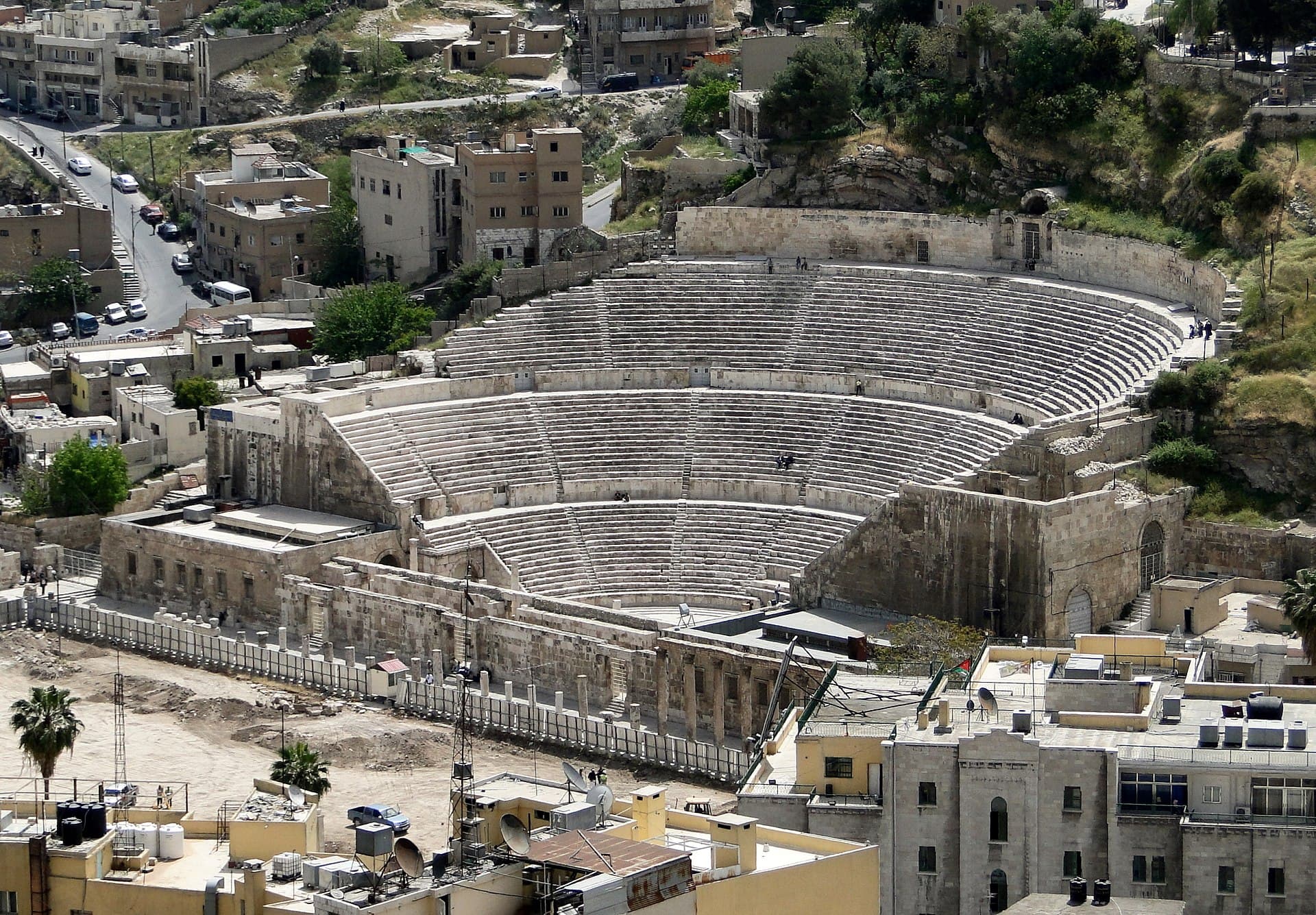
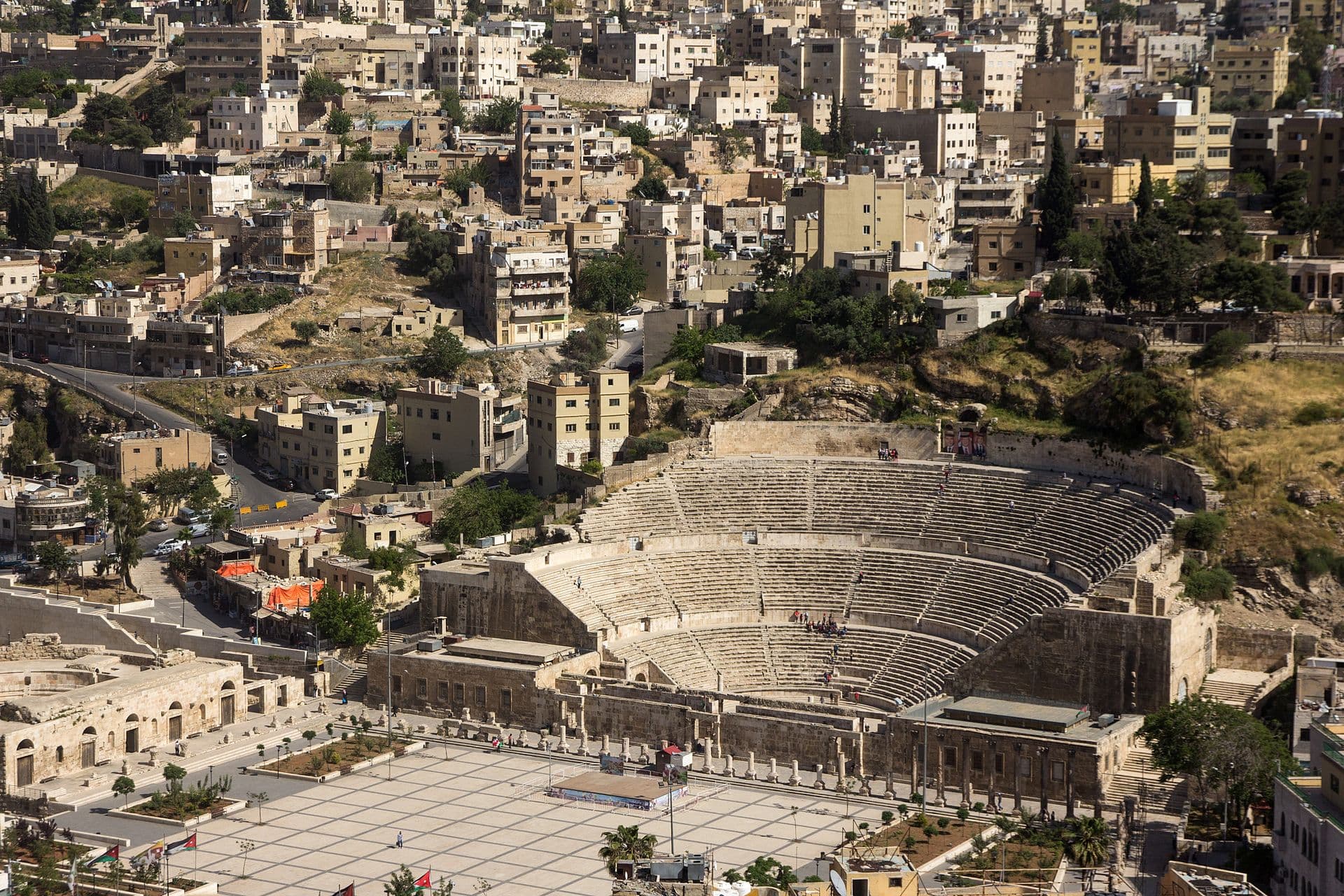
Amman and the North form the natural gateway to Jordan and concentrate a major share of the country's cultural and religious heritage. The region revolves around the capital Amman (4.5 million inhabitants in its metropolitan area, nearly half of Jordan's population), built on seven hills (jebels) like Rome — hence its nickname of 'White Rome'. Amman is a surprising city, both modern and ancient: on the Citadel (Jebel Al-Qala'a) stand the Roman Temple of Hercules (2nd century), the Umayyad palace (8th century) and a Byzantine basilica, while below unfolds the Roman Theatre (2nd century, 6,000 seats, still used for summer concerts).

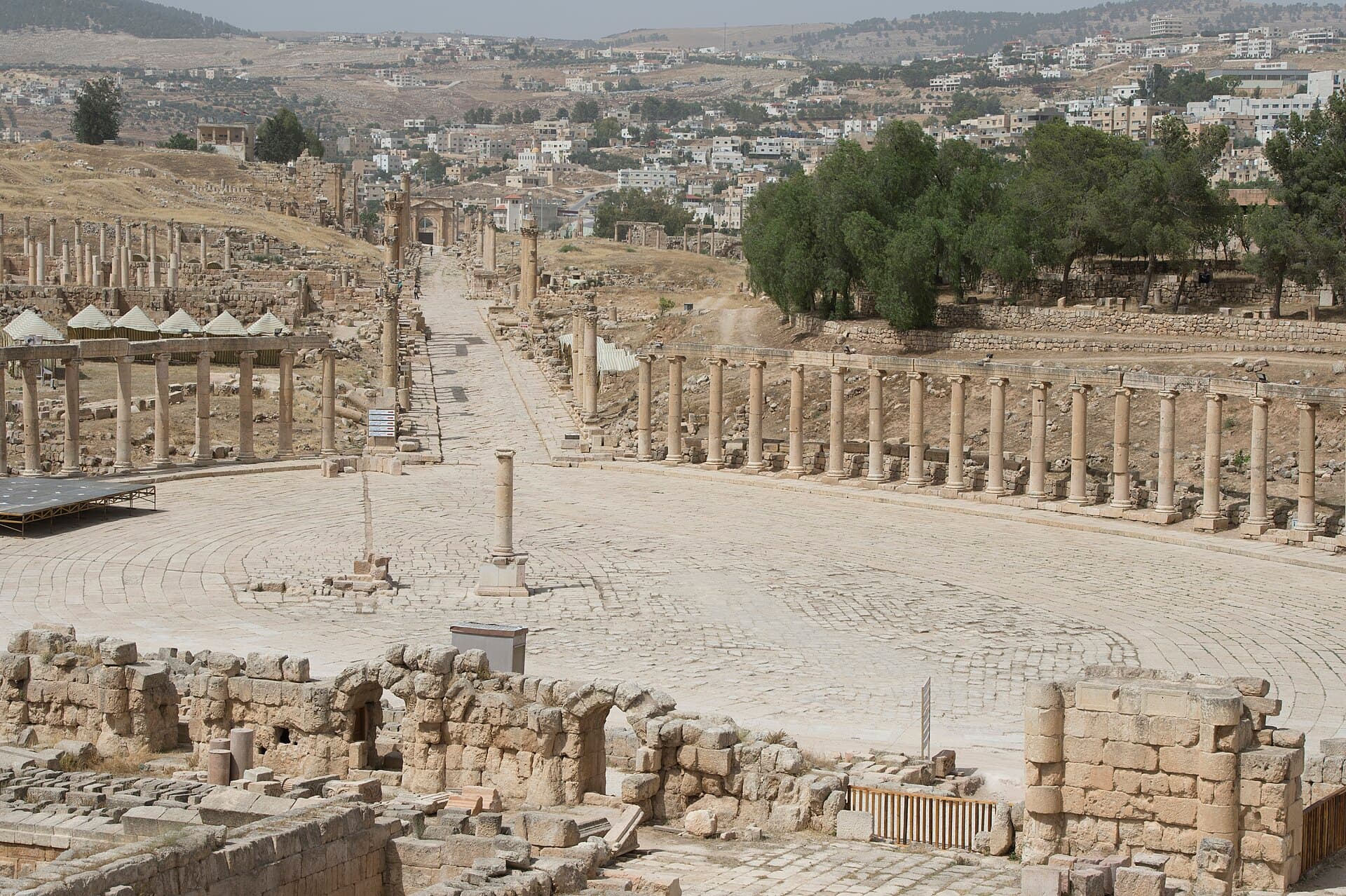
50 km north of Amman, Jerash (ancient Gerasa) is arguably the best-preserved Roman city in the Middle East — often called the 'Pompeii of the East'. Founded by Alexander the Great in the 4th century BC, it reached its peak under the Roman Empire (1st-3rd century) before being gradually abandoned after the 8th-century earthquakes. The 200-hectare site offers exceptional preservation: Hadrian's Arch (erected in 129 for the emperor's visit), the hippodrome (250 m long, 15,000 seats, still used for chariot race reenactments), the oval forum (unique square, surrounded by 56 Ionic columns), the cardo maximus (central avenue of 800 m lined with 500 columns), the Temple of Artemis (protector goddess of the city) and two remarkable theatres. A full day is needed to cover everything.

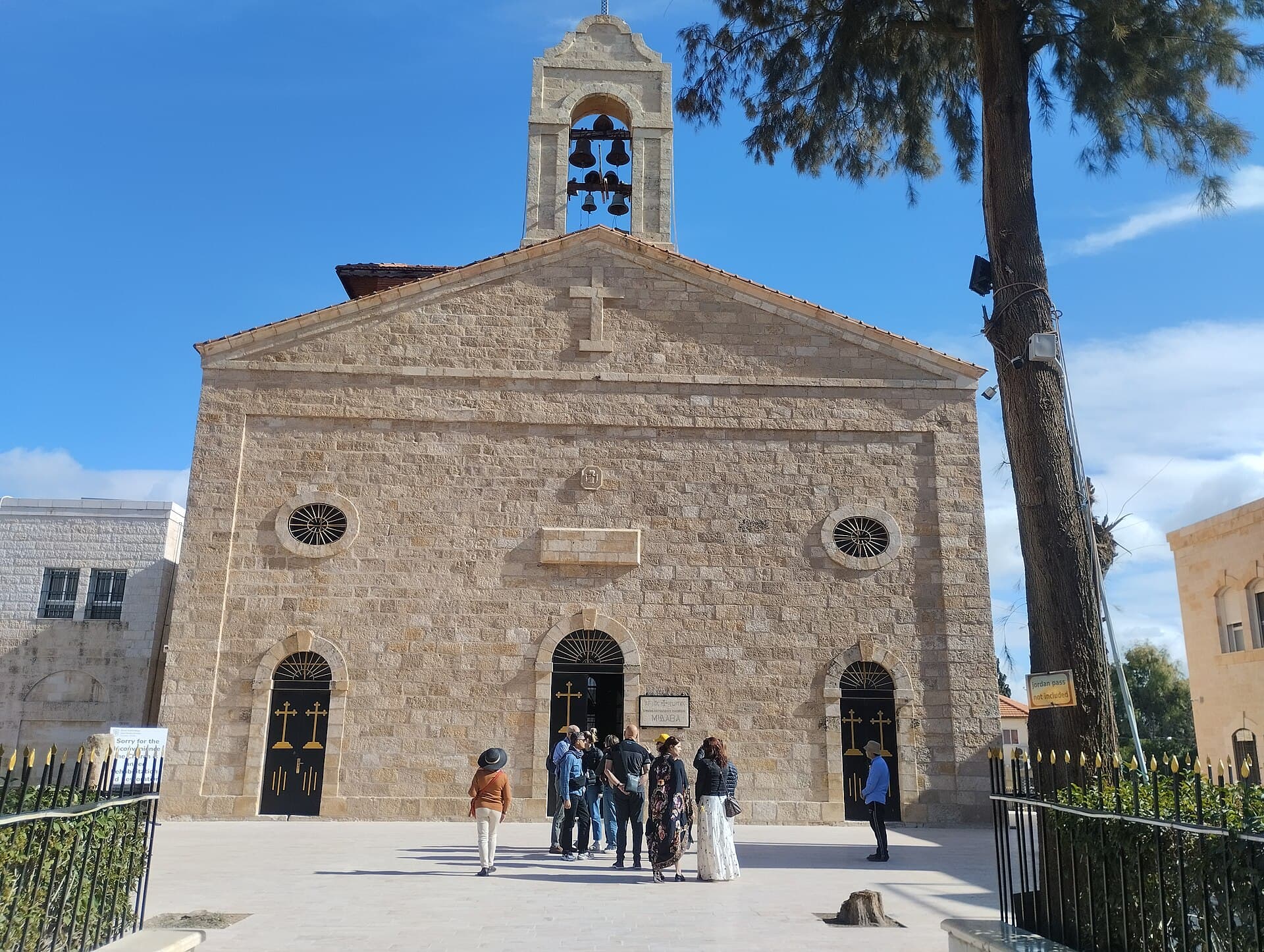
30 km southwest of Amman, Madaba (60,000 inhabitants, city with strong Christian minority) is Jordan's capital of Byzantine mosaics. Saint George's Basilica houses the famous mosaic map of the Holy Land (6th century), the oldest known cartographic representation of Jerusalem and Palestine — 2 million tesserae still visible, invaluable document for biblical topography. The town has about twenty other churches with remarkable mosaics. 10 km from Madaba, Mount Nebo (817 m) is, according to biblical tradition (Deuteronomy 34), the place where Moses saw the Promised Land before dying without being able to enter it. The Franciscan sanctuary (renovated in 2016) offers a spectacular view of the Jordan Valley, the Dead Sea and, on clear days, as far as Jerusalem and Bethlehem.

Further north, 75 km from Amman in the verdant hills of Jebel Ajloun, the Ajloun Fortress (Qal'at Ar-Rabad) is one of the finest examples of Arab-Muslim military architecture. Built in 1184 by a general of Saladin to counter the Crusaders settled at Belvoir (across the Jordan Valley), it dominates the region and offers, on clear days, views as far as Israeli Galilee. The Ajloun hills, covered with oaks, pines and olive trees, contrast surprisingly with the desert image usually associated with Jordan — this is where the Ajloun Forest Reserve is located, managed by the Royal Society for the Conservation of Nature, with hiking trails and ecolodges.

Explore Amman and the North

Spots in the region
Situation

Où se situe Amman and the North ?

Ouvrir la carte en grand sur OpenStreetMap →

Frequently asked questions

How many days do you need for Amman and the North?+
Plan for __2 to 3 days minimum__ for a balanced discovery: 1 day in Amman (Citadel atop Jebel Al-Qala'a, Roman Theatre at its foot, downtown with its souks and authentic Arab atmosphere, evening on Rainbow Street or Jabal Amman for the modern food scene); 1 full day at __Jerash__ (200 hectares to walk, Hadrian's Arch, hippodrome, oval forum, cardo maximus, Temple of Artemis); and half a day in __Madaba__ (mosaic map at Saint George's Basilica) with __Mount Nebo__ (biblical panorama over the Dead Sea and Jerusalem). With a 4th day, add __Ajloun__ and its green hills (Saladin's fortress, Forest Reserve trails), or the __Umayyad desert castles__ east of Amman (UNESCO Qasr Amra, Qasr Kharana).
How do you get from Amman to Jerash?+
Jerash is __50 km north of Amman__ (1h by car). Three options. 1) __Organised excursion__ from your Amman hotel: €35-60 per person for a half-day, transport + French- or English-speaking guide included (often combined with Ajloun or Umm Qais). 2) __Private taxi__ for the day: €50-80 for 6-8 hours on site (return trip + waiting time). Negotiate before departure, ask for a driver speaking some English. 3) __Public minibus__ from Tabarbour bus station (north Amman): 2-3 JOD (€2.50-4) per person, departs when full, 1h15 journey. Economical but unpredictable, not suitable for late return. The __Jordan Pass__ covers entry to Jerash (otherwise 10 JOD = €13).
What is the Madaba mosaic map?+
The __Madaba mosaic map__, displayed in the __Greek Orthodox Church of Saint George__, is the __oldest known cartographic representation of the Holy Land__. Created around 560 under Emperor Justinian, it originally covered 25 m by 5 m (94 m²) and depicted the entire region between Tyre to the north, Egypt to the south, the Mediterranean to the west and the desert to the east. It is composed of more than __2 million coloured tesserae__. The preserved part (about 25% of the original) shows Jerusalem in cavalier perspective (with the Damascus Gate, Cardo Maximus and Holy Sepulchre clearly identifiable), the Dead Sea (with fish dying as they enter), the Jordan River, and several biblical cities. It is an invaluable document for archaeologists who found biblical sites thanks to it (notably the Mount Nebo church). Visit: 1 JOD (€1.30), covered by the Jordan Pass.
What can you see from Mount Nebo?+
__Mount Nebo__ (817 m, 10 km west of Madaba) offers, on clear days, one of the __most history-laden views in the world__. At your feet, the green __Jordan Valley__ (biblical oasis of Jericho 25 km as the crow flies) and the __Dead Sea__ shimmering at -430 m altitude (you look downward even though you are 'at the summit'). Beyond: __Jericho__ (the oldest continuously inhabited city in the world, in Palestine), the __Jordan Valley__ with the Christ's baptism site at Bethany Beyond the Jordan (UNESCO 2015), the __Judean hills__ and, in very fine weather (rare, mainly in winter after rains), __Jerusalem__ and __Bethlehem__ on the horizon. According to Deuteronomy (chapter 34), this is where Moses saw the Promised Land before dying without being able to enter it. The Franciscan sanctuary (Memorial of Moses) was renovated in 2016 — modern basilica housing 6th-century Byzantine mosaics (summit archaeological park). Entry: 2 JOD (€2.60), covered by the Jordan Pass.
What can you see in Amman in one day?+
A well-organised day allows you to grasp Amman's essentials. __Morning__: climb to the __Citadel (Jebel Al-Qala'a)__ for the Temple of Hercules, Umayyad palace and Byzantine basilica — panoramic view over the city's 7 hills (entry 3 JOD = €4, covered by Jordan Pass). Visit the __Jordan Archaeological Museum__ on the Citadel (Petra artefacts, 9,000-year-old Ain Ghazal statues). __Midday__: walk down to the __Roman Theatre__ (2nd century, 6,000 seats, still in use) passing the Nymphaeum. Lunch in a downtown bakery (manakish, falafel). __Afternoon__: explore the __downtown souk__ (King Faisal Street, Sunday souk for spices, dates and Arabic coffee), then take a taxi to __Rainbow Street__ (Jabal Amman) for trendy cafés and the city's modern scene. __Evening__: dinner at the traditional __Sufra__ restaurant (mansaf, maqluba) or at the __Wild Jordan Center__ (panoramic terrace). With extra time, visit the __Royal Automobile Museum__ (King Hussein's private collection, historic cars).
Should you visit Ajloun and the desert castles?+
It depends on your interest and available time. __Ajloun__ (75 km north of Amman, 1h30) is highly recommended if you have 3-4 days in the North: the __Qal'at Ar-Rabad fortress__ (1184, built by a Saladin general against the Crusaders) is one of the world's finest examples of Arab military architecture, and the __green hills of Ajloun__ offer a striking contrast with Jordan's desert image (oaks, pines, olive trees, Forest Reserve ecolodges). Often combinable with Jerash in an organised day. The __Umayyad desert castles__ (UNESCO Qasr Amra with its exceptional frescoes, Qasr Kharana, Qasr Azraq where Lawrence of Arabia stayed) are __east of Amman__ (50-100 km) and require a full day by car/driver (€140-200 for the complete circuit). Interesting for lovers of early Islamic history, but less spectacular than Jerash or Petra for a first visit.
Is Amman's food scene worth the detour?+
Yes, Amman has become over the past 15 years one of the __most interesting culinary capitals in the Arab world__, at the crossroads of Palestinian, Lebanese, Syrian and Bedouin influences. For __traditional cuisine__: __Sufra__ (Jabal Amman, mansaf and maqluba in an elegant setting), __Hashem__ (downtown, falafel and hummus, institution since 1956, frequented by the royal family), __Beit Sitti__ (cooking class + traditional dinner, immersive experience). For __modern and creative cuisine__: __Fakhreldin__ (Jabal Amman, refined Lebanese), __Shams El-Balad__ (Jabal Amman, seasonal locavore cuisine), __Romero__ (Jordanian Italian). For __sweets__: __Habibah Sweets__ (institution since 1951, the best knafeh in Amman — downtown or Sweifieh), __Jabri__ (baklava and halawa). __Trendy neighbourhoods__ for going out: Rainbow Street, Weibdeh (artistic cafés), Sweifieh (shopping centres and restaurants). On Fridays, traditional brunch in the Marriott or Four Seasons hotels: impressive and delicious.

Our verdict

Amman and Northern Jordan are the unmissable gateway to the Hashemite Kingdom — not a simple stopover before Petra, but a major cultural destination in its own right. Dedicate at least 2 to 3 days to the region: 1 day in Amman (Citadel, Roman Theatre, downtown and souks, dinner in a traditional restaurant in Jabal Amman), 1 full day at Jerash (possibly combined with Ajloun for Crusader castle lovers) and half a day at Madaba and Mount Nebo (combinable en route to the Dead Sea). The best season is March-May for the green hills after winter rains, or September-November for calmer conditions and reduced crowds. Avoid winter (intense cold, possible snow) and midday summer (extreme heat on exposed sites). The Jordan Pass covers all these sites (Citadel, Jerash, Ajloun, Madaba, Mount Nebo) — purchase paid off from the second site visited.

Mowando Letter

Once a month: the right destinations for the right season + the best booking windows.

No spam. One-click unsubscribe. Your data is never shared.