Rome holds a number of first-rank sights without equal in any other single city in the world. The itinerary structures itself around three main poles.
The Vatican pole is the absolute priority on a first trip. The Vatican Museums — the largest collection of religious art on earth, with Michelangelo's frescoes in the Sistine Chapel, Raphael's Stanze and the Pinacoteca — need a half-day at minimum. The visit ideally ends with St Peter's Basilica and the climb up the dome for a panorama you'll find nowhere else. Book online several days ahead, or join a guided tour with priority entry that bypasses the worst queues.
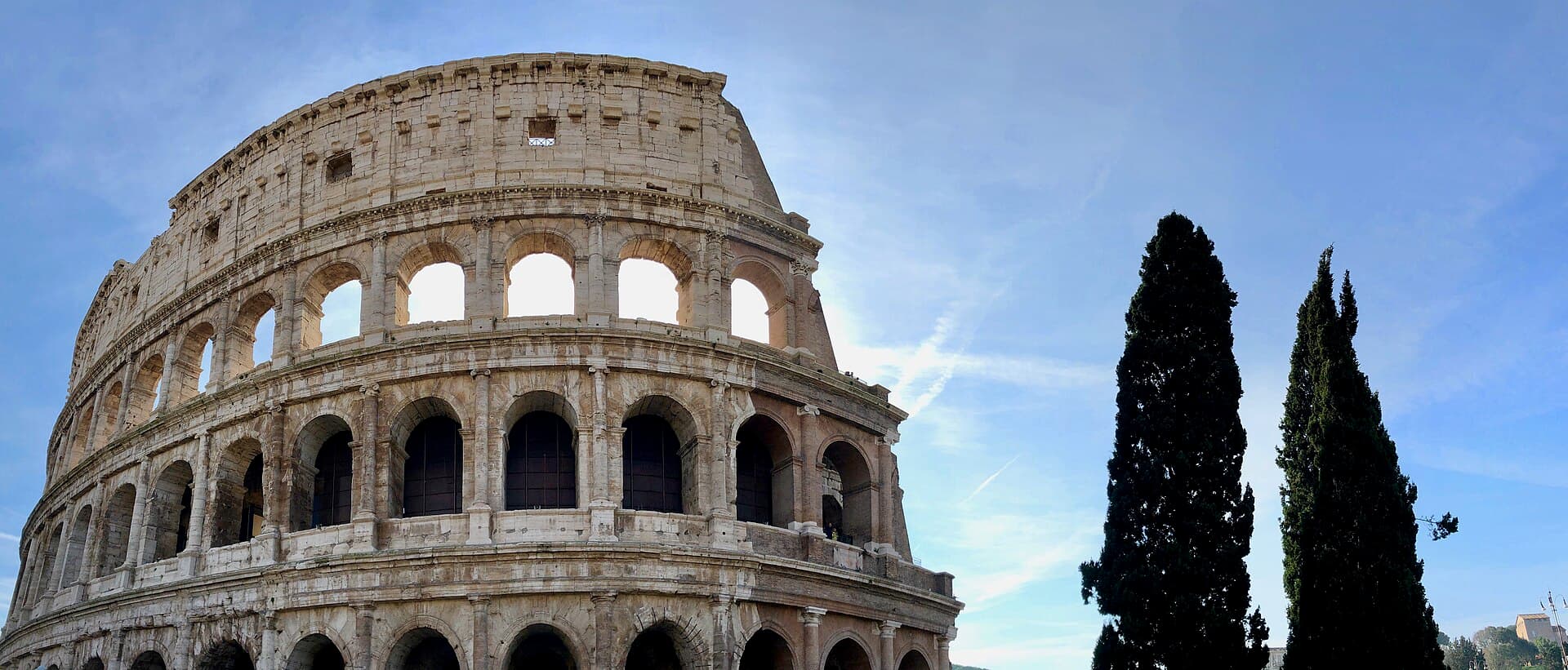
The ancient Rome pole groups together the Colosseum (a 50 000-seat amphitheatre built in AD 72), the Roman Forum (the political heart of the Empire for five centuries) and the Palatine Hill (the imperial residence and Rome's mythological birthplace). The combined Colosseum-Forum-Palatine ticket is the standard option. Add the Baths of Caracalla (third-century AD, capable of bathing 8 000 people a day at full tilt) for one of the most striking architectural sights of antiquity.
The Baroque historic centre unfolds on foot: from the Pantheon (the best-preserved building of Roman antiquity, beneath a concrete dome that inspired Michelangelo) to Piazza Navona (Roman Baroque at its swaggering peak, with Bernini's Fountain of the Four Rivers as centrepiece), via the Trevi Fountain and Piazza del Popolo. The circuit fills a full walking day, ideally launched first thing in the morning to reach each square before the day groups.
Beyond the headline list, Rome rewards anyone willing to step off the tourist treadmill. The Mercato di Testaccio (covered, Tuesday-Saturday) is one of the best in the city for local Lazio produce. The Capitoline Museums (Musei Capitolini) hold the oldest public collection in the world and are often noticeably less crowded than the Vatican. The Villa Borghese gallery is a quieter jewel that justifies its mandatory advance reservation — Bernini's Apollo and Daphne sculpture alone is worth a Roman afternoon. In the evening, Trastevere and Monti gather the best restaurants and wine bars without the tourist mark-up of the historic centre.
Read also
- Central Italy: Rome, Florence and Tuscany — The region that holds the richest artistic heritage in Europe.
- Florence, cradle of the Renaissance — Ninety minutes by train from Rome: the Uffizi, Brunelleschi's Dome and the Chianti hills.
- Italy — Complete country guide: entry rules, budget, when to visit, regions.
- Venice, La Serenissima — Canals, Gothic palaces and an atmosphere found nowhere else in the world.