Rome is the most expensive Italian capital after Venice, but still affordable compared to Paris, Amsterdam or Zurich for an equivalent comfort level. A baseline of €120 per person per day covers a comfortable stay: a double room in a well-located three-star hotel, lunch in a neighbourhood trattoria, dinner in a good restaurant and two to three museum entries.
Accommodation covers every band. A bed in a Trastevere or Monti hostel dormitory runs €25-40 a night. A decent double room in a B&B sits between €80 and €130 depending on the season and proximity to the centre. A four-star hotel in the historic centre (Navona, Trevi) starts at €180-250 a night. Roman palace hotels (Hotel de Russie, Hotel Eden, Hassler Villa Medici) sail past €600 a night and often well beyond.
The food scene is one of Rome's best value propositions. An espresso at the counter costs €1-1.50. A full lunch (antipasto, pasta, water, glass of wine) in a Testaccio or Pigneto family trattoria runs €18-28 per person. A pizza in a good pizzeria (Bonci, Roscioli) costs €10-16. A tasting menu in a starred restaurant (La Pergola, Imàgo) clears €150 per person before wine. Steer clear of the restaurants ringed around the Vatican and the Trevi Fountain — they charge tourist rates without delivering tourist-trap quality.
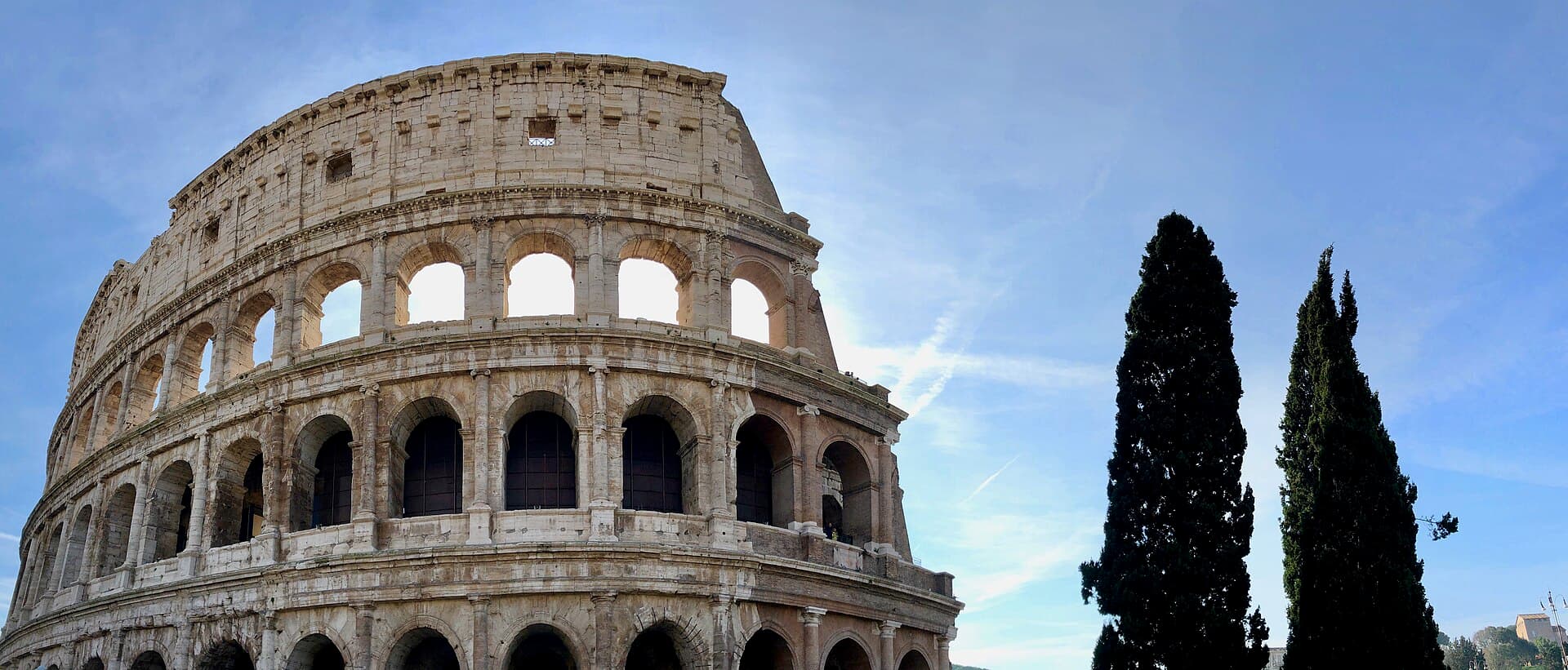
Entry fees add up. Colosseum + Forum + Palatine: €18 adult (online booking required, with a €2 fee). Vatican Museums + Sistine Chapel: €17-21 depending on the booking channel. Galleria Borghese: €15 (advance reservation mandatory). Pantheon: free before 9am, €5 afterwards. Capitoline Museums: €15. Free entry across all state museums on the first Sunday of each month — but expect crowds. Budget €15-25 per day on sights if you visit two to three paid places.
Local transport is genuinely cheap: a bus/metro ticket is €1.50 (75 minutes), a day pass €7, a 48-hour pass €12.50. A licensed taxi from Fiumicino is a fixed €50 to the centre; from Ciampino, €31. Uber operates in Rome and is often cheaper than the taxi rank for in-city journeys.
Read also
- Central Italy: Rome, Florence and Tuscany — The region that holds the richest artistic heritage in Europe.
- Florence, cradle of the Renaissance — Ninety minutes by train from Rome: the Uffizi, Brunelleschi's Dome and the Chianti hills.
- Italy — Complete country guide: entry rules, budget, when to visit, regions.
- Venice, La Serenissima — Canals, Gothic palaces and an atmosphere found nowhere else in the world.