Mowando

Region

South Iceland

The most natural-site-dense stretch of the Ring Road: 350 km at the foot of the Vatnajökull glacier, between waterfalls, volcanic beaches and iceberg lagoons.

4.90

Iceland's South Coast is probably the most spectacular stretch of the Ring Road and one of the country's most prized tourist itineraries. Across 350 km between Selfoss (50 km east of Reykjavik) and Höfn (south-east), Route 1 hugs the Atlantic coast with the Vatnajökull glacier (Europe's largest by volume) as backdrop — a decor changing with every kilometre, combining vertiginous waterfalls, black-sand beaches bristling with basalt columns, glacier tongues reaching down to the sea, and lagoons studded with blue icebergs.

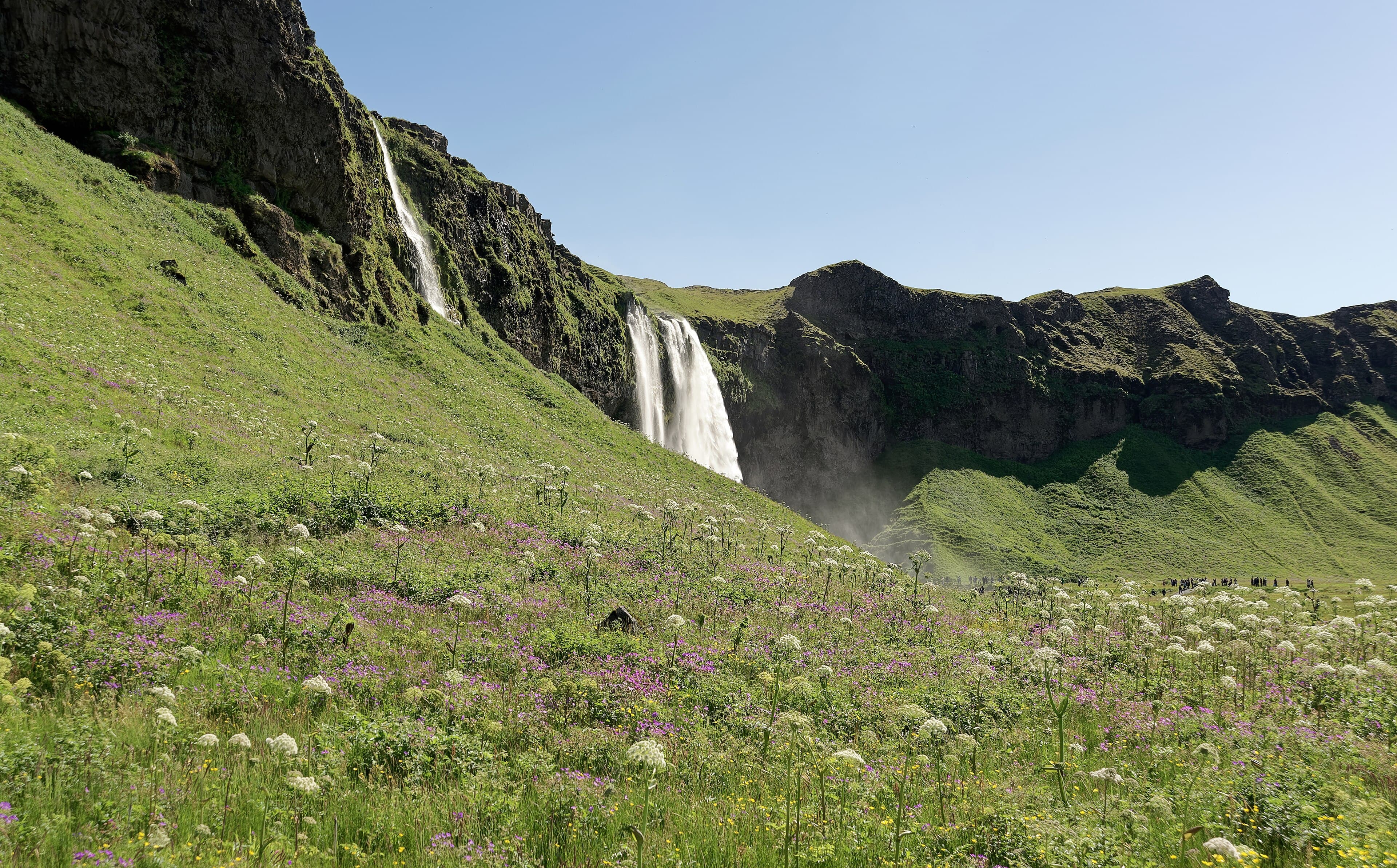
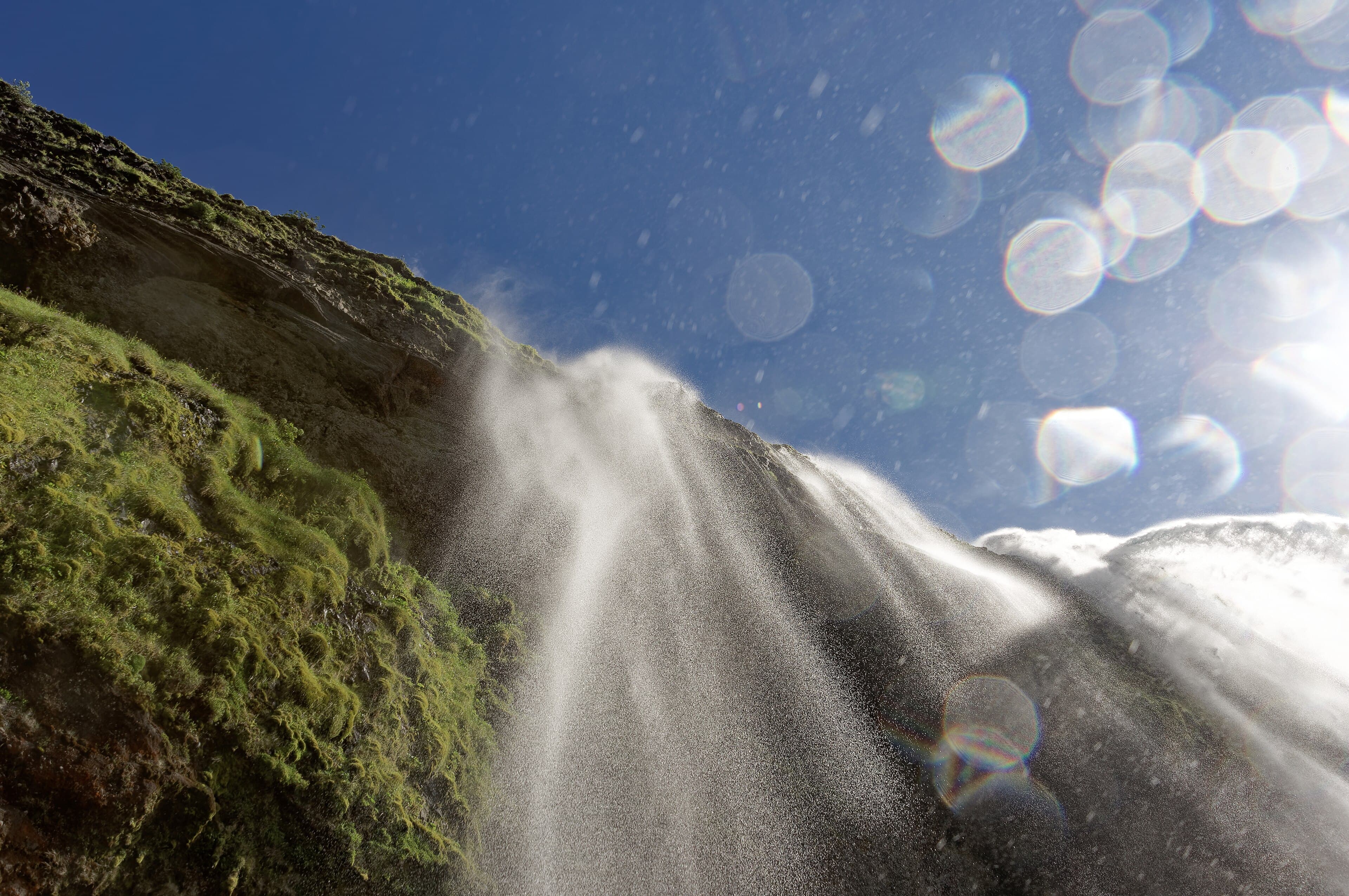
The south coast's emblematic waterfalls are Seljalandsfoss (60 m drop, with a wet trail allowing you to walk behind the curtain of water) and Skógafoss (60 m drop, a perfectly rectangular wall of water, one of the most photographed in Iceland). Between the two, the Eyjafjallajökull glacier (the one that paralysed European aviation in 2010) blankets the mountain and feeds several smaller waterfalls. At the snout of the Sólheimajökull glacier, guided hikes (€90-150 with equipment) let you walk on blue ice streaked with black volcanic ash.

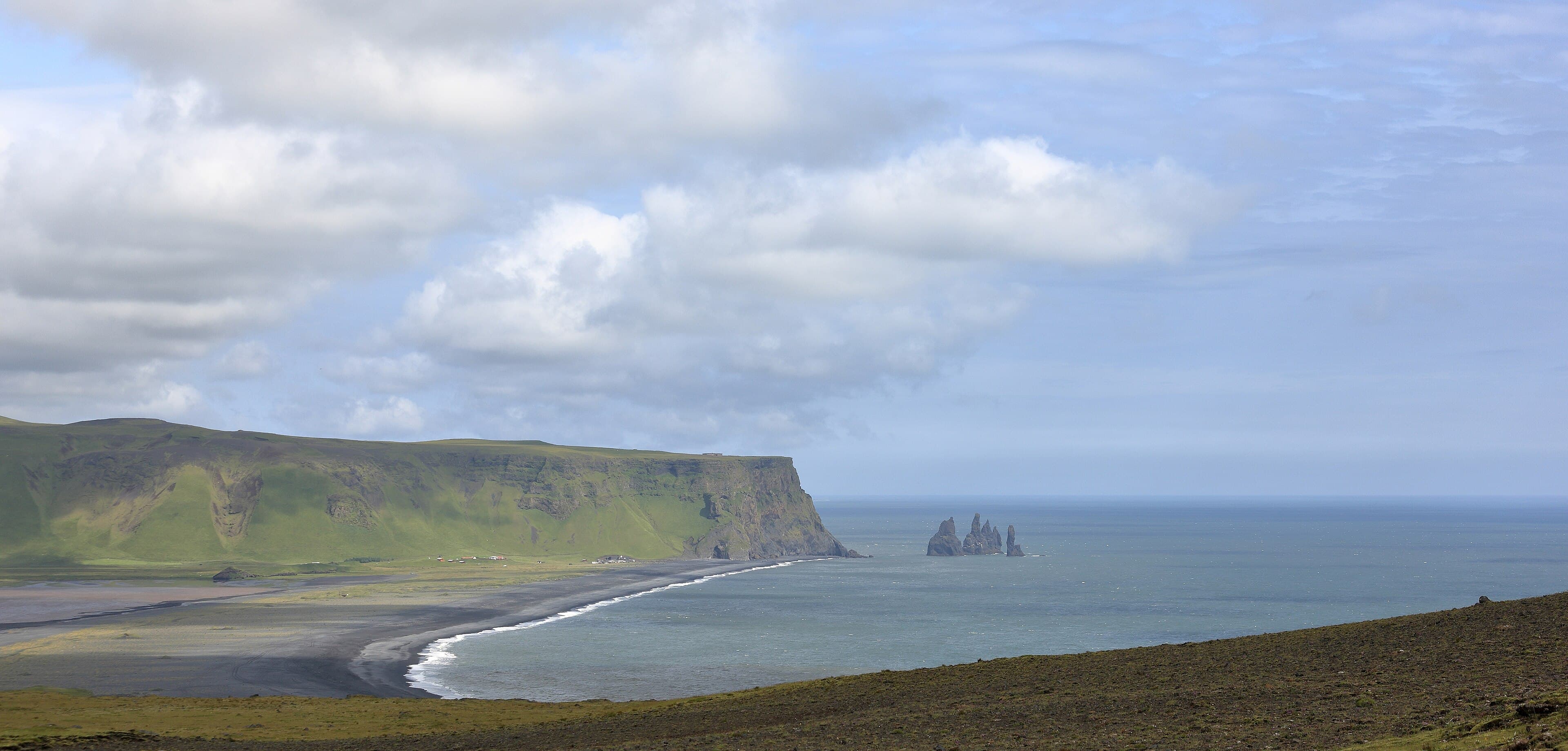
The Reynisfjara beach, 5 km west of Vík, is one of Iceland's most famous beaches: black volcanic sand, basalt columns (hexagonal basalt pillars carved by lava), Reynisdrangar sea stacks rising from the ocean, and the Hálsanefshellir cave with its perfect columnar walls. Warning: the beach has caused several recent deaths through sneaker waves (unusually powerful waves) — strictly observe the warning signs and stay more than 30 m from the edge. The village of Vík (300 inhabitants), with its small red church perched on a hill and its hotel-restaurant, is the only major stopover between Selfoss and Höfn.

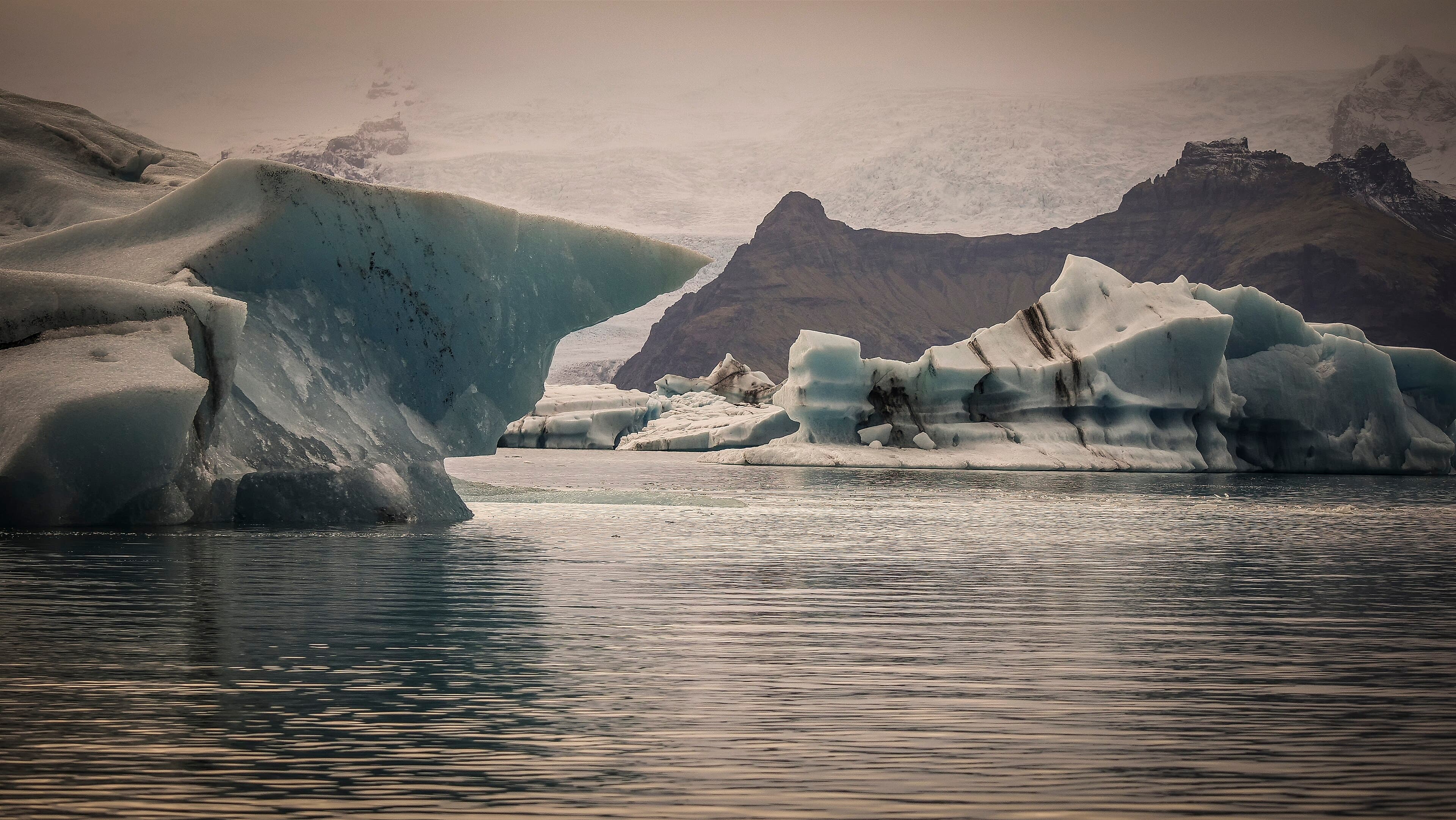
The apotheosis of the south coast is the Jökulsárlón glacial lagoon, 200 km east of Vík and 80 km west of Höfn. This 18 km² lagoon, 248 m deep, gathers icebergs that calve from the Breiðamerkurjökull glacier (a Vatnajökull tongue) — a spectacle of icebergs slowly drifting to sea in surreal blue water. Amphibious zodiac tours let you navigate between the blocks (€60-90/person, May to October). Opposite, the Diamond Beach is a black-sand beach strewn with stranded iceberg fragments glittering like diamonds in the sun — one of Iceland's most iconic photo sites.

Explore South Iceland

Spots in the region
Situation

Où se situe South Iceland ?

Ouvrir la carte en grand sur OpenStreetMap →

Frequently asked questions

How many days do you need to visit the Iceland south coast?+
Minimum 2-3 days to reach Jökulsárlón comfortably. Day 1: Reykjavik-Vík (Seljalandsfoss, Skógafoss, Sólheimajökull, Reynisfjara), night at Vík. Day 2: Vík-Jökulsárlón-Höfn (300 km), night at Hof or Hali. Day 3: direct return Höfn-Reykjavik (450 km, 6 h) or continuation toward the east fjords. In 4-5 days, you can add Þórsmörk (nature reserve accessible by 4x4 or special bus), a glacier hike on Sólheimajökull and a blue ice cave (winter only, November-March).
Can you do the south coast in one day from Reykjavik?+
Yes, but it's not optimal. Day tours from Reykjavik (€110-140/person, 11-12 h, bus) cover Seljalandsfoss, Skógafoss, Sólheimajökull and Reynisfjara, with evening return. It's intense (12 h of bus round trip) and doesn't allow reaching Jökulsárlón (still 200 km further). For Jökulsárlón, you need a minimum 2-day trip with overnight stay. Organised 2-day Jökulsárlón tours cost €350-500/person with lodging.
Is Reynisfjara beach really dangerous?+
Yes, and it must be taken seriously. The beach suffers from __sneaker waves__ — unusually powerful waves that can appear without warning from the Atlantic and sweep careless visitors into the sea. Several tourist deaths have been recorded in recent years (5 deaths since 2007). Strictly observe the warning signs, never turn your back to the ocean, stay more than 30 metres from the edge and never go down on the wet sand. Vigilance is particularly important on stormy or rough-sea days (check conditions on safetravel.is).
How do you visit the Vatnajökull glacier?+
Several options depending on your adventure level. The __glacier hike__ on Sólheimajökull (€90-150/person, 3-4 h with equipment provided, crampons + ice axe, departure from Skógar or Vík) is accessible to all levels and lets you walk on blue ice. The __blue ice caves__ (€150-200/person, November to March only, departure from Jökulsárlón) are a more exclusive experience: you enter ice cavities formed by sub-glacial rivers. For experienced hikers, __multi-day crossings__ with high-mountain guide are organised on Vatnajökull (count €500-1,200/day).
Do you have to pay to visit the south coast waterfalls and beaches?+
Most main sites are free, but parking is charged. __Seljalandsfoss__: parking ISK 700 / €4.50. __Skógafoss__: free parking. __Reynisfjara__: free parking. __Jökulsárlón__: free parking (lagoon and Diamond Beach), but zodiac tour paid (€60-90). Walking behind Seljalandsfoss requires a waterproof (sold on site) and a waterproof bag for camera gear. Activities are paid: glacier hike €90-150, ice cave €150-200, Jökulsárlón zodiac €60-90.
What accommodation should you choose on the south coast?+
Three recommended stopover zones. __Hella or Hvolsvöllur__ (100 km from Reykjavik): good launch point before Seljalandsfoss, quality hotels like Hotel Rangá (design, Eyjafjallajökull view, €350-500/night) or Hotel Hvolsvöllur (mid-range, €180-260). __Vík or Skógar__: central stopover after the waterfalls, Hotel Kría (Vík, sea view, €200-300), Hotel Skogafoss (€220-280) or Hotel Vík (€180-240). __Jökulsárlón region (Hof, Hali, Höfn)__: to photograph the lagoon at dawn, Fosshotel Glacier Lagoon (€200-300), Hali Country Hotel (€180-240), Guesthouse Gerdi (with locals, €130-180).
Can you see puffins on the south coast?+
Yes, at __Dyrhólaey__ (rocky peninsula 5 km west of Vík) between __May and early August__. Puffins nest in the cliffs and return to nests in late afternoon (4pm-10pm). The site is free, accessible by a small paved road up to the top car park, with a marked path to the cliffs. Never try to touch or feed puffins, and stay at distance from burrows. Observation is by binoculars or telephoto lens. The Dyrhólaey lighthouse also offers a magnificent panorama over Reynisfjara beach and the Dyrhóláey rock arch.

Our verdict

Iceland's South Coast is the unmissable itinerary of any trip of at least 5 days in Iceland, and the natural complement to the Golden Circle. Plan 2-3 days minimum to cover it comfortably (1 night at Vík, 1 night in the Jökulsárlón region), with direct return to Reykjavik on day 3 or continuation toward the east fjords on the full Ring Road. Our tip: leave early from Reykjavik to have Seljalandsfoss and Skógafoss before 10am, lunch at Vík (excellent Suður-Vík restaurant), spend the night at Hof or Hali (lodges with Vatnajökull views) to photograph Jökulsárlón at dawn and sunset without crowds.

Mowando Letter

Once a month: the right destinations for the right season + the best booking windows.

No spam. One-click unsubscribe. Your data is never shared.