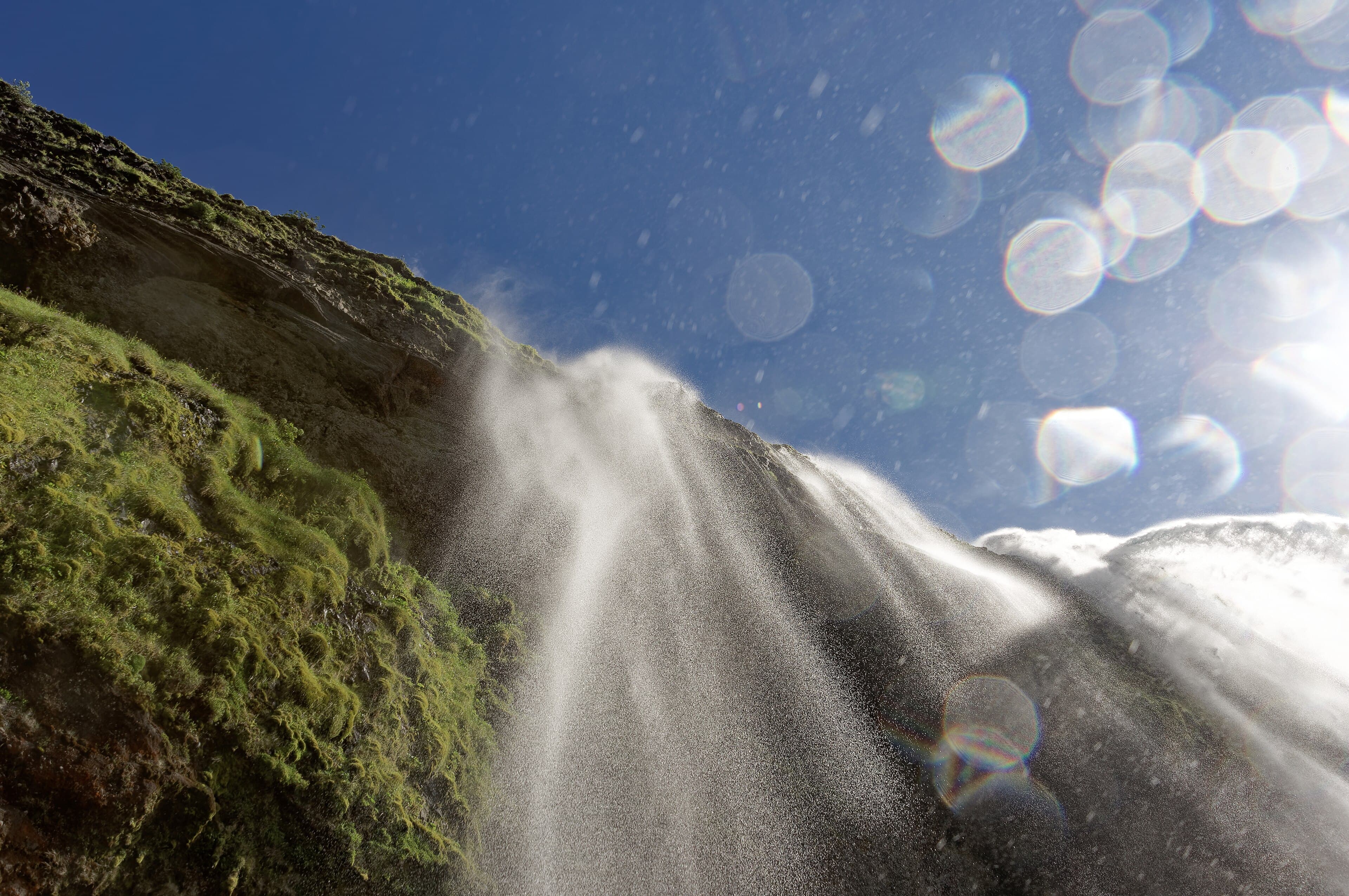
Iceland's South Coast is visited year-round, with two seasons of radically different characters.
From May to September is the most accessible season. All roads are open, days are long (16-21 h of light), waterfalls are at full power (May-June snowmelt) and Jökulsárlón zodiac tours run at full capacity. This is the puffin nesting period at Dyrhólaey (May-August) and the opportunity to hike the Skógar-Þórsmörk trail (Fimmvörðuháls, 25 km, accessible mid-June to late August). The trade-off: heavy crowds at Seljalandsfoss and Reynisfjara between 10am and 4pm, accommodation to book 3-4 months ahead, and no Northern Lights possible before late August.
From November to March is blue ice cave season — formed only in winter in the Vatnajökull glacier, accessible only by guided tour (€150-200/person, departure from Jökulsárlón). It is also the best period to observe Northern Lights from south coast lodges (Hotel Rangá, Fosshotel Glacier Lagoon). The partially frozen waterfalls and snowy coast offer a fairy-tale decor. The trade-off: sometimes extreme driving conditions (Route 1 between Hella and Vík can be closed for several days during blizzards), very short days (4-5 h of light in December), and risk of activity cancellation depending on weather.
September-October and April are interesting shoulder seasons: prices down 40%, crowds easing, still-easy access to main sites, and possibility of Northern Lights at the end and start of the period. May is also excellent: already long days (16 h of light), waterfalls at full flow, start of puffin season.
Read also
- Jökulsárlón, glacial lagoon — Iceland's most famous lagoon: floating icebergs, Diamond Beach and zodiac tours.
- Seljalandsfoss, the waterfall you walk behind — 60 m drop you can walk behind via a wet trail — an unforgettable experience.
- Vík and the black Reynisfjara beach — Black volcanic sand beach with sea stacks and a basalt-columned cave.
- The Golden Circle — The Þingvellir-Geysir-Gullfoss loop, the natural complement before the south coast.