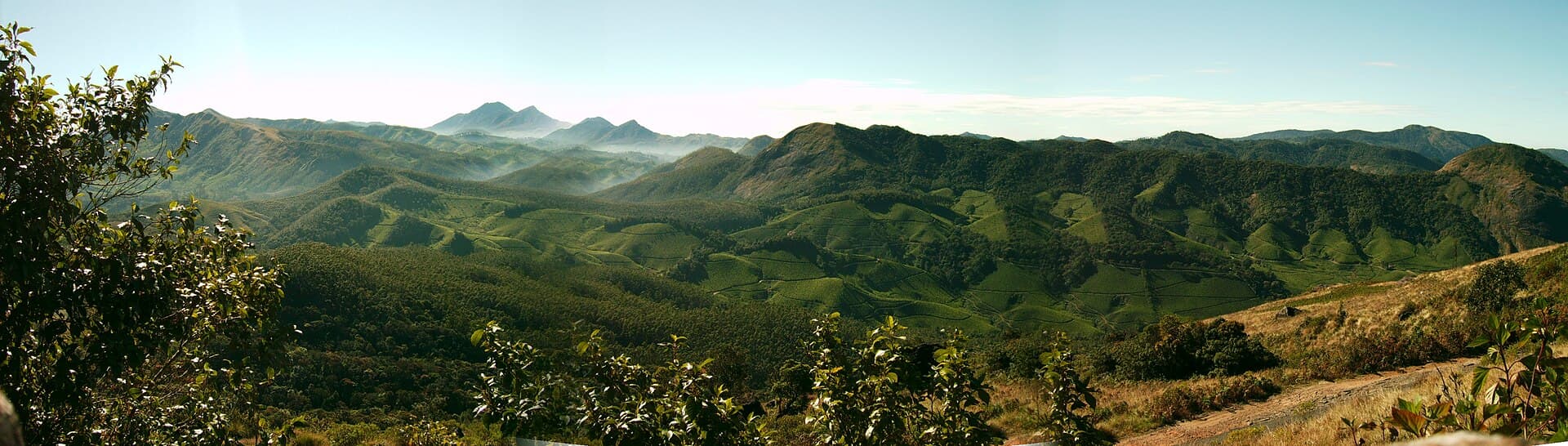
The Kerala & South region offers a radically different Indian experience — gentler, more soothing, less chaotic than the country's North. Kerala is one of India's most prosperous states (GDP per capita 2x national average, highest literacy rate at 96%), with an exceptional centuries-old tradition of religious tolerance (53% Hindus, 26% Muslims, 18% Christians — Asia's oldest Christian community, since the 1st century with St Thomas, and India's oldest Jewish community at Cochin).
Keralan geography structures tourism. The state stretches 580 km along the Arabian Sea, wedged between the Western Ghats range (UNESCO since 2012) east and the Malabar coast west. This creates three distinct zones: coastlines and beaches (Kovalam, Varkala, Marari), central plains with backwaters (Alleppey, Kumarakom, Kollam, 96 km Vembanad lake), and hills and plantations (Munnar at 1,600 m, Wayanad, Thekkady-Periyar).
Our angle: Kerala is the perfect gentle alternative to chaotic North India. For a first trip to India, for a couple's trip, for families with children, for travellers returning from a first Delhi-Rajasthan trip seeking radical contrast, or simply for those wanting an "easy" India, it's the most rational choice. UNESCO heritage density is lower than the North (Kerala has only 1 mixed UNESCO site with the Ghats), but the experience richness — backwaters, plantations, Ayurveda, gastronomy, atmosphere — is exceptional.
Read also
- Kerala Backwaters — Alleppey houseboats — Kerala's signature experience: kettuvallam night on Lake Vembanad canals, silent gliding between rice paddies.
- India — complete country guide — Everything to know: mandatory e-Visa, currency, regions, best time to visit.
- Delhi & Rajasthan — The classic alternative: Golden Triangle, Taj Mahal, Maharaja palaces, Thar desert.
- Goa — Portuguese heritage and festive beaches — beach complement to quieter Kerala.