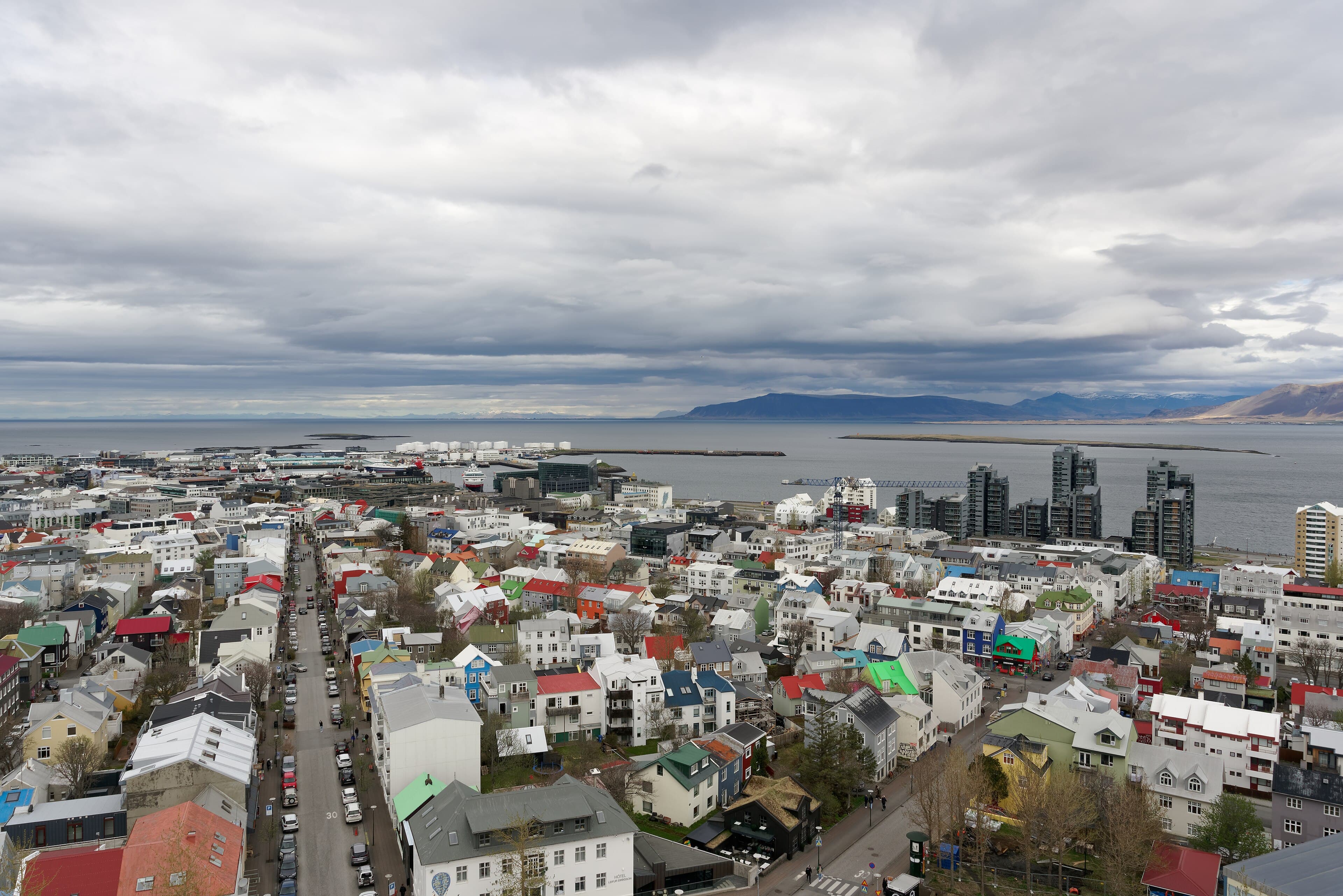
Reykjavik and the Southwest are visited year-round, with a maritime climate tempered by the Gulf Stream — less extreme than the highlands but marked by very strong winds and near-constant humidity.
From May to September, days are long (16 to 21 hours of daylight), temperatures sit between 10 and 15 °C (sometimes 18-20 °C on still, sunny days), and all tourist infrastructure runs at full capacity. Reykjavik moves to the rhythm of festivals (Iceland Airwaves in early November, Reykjavik Pride in August, Secret Solstice in late June), terraces and nightlife along Laugavegur. This is the high tourist season: book hotels, Blue Lagoon, car hire and gastronomic restaurants 2 to 4 months ahead.
From October to March, it's aurora season. Nights are long (in December, only 4 hours of daylight in Reykjavik), often clear on the Reykjanes peninsula, and the sky regularly lights up with spectacular green veils. The Blue Lagoon in falling snow, Christmas markets in Reykjavik in December, winter festivals (Light Festival in late February) — the winter experience is unique. The flip side: driving conditions can be tough (black ice, blizzards, winds at 100 km/h+), and some days are so grey you literally see nothing.
April and May offer an interesting window for canny travellers: lower prices, lengthening days, last Northern Lights up to mid-April, and gradually stabilising weather. Our recommendation for a first trip that combines climate comfort and reasonable budget.
Read also
- Reykjavik, the world's northernmost capital — Hallgrímskirkja, Harpa, street art, music scene and new Nordic gastronomy.
- The Blue Lagoon — The world's most famous milky-blue geothermal lagoon, 20 minutes from the airport.
- The Golden Circle — Þingvellir, Geysir and Gullfoss: the must-do day loop from Reykjavik.
- Iceland — Complete country guide: Schengen entry, budget, when to go, regions.