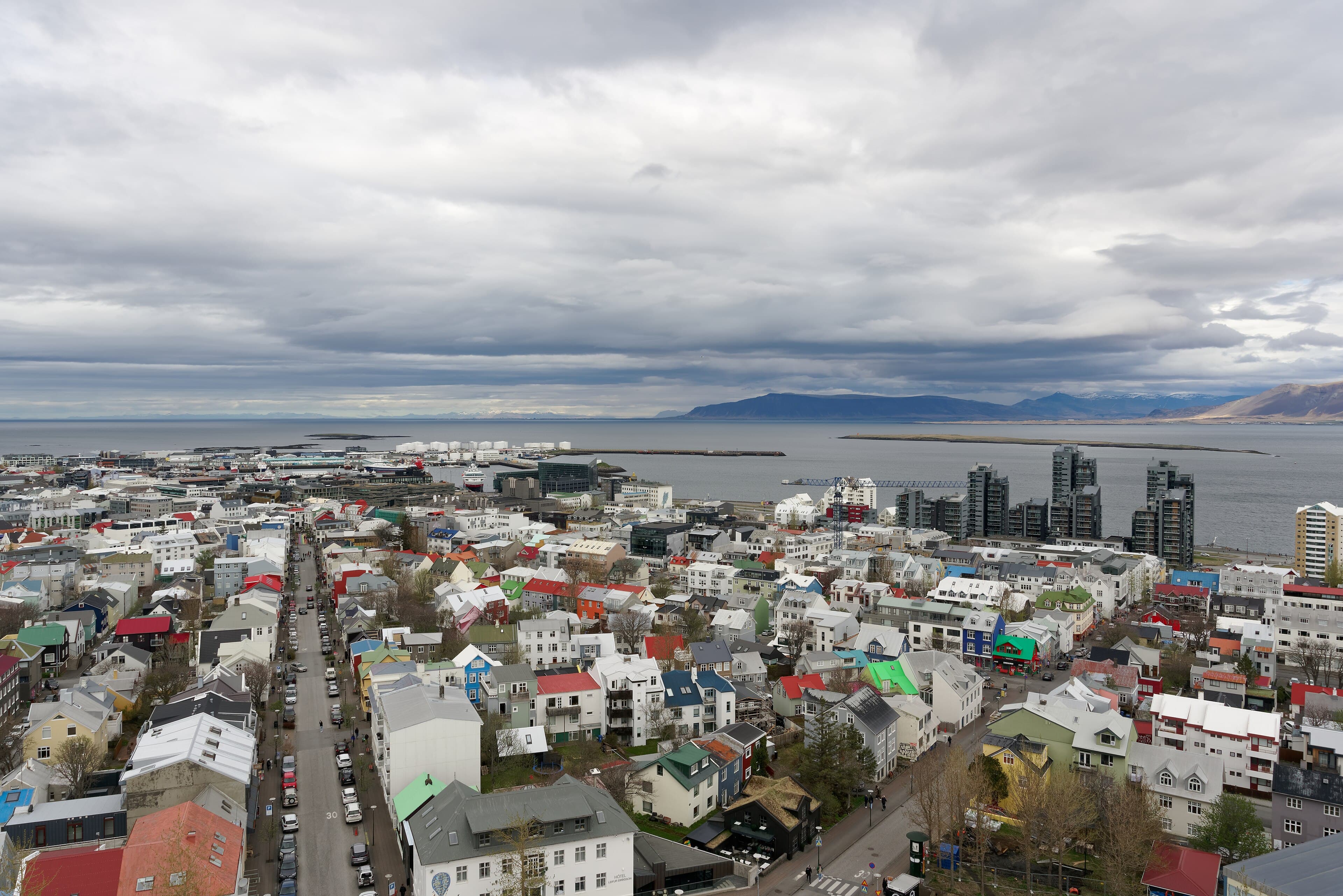
Reykjavik and the Southwest are organised around three main poles: the capital Reykjavik and its districts (historic centre, Grandi, Laugar), the Reykjanes peninsula (the country's entry point at Keflavík, the Blue Lagoon, the active volcanic zones) and the Suðurnes and Hafnarfjörður area (south-eastern outskirts of Reykjavik, quick access to the Golden Circle).
For a short stay (2-3 days), Reykjavik and the Blue Lagoon are enough. The capital is walkable: morning at Hallgrímskirkja and Harpa, afternoon along Laugavegur and at the old harbour (optional 3-hour whale tour), evening at a new-Nordic restaurant (Dill, Matur og Drykkur, Snaps). The next day, half a day at the Blue Lagoon (ideally early to avoid crowds), then exploring the Reykjanes peninsula (Bridge Between Continents, Reykjanesviti lighthouse, recent eruption sites if accessible).
Over a week (5-7 days), the itinerary naturally extends to the Golden Circle (1 day), the south coast as far as Vík (1-2 days) and a return via the Jökulsárlón lagoon if time allows. A hire car is essential the moment you leave intra-muros Reykjavik. Rural lodgings in the region (ION Adventure Hotel on Reykjanes, farm guesthouses of the Suðurland) offer an alternative to capital hotels and make aurora hunting easier in winter.
Read also
- Reykjavik, the world's northernmost capital — Hallgrímskirkja, Harpa, street art, music scene and new Nordic gastronomy.
- The Blue Lagoon — The world's most famous milky-blue geothermal lagoon, 20 minutes from the airport.
- The Golden Circle — Þingvellir, Geysir and Gullfoss: the must-do day loop from Reykjavik.
- Iceland — Complete country guide: Schengen entry, budget, when to go, regions.