ile
Santorini
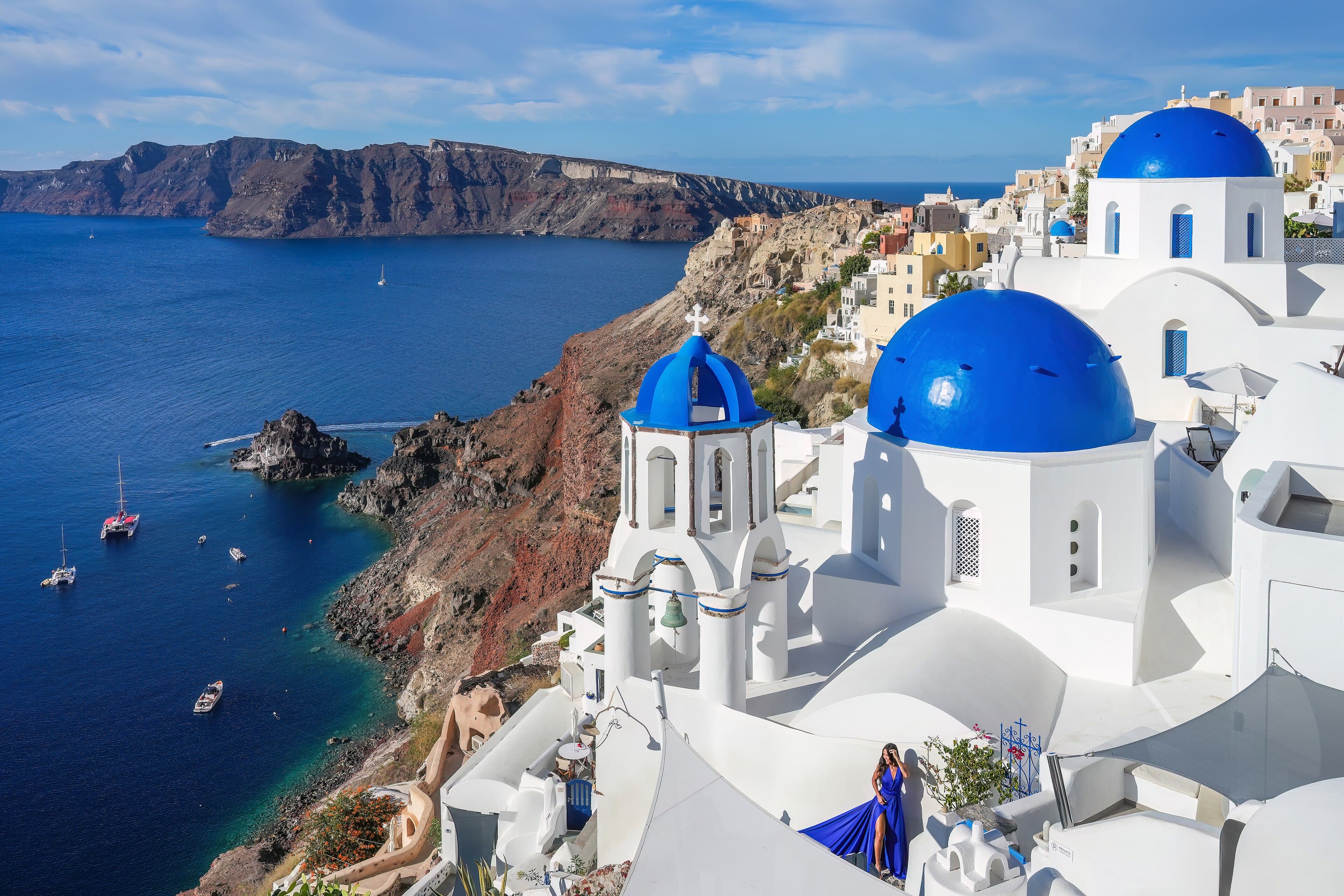
Oia, its blue domes and its sunset — the ultimate cliché of Greece, and one that somehow still delivers.
Santorini was born of one of the largest volcanic eruptions in recorded history, an Aegean Pompeii event that hollowed out the island's southern half and left behind the 300-metre cliffs of today's caldera. Three and a half thousand years later, the villages of Fira and Oia cling to the rim like sugar-cubes on a slate, their cubic houses, blue domes and infinity terraces hanging over the deepest blue water in the Mediterranean. Add black- and red-sand beaches, volcanic vineyards producing the famously mineral assyrtiko white wine and the prehistoric site of Akrotiri, and Santorini reveals itself as a far more layered island than its Instagram reputation suggests. The sunset over Oia remains one of the most coveted spectacles in all of Greece.
For first-time visitors, Santorini is essentially a love letter to the Cyclades in concentrated form. You can walk the spectacular Fira-to-Oia cliff path before breakfast, swim off black volcanic sand at Perissa by lunchtime, and finish the day with a glass of Assyrtiko on a caldera-edge terrace as the sky turns crimson. Returning travellers find a quieter Santorini in the inland villages — Pyrgos, Megalochori, Emporio — where Cycladic life still runs on grandmother time and ouzo is poured by people who remember the island before tourism. Yes, Santorini is busy, expensive and best avoided in peak August. But come in May, June or September, and you'll understand why it sits on so many travellers' once-in-a-lifetime lists.
What we love
- ✅Caldera and perched villages that are breathtaking
- ✅Legendary sunsets over Oia
- ✅One of the ultimate honeymoon destinations
- ✅Highly rated volcanic wines and food scene
- ✅Distinctive black and red volcanic beaches
What to know
- ❌Extreme overtourism in peak season
- ❌Among the most expensive islands in Greece
- ❌Heavy cruise-ship crowds in Fira
- ❌Beaches less paradisiac than the imagery suggests
Situation
Où se situe Santorini ?
Ouvrir la carte en grand sur OpenStreetMap →Frequently asked questions
How many days do you need in Santorini?+
When should you watch the sunset in Oia?+
Where should you stay in Santorini?+
Are the beaches in Santorini worth visiting?+
Is Santorini suitable for families?+
Is Santorini overcrowded in July?+
Our verdict
Santorini lives up to its reputation: few island landscapes anywhere in the world rival its caldera and cliff-top villages, and the sense of theatre when the sun drops behind the volcanic islets in the bay is genuinely hard to overstate. This is the textbook romantic destination, near-purpose-built for honeymoons, milestone anniversaries and the kind of photographs that anchor a lifetime of memories. The food scene has quietly matured too — modern Santorinian cooking, built on local tomatoes, fava beans, capers and the salty, mineral assyrtiko white, is one of the most distinctive in the Mediterranean.
The downsides are no secret. Santorini is suffering visibly from its own popularity: overtourism in Oia, daily cruise-ship surges in Fira, and price tags that increasingly belong to Monaco rather than to a Greek island. The fix is straightforward. Come in May–June or September, sleep outside the caldera (Pyrgos, Megalochori, Imerovigli) for a far better quality-to-price ratio, and enjoy the villages at the edges of the day — sunrise in Oia is silent, the same Oia at 7pm is a packed open-air amphitheatre. Treated with even a little strategy, Santorini delivers on the postcard while still leaving room for the real island — and that is precisely why it remains, for many travellers, the single most memorable stop in Greece.
Réserver votre séjour
Liens partenaires — une commission peut nous être reversée, sans surcoût pour vous.
HébergementAnnulation gratuiteHôtels & studios en Grèce
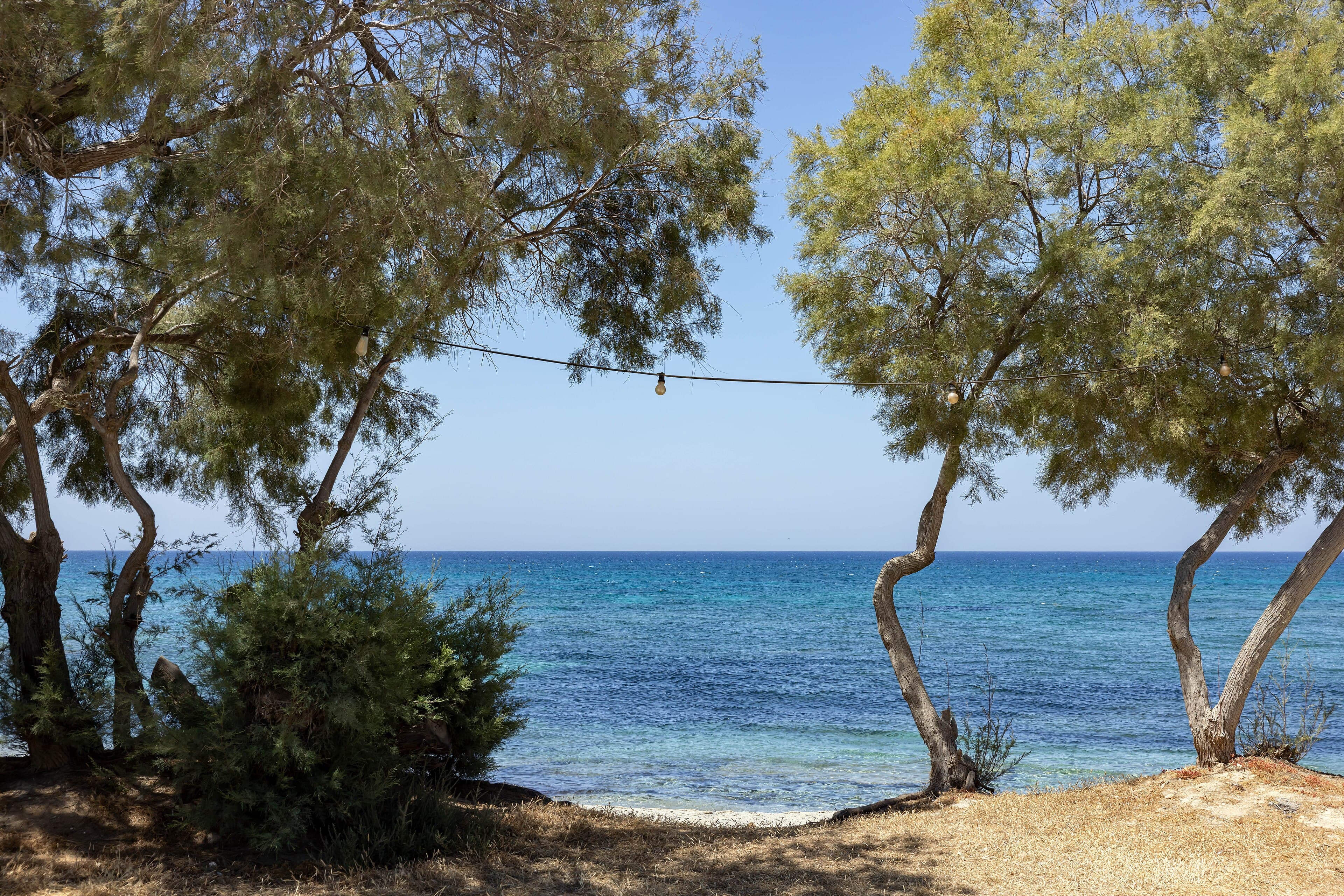
Des suites avec vue sur la caldeira aux studios face à l'Égée, comparez les hébergements de toute la Grèce.
 ActivitéCoup de cœur
Excursions & croisières en Grèce
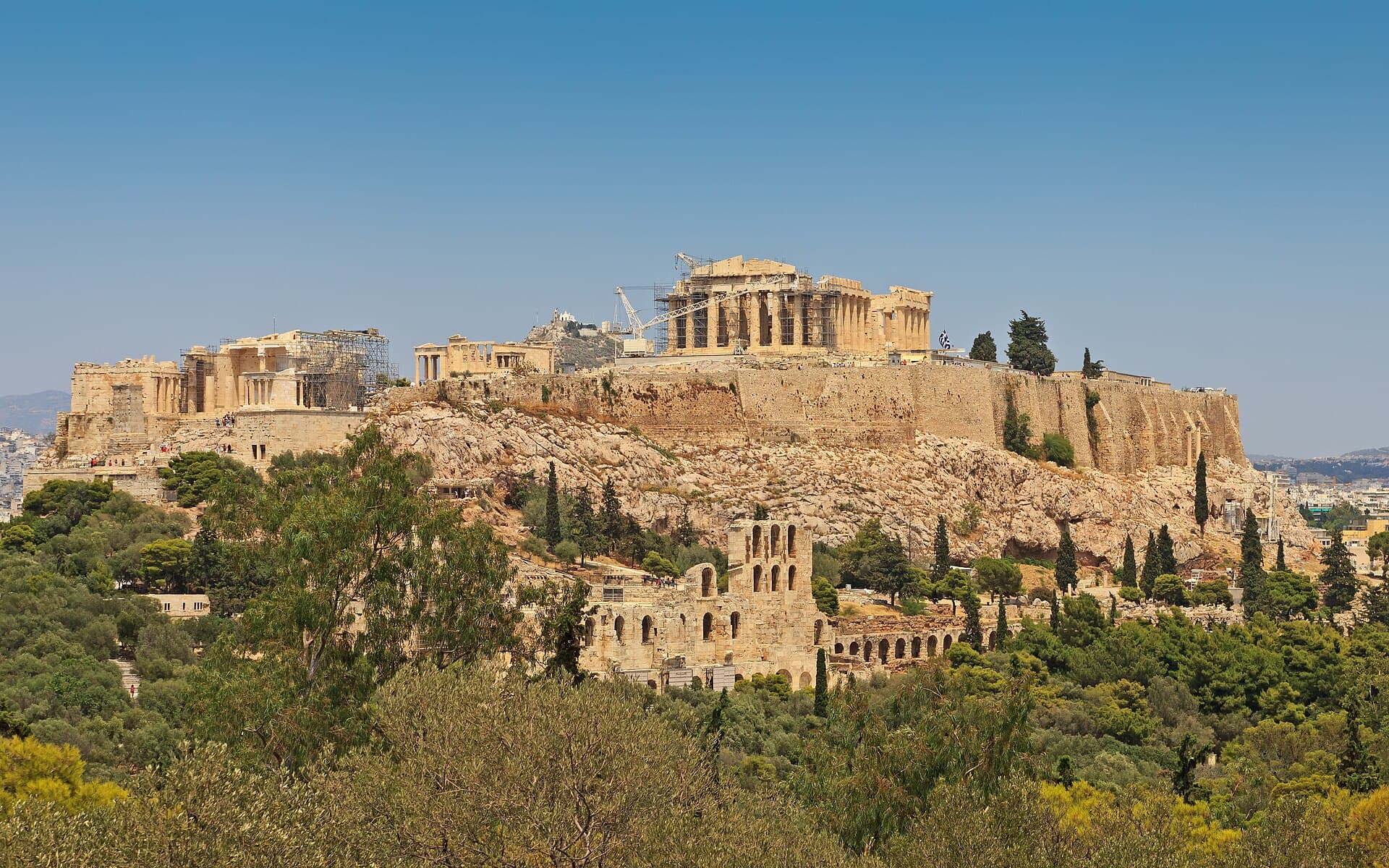
Croisière dans la caldeira, visite de l'Acropole, île-hopping, dégustation de vins : la Grèce à la carte.
 VolComparateur
Vols vers la Grèce
Athènes toute l'année, Santorin et Mykonos en saison : comparez les vols directs depuis la France.
Nearby

"Mai est idéal : caldeira lumineuse, douceur et foule encore mesurée."
Expert on Santorini · 1 contributions