Region
Alsace
UNESCO Strasbourg and European capital, Colmar the "Little Venice", Alsace Wine Route (170 km, 70 villages), fairy-tale Christmas markets: Alsace is one of France's most identifiable regions.
Alsace (integrated into the Grand Est region since 2016) is one of France's most identifiable regions — singular culture (Alsatian language, German-Rhenish traditions), specific gastronomy (sauerkraut, tarte flambée, kougelhopf, bredele, white wines), picturesque half-timbered villages, fairy-tale Christmas markets. Located between the Vosges and the Rhine (border with Germany), it alternated between French and German sovereignty through history (1871-1918 under German Empire, 1940-1944 under Nazi Reich), which explains its rich and complex cultural identity.
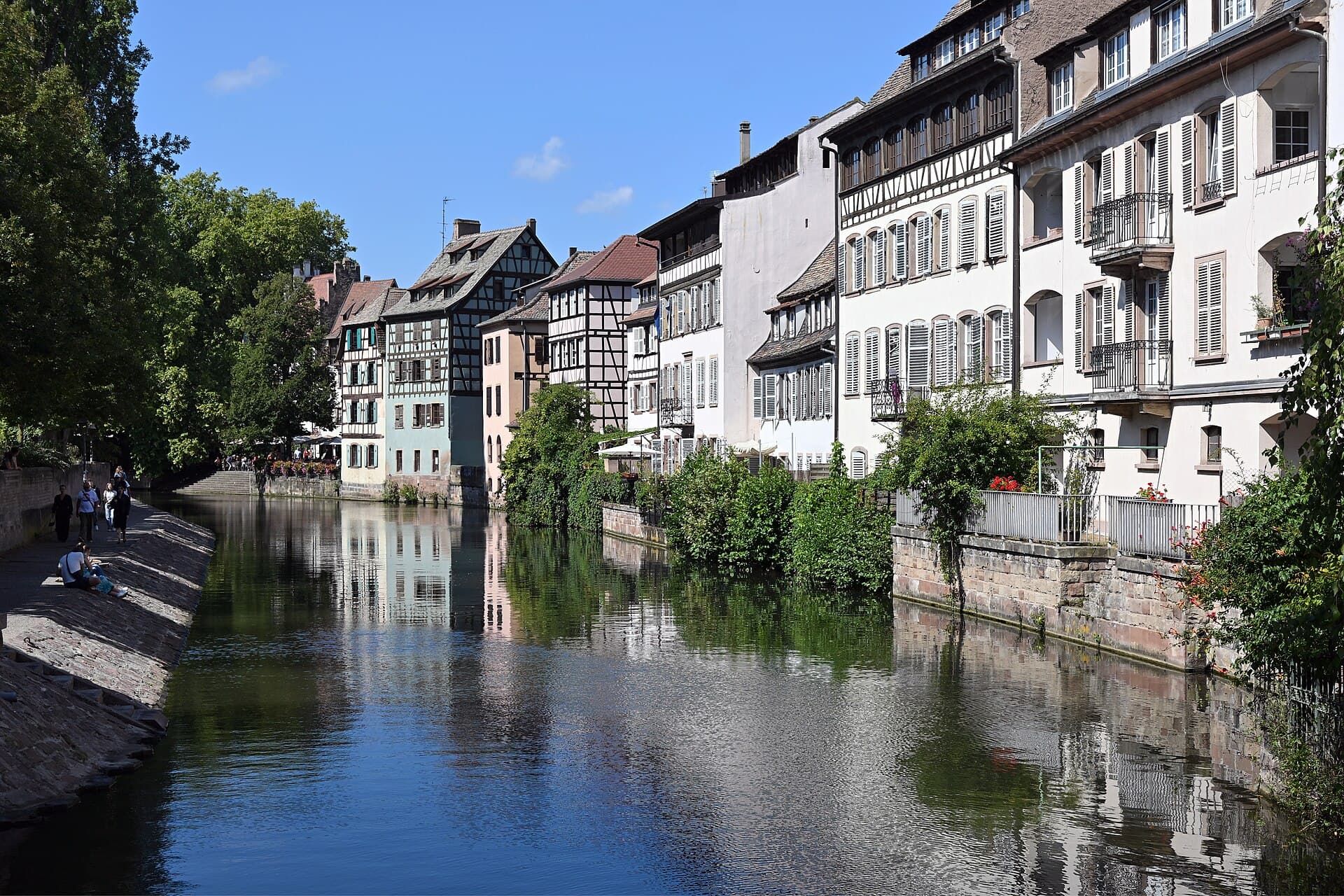
Strasbourg (capital of Alsace and European capital, 290,000 inner inhabitants, 800,000 metropolitan area with Kehl in Germany) is one of Europe's most beautiful cities. The Grande-Île (UNESCO since 1988) houses the Notre-Dame Cathedral (Gothic masterpiece, 142 m high, the world's tallest building from 1647 to 1874), the Petite France (tanners' district with half-timbered houses), the Covered Bridges, the Rohan Palace, the Modern Art Museum. The Neustadt (Wilhelminian extension 1880-1918, UNESCO since 2017) is an exceptional urban ensemble of Rhenish architecture. Strasbourg also hosts the European Parliament and the Council of Europe.
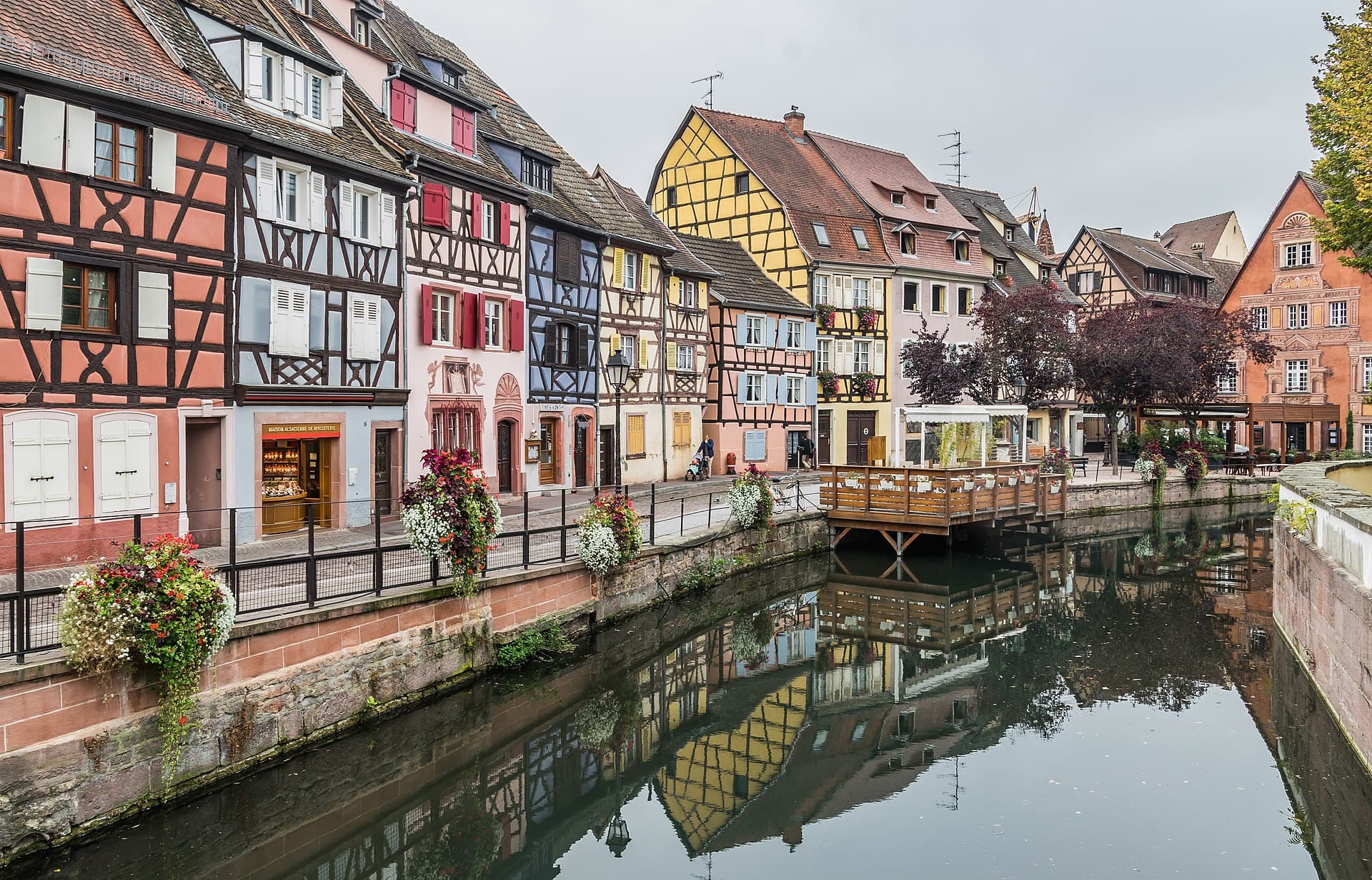
Colmar (70,000 inhabitants), 2nd city of Alsace, is one of France's most picturesque cities. The Little Venice (boatmen's quarter on the Lauch), the half-timbered houses (Maison Pfister, Maison des Têtes), the Unterlinden Museum (Grünewald's Isenheim Altarpiece, one of the most beautiful masterpieces of Western art). Colmar is also the capital of the Alsace vineyard and houses the birthplace of Frédéric Auguste Bartholdi (sculptor of the Statue of Liberty).
The Alsace Wine Route (170 km from Marlenheim to Thann) crosses 70 wine villages classified as "Most Beautiful Villages": Riquewihr (the most visited, one of France's Most Beautiful Villages), Kaysersberg (Favourite Village of the French 2017), Eguisheim (Favourite Village of the French 2013, round like a half-timbering), Ribeauvillé (3 medieval châteaux), Hunawihr (storks), Bergheim, Mittelbergheim, Obernai. The Alsace grape varieties (Riesling, Gewurztraminer, Pinot Gris, Pinot Blanc, Sylvaner, Pinot Noir, Crémant d'Alsace) cover 15,600 hectares of slopes between the Vosges and the Rhine plain.
The hinterland (Vosges, Munster, Ballon d'Alsace) offers nature: Vosges massif (highest point: Grand Ballon 1,424 m), Vosges lakes (Blanc, Noir, Truite), Munster valley (typical Alsatian valley), family ski resorts (Le Bonhomme, La Bresse, Gérardmer). The Haut-Kœnigsbourg castle (11th century, restored by Wilhelm II in 1900) dominates the Alsace plain from 757 m altitude — one of Alsace's most visited sites (550,000 visitors/year).
Explore Alsace
Spots in the region
Situation
Où se situe Alsace ?
Ouvrir la carte en grand sur OpenStreetMap →Frequently asked questions
How many days do I need for Alsace?+
When to visit Alsace Christmas markets?+
What to see in Strasbourg?+
Which villages are essential on the Wine Route?+
How do I visit the Wine Route?+
What to taste in Alsace?+
Is the Haut-Kœnigsbourg castle worth the detour?+
Our verdict
Alsace is one of France's most identifiable and beloved regions — UNESCO Strasbourg, picturesque Colmar, Wine Route, fairy-tale Christmas markets. The region lends itself to a 4-7 day stay: 2 days Strasbourg, 2 days Colmar + Wine Route, 1-2 days Haut-Kœnigsbourg castle + Vosges. For Christmas markets (December), plan 3-4 days on Strasbourg + Colmar + Riquewihr — booking mandatory from summer. A car is highly recommended for the Wine Route; alternative: TGV Strasbourg + TER Colmar + rental for 1-2 days. Visit in May-June or September-October for the best conditions; in December for the magic of Christmas.