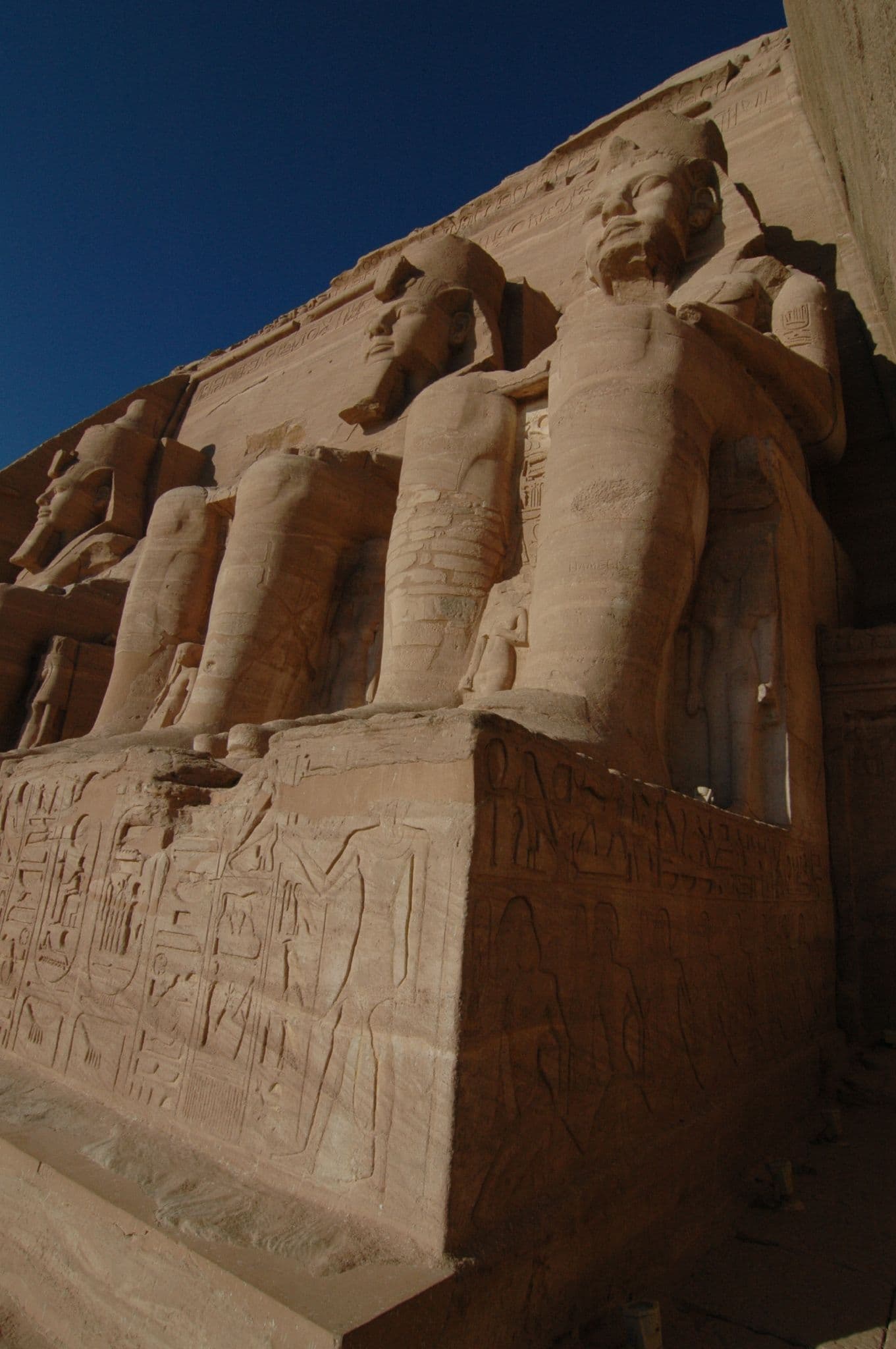
A visit to Abu Simbel organises around the two temples, 100 metres apart on the western shore of Lake Nasser.
The Great Temple of Ramesses II is one of the absolute masterpieces of pharaonic architecture. Its facade, carved directly into the sandstone cliff, is dominated by four colossi of the pharaoh seated on his throne, 20 metres high each (one of the colossi lost its head in an ancient earthquake). The king's feet are surrounded by smaller statues representing his wife Nefertari and his children. Above the entrance, a row of worshipping baboons greets the rising sun. Inside, you enter through a sequence of four halls sinking 65 metres into the rock: the great hypostyle hall with eight Osiride pillars (Ramesses depicted as Osiris), the hall of four pillars, the transverse hall and finally the inner sanctuary with its four statues of the gods. The walls are entirely covered with bas-reliefs commemorating the exploits of Ramesses II, including the famous Battle of Kadesh against the Hittites (1274 BC) which is also the first known international peace treaty.
The Small Temple of Nefertari, 100 metres to the north, is dedicated to the queen and the goddess Hathor. Its facade has six 10-metre-high statues, alternating the pharaoh Ramesses II and his wife Nefertari — extremely rare, the queen appears at the same scale as the king, making this one of antiquity's most moving love testimonies ("For the one for whom the sun shines", declares the dedication inscription). Inside, the colourful bas-reliefs depict Nefertari making offerings to Hathor and participating in divine ceremonies as her husband's equal. Visiting both temples takes 1.5-2 hours, more if you take time to read the bas-reliefs with a competent guide.
Nearby, several observation points let you step back from the whole site and grasp the scale of the 1964-1968 UNESCO operation (the "false hill" supporting the rebuilt temples is in fact a reinforced concrete dome covered with rocks and sand). The evening sound and light show (50 min, €15-25 per person, rotating languages including English) projects images on the lit-up facades and tells the story of the temples — worth seeing if you sleep on site. For enthusiasts, Lake Nasser cruises (3-4 nights Aswan-Abu Simbel-Aswan) give access to several Nubian temples also saved from the waters and rebuilt on the lake's shores: Wadi es-Sebua, Amada, Kalabsha — little visited and very moving.
Read also
- Aswan, Nubian softness — 280 km to the north: Philae, Elephantine and the base for all Abu Simbel excursions.
- Luxor, capital of the pharaohs — Karnak, Valley of the Kings and the heart of the New Kingdom — combine with Abu Simbel.
- Egypt — Complete country guide: entry rules, budget, when to visit, regions.