Region
Pantanal
The planet's largest wetland (210,000 km²), UNESCO heritage 2000 — the Pantanal is the world capital of wild jaguar observation, with 4,700 animal species recorded: caimans, capybaras, anacondas, giant otters, 650 bird species.
The Pantanal is one of the planet's most extraordinary ecosystems — the world's largest wetland, covering 210,000 km² (three-quarters of Italy) straddling Brazil (78%, Mato Grosso and Mato Grosso do Sul states), Bolivia (18%) and Paraguay (4%). UNESCO World Heritage 2000 and biosphere reserve, it's a wildlife sanctuary of unparalleled density in South America — more accessible and efficient than the Amazon for large fauna observation.
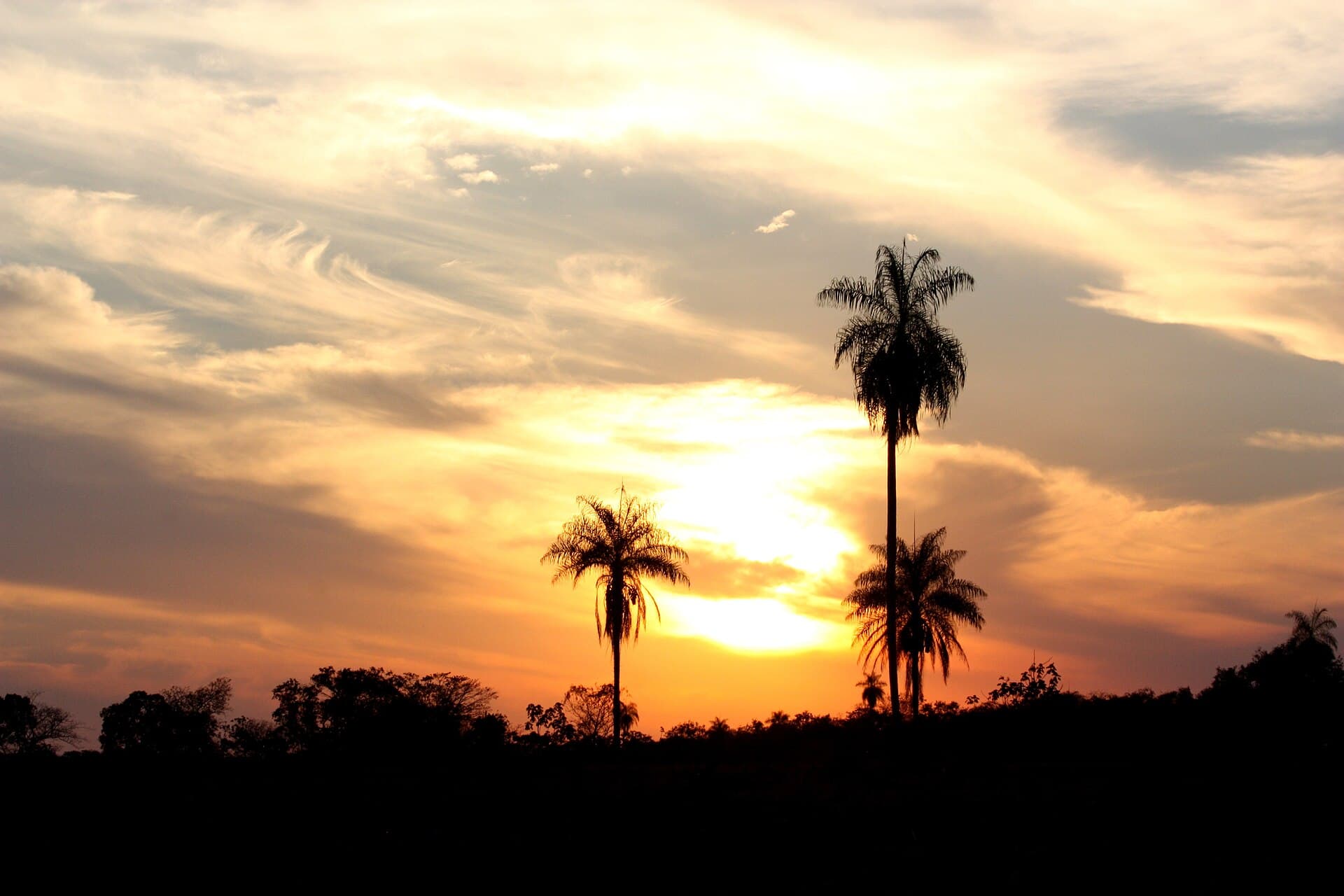
The Pantanal lives by the rhythm of its annual floods. During the wet season (December-April), rains raise rivers and the basin transforms into an immense marsh where 80% of the territory is underwater — extraordinary landscape seen from above (impossible to traverse by car). During the dry season (July-October), waters recede leaving grassy plains, gallery forests along rivers, residual lagoons where all wildlife concentrates — it's the optimal wildlife observation period.
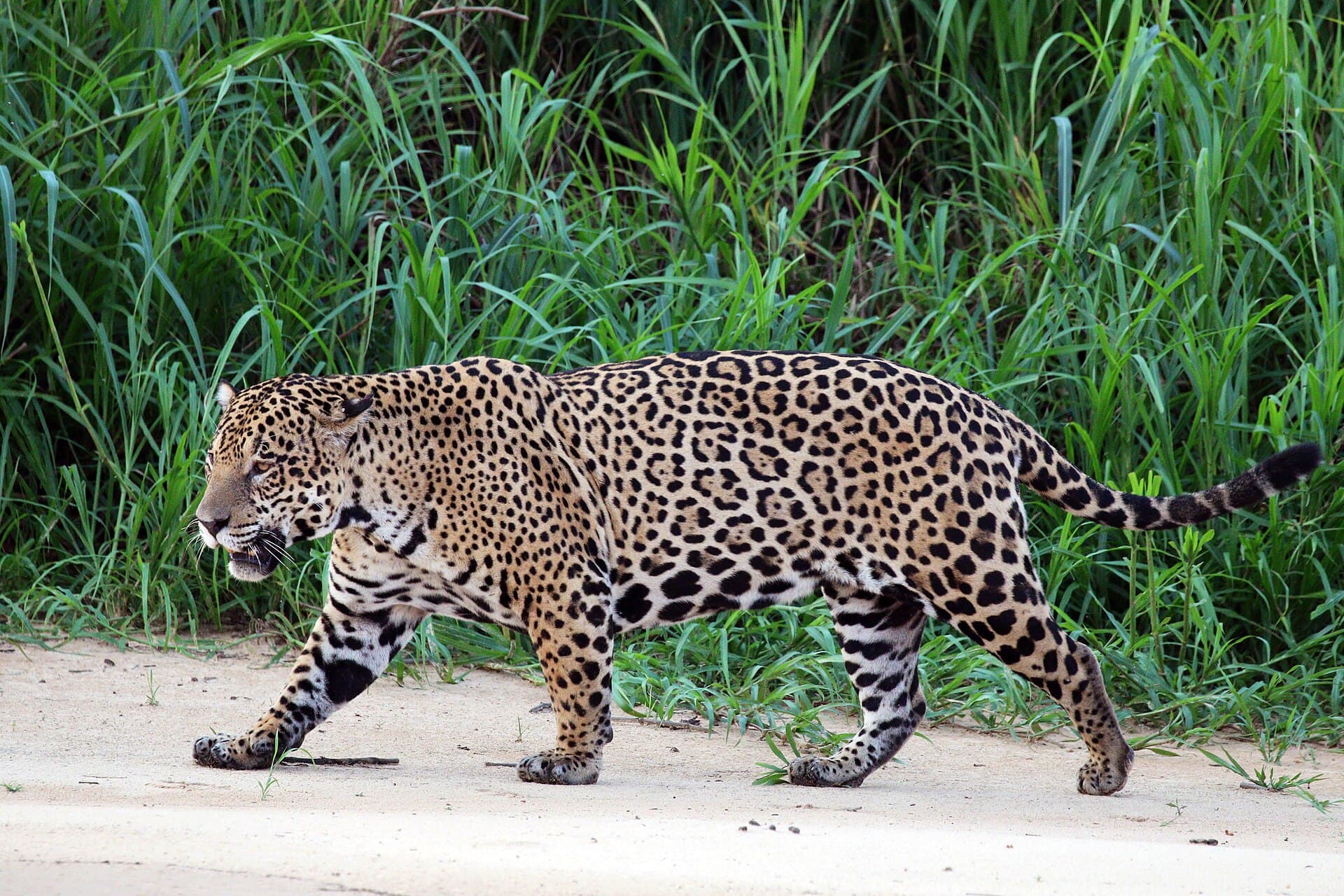
The wildlife density is spectacular: 4,700 animal species recorded, including 650 bird species (jabirus with 1.5 m wingspan, hocco-pheasants, hyacinth macaws, parrots, multicoloured herons), 159 mammals (jaguars 1,000-2,000 individuals, ocelots, giant anteaters, tapirs, capybaras — world's largest rodent — by thousands, giant otters), 270 reptiles and amphibians (giant anacondas, yacare caimans 10 million individuals), 1,100 butterfly species. The jaguar (Panthera onca, world's 3rd largest cat after tiger and lion) is the flagship animal — the Pantanal is its world capital of observation: in the Porto Jofre region (Rio Cuiabá), during dry season, operators guarantee 1-5 different jaguar sightings per day, a unique world experience.
The tourist region is organised around two gateways. North Pantanal (Mato Grosso), accessible from Cuiabá (CGB airport, flights from São Paulo 2h, Rio 2h30, €150-300 return), is the most visited sector — famous Transpantaneira road (147 km of dirt track, 122 wooden bridges, crossing the sanctuary), renowned lodges (Pousada Rio Mutum, Pouso Alegre, Araras Eco Lodge, Pousada Piuval), Porto Jofre region (world's eldorado for jaguar observers). South Pantanal (Mato Grosso do Sul), accessible from Campo Grande (CGR airport, flights from São Paulo 2h, €150-300), is more authentic and less frequented — traditional fazendas (Caiman, Refúgio Ecológico Caiman, Fazenda San Francisco), focus on ecotourism and full wildlife rather than just jaguar, access to Bonito Natural Aquarium (crystal-clear rivers for snorkelling).
Stays organise in eco-lodges or fazendas (3-5 nights all-inclusive, €200-500/night/person full board) with daily activities: pick-up safari (game drives at dawn and sunset on the Transpantaneira), horse safari (closest observation without disturbing wildlife), boat safari on rivers (Rio Cuiabá for jaguars, Rio Aquidauana for giant otters), walking hike (close observation of birds and smaller mammals), starry night (Pantanal = sky without light pollution, austral constellation observation).
Explore Pantanal
Spots in the region
Situation
Où se situe Pantanal ?
Ouvrir la carte en grand sur OpenStreetMap →Frequently asked questions
North or South Pantanal: which to choose?+
When to visit the Pantanal?+
Which lodge to choose in the Pantanal?+
How to get to the Pantanal?+
What budget for a Pantanal trip?+
Our verdict
The Pantanal is probably South America's best wildlife observation destination — and one of the world's best for big fauna, with wild jaguar observation density unmatched (1-5 individuals/day guaranteed at Porto Jofre in dry season). Our recommendation: choose North Pantanal via Cuiabá for jaguar experience (Porto Jofre stay, 3-4 nights at Rio Cuiabá lodge, €500-700/day all-inclusive jaguar boat excursions included) or South Pantanal via Campo Grande for global ecotourism and fazenda authenticity (Caiman, Refúgio Ecológico Caiman, 4 nights, €300-500/night). Optimal period: July to October (dry season, maximum observation). Avoid December-April (wet season, flooded roads). Book 3-6 months ahead for premium lodges in high season. Budget €1,500-3,000/person for 5 days all-inclusive (domestic flight + premium lodge + jaguar excursions). Yellow fever vaccine mandatory (10 days before departure). The Pantanal is physically less demanding than the Amazon (drier climate, fewer mosquitoes in season) but requires equal anticipation.