Region
Outback and Uluru
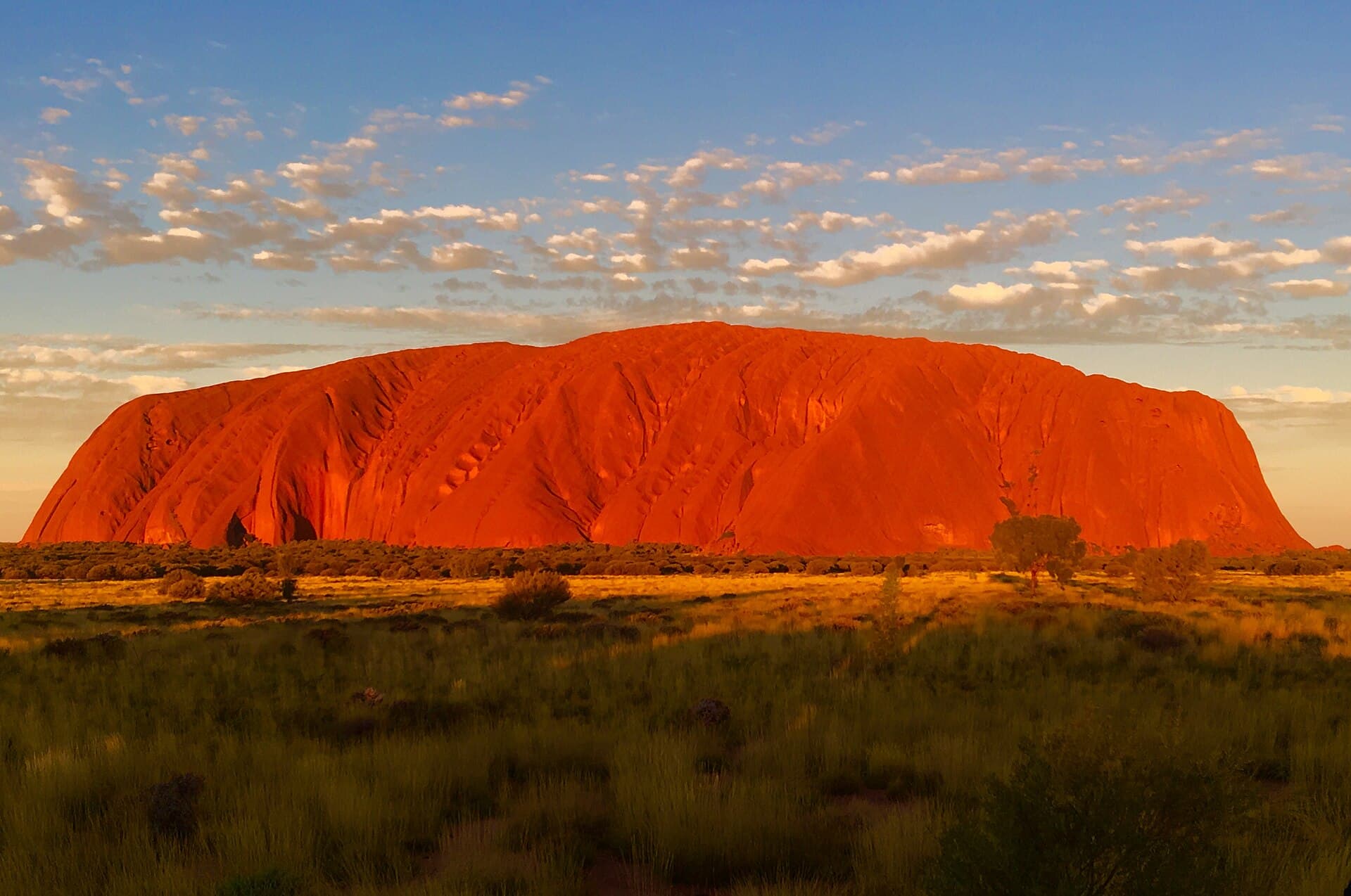
Uluru (Ayers Rock) is the absolute Outback icon — a 348 m red sandstone monolith, sacred to the Aboriginal Anangu people for 65,000 years, officially returned in 1985 and closed to climbing since 2019 out of respect.
The Australian Outback — nicknamed the Red Centre — covers two thirds of the continent at Australia's heart. It is a vast, flat, ochre-red desert, dominated by a few spectacular rock formations that seem to spring from nowhere: Uluru (Ayers Rock, 348 m), Kata Tjuta (the Olgas, 36 rock domes, highest point 546 m), Kings Canyon (red sandstone gorge), MacDonnell Ranges (parallel mountain chain 644 km long crossing the Outback). All concentrated in the Northern Territory around the small town of Alice Springs (30,000 inhabitants), the logical arrival point at the continent's heart.
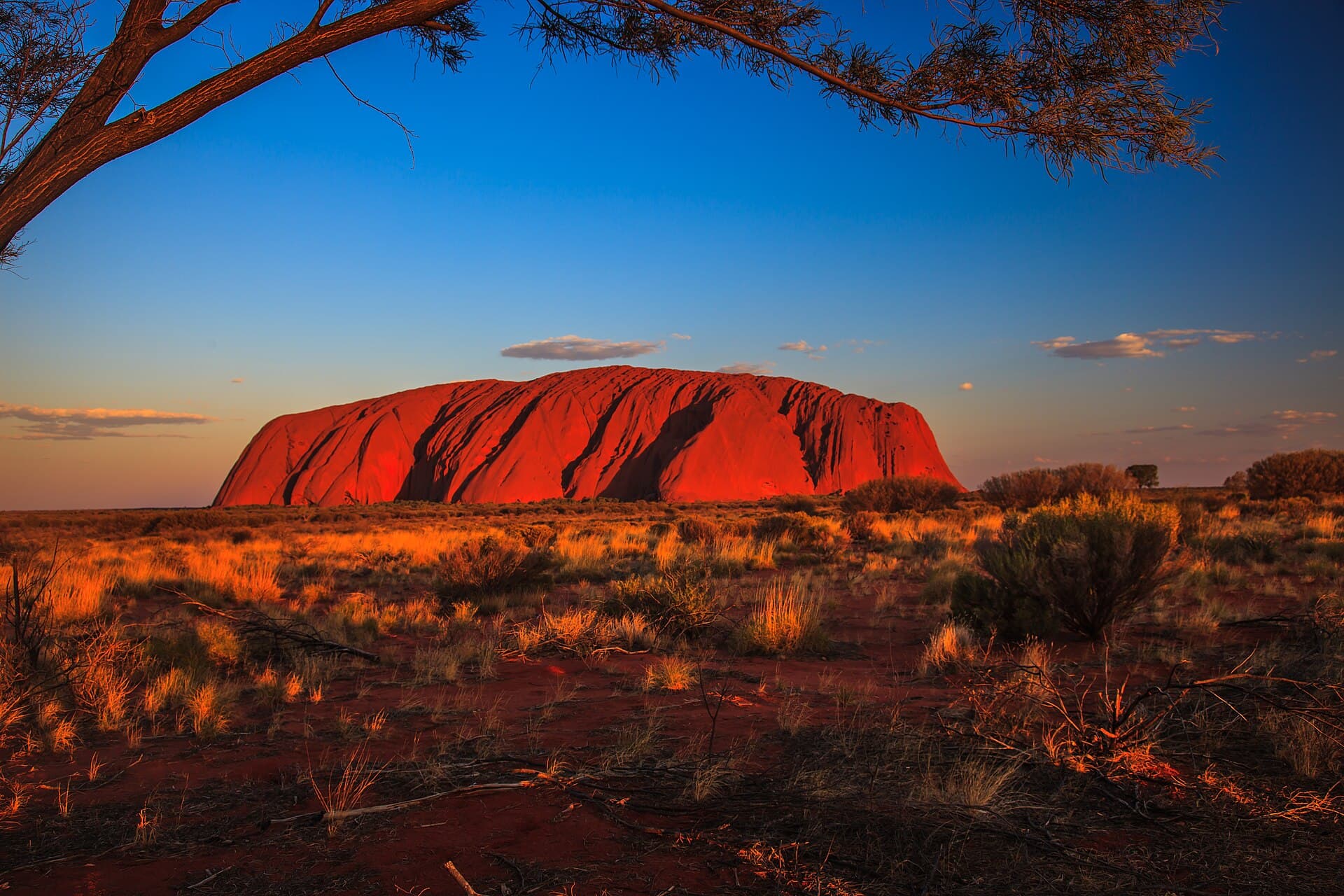
Uluru is without possible contest the absolute icon of the Outback and natural Australia. This arkosic sandstone monolith (cemented reddish sand), 348 m above ground (but 6 km deep underground!), 9.4 km circumference, 3.6 km long by 2 km wide, literally changes colour at sunrise and sunset — passing from deep ochre to bright red, then flamboyant orange, in a 20-30 minute spectacle that marks travellers for life. It is one of the world's most photographed sites, and probably one of the most spiritual.
Uluru is UNESCO World Heritage listed (1987 for nature, 1994 for Aboriginal culture — rare double listing). It is a sacred site for the Anangu people for at least 30,000 years (according to archaeological dating, but the Anangu consider their presence eternal, since the Tjukurpa, the Dreamtime). The rock is associated with several creation stories (the rainbow serpent, the Mala lizard-men, the Kuniya python-woman) and each relief, fault, cave and water hole has a precise spiritual meaning. The site was officially returned to the Anangu in October 1985 (one of the most symbolic acts of reconciliation), and since 26 October 2019, climbing Uluru is prohibited out of respect for its sacredness (previously, thousands of tourists climbed annually, deeply hurting the Anangu and causing 37 deaths since 1958).
The region offers other strong experiences. Kata Tjuta (the Olgas, 36 rock domes 50 km from Uluru) — the Valley of the Winds walk (7.4 km, 3-4h) is one of Australia's most beautiful. Kings Canyon (300 km north of Uluru) with the Rim Walk (6 km, 3-4h) along the gorge top — spectacular views of 100 m sandstone cliffs, descent into the Garden of Eden (palm oasis). Alice Springs (4h drive north-east of Uluru) — small historic town, base for MacDonnell Ranges, Ormiston Gorge, Standley Chasm, Glen Helen Gorge. East and West MacDonnell Ranges — parallel mountain chains, gorges, water holes, Aboriginal sites.
The Outback experience is unique and spiritual. Absolute silence, purity of the starry sky (Uluru is one of the certified Dark Sky Places — extraordinary Milky Way visibility), contact with the world's oldest Aboriginal culture, raw desert dimension — all this makes it one of the most marking experiences of an Australian trip.
Explore Outback and Uluru
Spots in the region
Situation
Où se situe Outback and Uluru ?
Ouvrir la carte en grand sur OpenStreetMap →Frequently asked questions
How many days for the Outback and Uluru?+
When is the best time for Uluru and the Outback?+
How to get to Uluru from Sydney or Melbourne?+
Can you still climb Uluru?+
Where to stay near Uluru?+
Our verdict
The Outback and Uluru are Australia's signature nature and spiritual experience — an initiatory journey at the red continent's heart, in the sacred Anangu country (present for 65,000 years). Uluru at sunrise and sunset is one of the world's most beautiful photographic experiences. Plan 3-4 days minimum: 2 nights at Yulara/Ayers Rock Resort (Uluru sunrise and sunset, Kata Tjuta Valley of the Winds, Sounds of Silence dinner under the stars), 1 night at Kings Canyon Resort (Rim Walk), 1 night at Alice Springs (MacDonnell Ranges base). Prioritise austral winter (May to September) for coolness and no flies. Avoid November-March (38-45 °C, dangerous hikes). Do not forget the cultural dimension: Uluru cultural centre, Anangu-guided experience if possible, absolute respect for sacred sites (clearly signed no-photo zones).