
Mowando

Climate & seasons

When to visit Australia?

By La rédaction · Updated 6/10/2026

The Editors
The Editorsauteur principal✓ Verified

Expert on Australia · 1 contributions

The best periods

The best time to visit Australia is September to November (austral spring) and March to May (austral autumn).

Sep, Oct, Nov

Printemps austral — la meilleure période d'ensemble

  • Climat idéal sur la côte est (Sydney, Melbourne) : 18-25 °C, ciel dégagé, faible humidité
  • Outback (Uluru, Alice Springs) accessible : 25-32 °C en journée, nuits fraîches confortables
  • Floraison sauvage dans l'Outback (Australie occidentale notamment, août-octobre)
  • Grande Barrière de Corail en pleine saison : visibilité 20-25 m, eau à 24-26 °C, hors méduses-boîte
  • Vacances scolaires australiennes (deux semaines fin septembre) : affluence sur les plages
  • Tarifs aériens internationaux en hausse approche fin d'année (1 500-2 000 € A/R Paris-Sydney)
  • Sud-est (Tasmanie, Melbourne) encore variable en septembre, plus stable en novembre
Mar, Avr, Mai

Automne austral — la deuxième meilleure période

  • Sydney et Melbourne dans leurs plus belles conditions : 18-25 °C, ciel limpide, lumière chaude
  • Fin de la saison des méduses-boîte dans le nord tropical (Cairns, Whitsundays accessibles dès avril)
  • Outback redevient praticable après la chaleur extrême de l'été
  • Tarifs hôteliers et aériens en baisse après le pic de Pâques
  • Pluies possibles dans le nord tropical (Cairns) en mars (fin saison humide)
  • Tasmanie déjà fraîche en mai (12-18 °C), à privilégier en mars
  • Pâques australiennes : pic touristique sur 1-2 semaines, hôtels saturés et prix élevés
Déc, Jan, Fév

Été austral — chaleur extrême Outback, paradis sud-est

  • Sydney, Melbourne, Tasmanie dans leurs plus belles conditions estivales (22-28 °C)
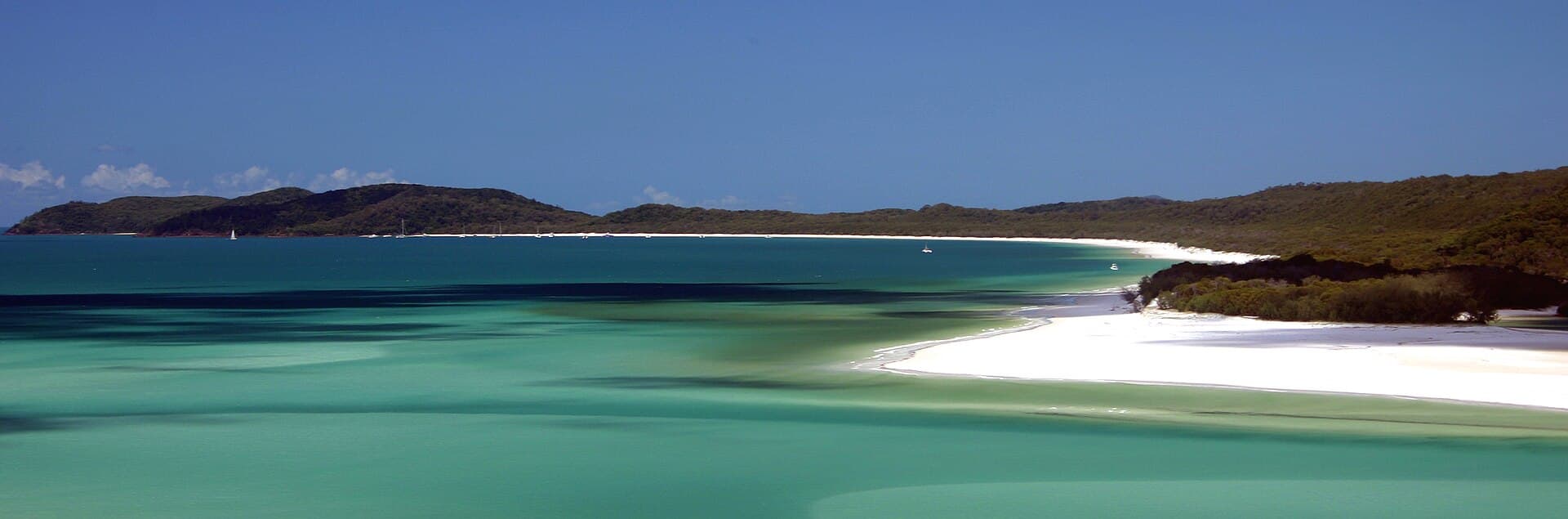
  • Plages australiennes en pleine saison : Bondi, Whitehaven, Surfers Paradise
  • Open d'Australie de tennis à Melbourne (janvier), feux d'artifice Sydney 31 décembre légendaires
  • Festivals d'été dans toutes les grandes villes
  • Outback (Uluru, Alice Springs) inaccessible : chaleur extrême 38-45 °C en journée
  • Cairns et Grande Barrière : saison humide tropicale, méduses-boîte mortelles dans les eaux
  • Cyclones possibles dans le nord-est et nord-ouest tropical (décembre à avril)
  • Vacances scolaires australiennes (mi-décembre à fin janvier) : prix et affluence au maximum
  • Risque de feux de brousse (bushfires) catastrophiques (Black Summer 2019-2020 a marqué les esprits)
Juin, Jui, Aoû

Hiver austral — saison sèche tropique, ski Snowy Mountains

  • Cairns et Grande Barrière de Corail dans leurs meilleures conditions : sec, 20-26 °C, mer calme, pas de méduses-boîte
  • Outback (Uluru, Alice Springs) idéal : 20-25 °C en journée, ciel limpide, nuits fraîches
  • Whitsundays parfaits : voile, plongée, snorkeling dans des conditions optimales
  • Observation des baleines à bosse sur la côte est (Hervey Bay, Byron Bay, juillet-octobre)
  • Saison du ski dans les Snowy Mountains (NSW) et les Alpes victoriennes
  • Sydney et Melbourne frais et humides : 8-16 °C, pluies fréquentes
  • Tasmanie froide : 4-12 °C, neige possible en altitude, journées courtes
  • Vacances scolaires australiennes (deux semaines en juillet) : pic touristique côte tropicale et stations de ski

Climate by destination

The climate varies sharply from one region to another. See the month-by-month detail — temperatures, sea, crowds and flight prices — on each destination's 'when to go' page.

Frequently asked questions

Do you need a visa to visit Australia?+
Yes, French and EU citizens must obtain an eVisitor (subclass 651) before travelling. It is a free electronic visa, valid for 12 months, allowing multiple tourist stays of 3 months maximum each. Application is online at immi.homeaffairs.gov.au (ImmiAccount), with processing in a few hours to 72 hours — request your eVisitor at least one to two weeks before departure for safety. Conditions: valid passport, no serious criminal conviction, no history of Australian visa refusal. The visa is electronically linked to your passport — no physical sticker. On arrival, control via automated SmartGate kiosks at major airports. For longer stays or to work, the Working Holiday Visa (subclass 417) is available for 18-35 year olds, up to 12 months, AUD 635.
How long is the flight Paris-Sydney?+
Count 22 to 24 hours minimum for Paris-Sydney with one stopover, or more with two stops. No direct flight (Paris-Sydney distance is 17,000 km, beyond current commercial range). Most common routes via Singapore (Singapore Airlines, Qantas, Air France codeshare): 12-13h Paris-Singapore + 1-3h layover + 8h Singapore-Sydney. Via Dubai (Emirates): 7h Paris-Dubai + 2-4h layover + 14h Dubai-Sydney. Via Doha (Qatar Airways): comparable duration. Return fares: €1,100-1,500 in low season (May-June, September-October), €1,800-2,500 in high season (July-August, Christmas). Book 3-6 months ahead for best prices. Jet lag on arrival is significant (9-10h) — allow 2-3 days adjustment.
When is the best time to visit Australia?+
Depends on your itinerary — Australia is so vast that seasons vary radically. For a comprehensive trip (east coast + Outback + tropical north), the best periods are austral spring (September to November) and austral autumn (March to May): balanced climate across the whole territory. Austral summer (December to February) is perfect for Sydney, Melbourne and Tasmania (22-28 °C), but makes the Outback inaccessible (38-45 °C at Uluru) and the Great Barrier Reef dangerous (lethal box jellyfish October to May in the tropical north). Austral winter (June to August) is paradoxically the best season for Cairns and the Great Barrier (dry, 20-26 °C, no box jellyfish) and the Outback (20-25 °C by day), but cools Sydney (8-16 °C) and Tasmania (4-12 °C, possible snow).
How many days for Australia?+
Plan 3 weeks minimum to make the 22-24h flight and 9-10h jet lag worthwhile. In 3 weeks, signature formula: 5 days Sydney + east coast (Blue Mountains, Hunter Valley), 5 days Cairns and Great Barrier Reef (Whitsundays included), 4 days Uluru and Outback (flights from Sydney or Cairns), 4 days Melbourne and Great Ocean Road, plus travel days. In 4-5 weeks, add Tasmania (5-7 days: Hobart, Cradle Mountain, Wineglass Bay) and/or Western Australia (Perth, Margaret River, Ningaloo Reef). For a Working Holiday Visa (18-35 year olds), 6-12 months on the ground allow real immersion (Sydney + East Coast trip + Outback + Tasmania + Perth, alternating work and travel).
What budget for an Australian trip?+
Australia is a mid-to-high destination. Reference budget €130/day/person for a comfort trip excluding flight: 3* hotel €100-150/night for two, meals €25-40/person, car rental €50-80/day, activities (diving, national parks) €50-100/day. For signature experience (4-5*, guided experiences, domestic flights), plan €200-300/day/person. The Paris-Sydney flight alone represents €1,100-2,500/person return depending on season. For 3 weeks comfort formula, total budget €6,000-9,000/person (flight + 21 days × €130 + activities + domestic flights Sydney-Cairns-Uluru-Melbourne €600-1,000). For signature: €10,000-15,000/person. Money-saving tips: Working Holiday Visa allows work on site, road trip in van (rental €60-100/day or buy-resell on Gumtree), backpackers at €25-40/night in dorms.
What currency is used in Australia?+
The Australian dollar (AUD or A$), symbol $AU or simply $. Rate around €1 ≈ AUD 1.64 (or AUD 1 ≈ €0.61), relatively stable since 2020. Banknotes (5, 10, 20, 50, 100 AUD) are polymer, untearable and waterproof — a practical Australian feature for the beach. Visa and Mastercard are accepted absolutely everywhere, including food trucks and markets — Australia is one of the most advanced societies for contactless payment (most Australians barely carry cash). American Express less accepted outside hotels. ATMs are numerous in all cities and towns, moderate fees (AUD 2-4 per withdrawal). No need to plan much cash — card covers 95% of expenses. Tipping is not expected in Australia (minimum wages are among the highest in the world, AUD 23.23/h in 2024) — exceptional service deserves 10%, otherwise nothing.
What are the must-see sites in Australia?+
The classic combo for a first 3-4 week trip includes: Sydney (3-4 nights — Opera House, Harbour Bridge, Bondi Beach, Blue Mountains day trip), Cairns and Great Barrier Reef (4-5 nights — Port Douglas, Whitsundays with Whitehaven Beach, diving and snorkelling), Uluru and Outback (3-4 nights — sacred Uluru at sunrise and sunset, Kings Canyon, MacDonnell Ranges from Alice Springs), Melbourne and Great Ocean Road (4-5 nights — cafés and street art in Melbourne, 12 Apostles on Great Ocean Road, Phillip Island and its penguins). For a longer trip, add Tasmania (Hobart, MONA, Cradle Mountain, Wineglass Bay — 5-7 days) or Western Australia (Perth, Margaret River, Ningaloo Reef to swim with whale sharks — 7-10 days). Avoid trying to see everything in a short time: internal distances are immense.

Our verdict

Australia is one of the greatest signature trips a European can undertake. The world's 6th largest country offers unmatched landscape diversity — iconic east coast beaches, UNESCO Great Barrier Reef (1981), red Outback dominated by sacred Uluru, wild Tasmania, unique wildlife, 65,000-year Aboriginal culture, ultra-modern cities Sydney and Melbourne. The trade-off is clear: 22-24 hours of flying from Paris (via Singapore or Dubai), a mid-to-high budget (€130/day minimum on site, plus €1,100-2,500 return flight), and immense internal distances requiring careful logistical planning. For these reasons, plan at least 3 weeks on the ground to make the trip worthwhile — ideally 4-6 weeks for a real discovery. Our signature formula: Sydney and east coast (5 days), Cairns and Great Barrier Reef (5 days), Uluru and Outback (4 days), Melbourne and Great Ocean Road (4 days), Tasmania optional (5 days). Prioritise austral spring (September to November) or austral autumn (March to May) for balanced climate across the whole territory — austral summer (December to February) makes the Outback inaccessible, austral winter (June to August) cools the south-east.

Mowando Letter

Once a month: the right destinations for the right season + the best booking windows.

No spam. One-click unsubscribe. Your data is never shared.