Asia
Thailand
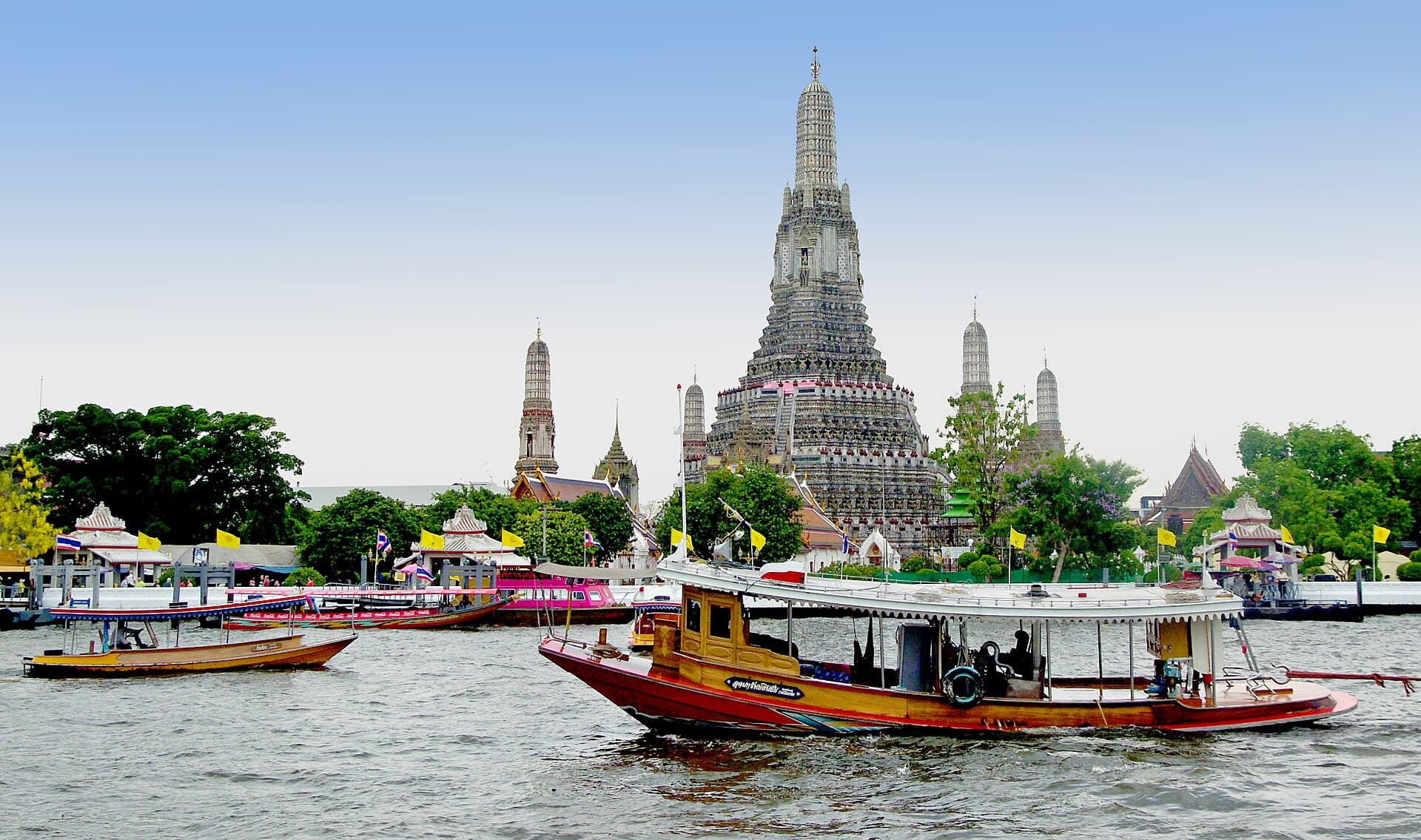
The Land of Smiles: Buddhist temples, paradise islands and some of the world's best street food, all in one kingdom.
- Capital
- Bangkok
- Currency
- Baht thaïlandais (THB)
- Languages
- Thaï
- Budget
- From €45/day/person
Thailand at a glance
Thailand is arguably the most complete destination in Southeast Asia: in a single trip, you can wander the gilded corridors of Chiang Mai's temples, lose yourself in Bangkok's exhilarating chaos and unpack your bags on the powder-white sands of Phuket or Krabi. This geographical range — from the misty, mountainous north to the turquoise islands of the south — is matched by an exceptional cultural depth, inherited from centuries of Buddhist kingdoms and from a civilisation that famously remained independent through the colonial era.
What strikes most travellers from the very first day is the warmth of the welcome: the Thai smile is no tourist cliché, but a genuine expression of an art of living rooted in Theravada Buddhism. Thailand also stands out for its sheer accessibility — robust tourism infrastructure, dependable transport links between the major cities, accommodation for every budget, and a street food scene that is among the most flavour-packed and affordable in Asia. Between the night markets of Chiang Mai, the flower offerings floating in Bangkok's temple pools and the sunsets blazing over the Phi Phi Islands, every day in Thailand holds a new promise.
Few countries offer so much variety for so little money. Backpackers stretch their bahts in cheerful guesthouses for under €30 a day; honeymooners settle into infinity-pool villas in Phang Nga for ten times that and still feel they're getting a deal. Foodies follow the smoke of curry pots through Yaowarat at midnight; divers chase whale sharks at Richelieu Rock; trekkers shoulder light packs into the hill-tribe villages north of Chiang Mai. Throughout it all, the kingdom remains overwhelmingly safe, easy to navigate and quietly proud of its singular identity — a country that has been showing the rest of Southeast Asia how to do hospitality for decades.
What we love
- ✅Exceptional diversity: from the cultural, mountainous north to the postcard beaches of the south, all in a single country
- ✅Legendary street food: pad thai, som tam, massaman, khao pad — an explosion of flavour for every budget
- ✅Tourism infrastructure among the best in Asia: transport, hotels and organised tours that just work, at low cost
- ✅Dazzling Buddhist temples: Wat Pho, Doi Suthep, Wat Rong Khun
- ✅Accessible budget: around €45/day in comfort mode, under €30/day for backpackers
What to know
- ❌Intense heat and humidity in the hot season (April-May): up to 40 °C in Bangkok
- ❌Headline sites often crowded: Phuket packed in high season
- ❌Air pollution in Chiang Mai during the dry season (agricultural burning, January-April)
- ❌Mass-tourism logic on some islands — a handful of beaches feel over-developed
Explore Thailand
Situation
Où se situe Thailand ?
Ouvrir la carte en grand sur OpenStreetMap →Frequently asked questions
Do British, American or Australian travellers need a visa for Thailand?+
When is the best time to visit Thailand?+
How many days do I need in Thailand?+
Is Thailand safe for solo or female travellers?+
How much does a trip to Thailand cost?+
What currency is used in Thailand and where can I exchange it?+
Do I need vaccinations to travel to Thailand?+
How do I get between northern and southern Thailand?+
Our verdict
Thailand remains one of the most versatile and accessible destinations in Southeast Asia. It pulls off the rare trick of combining cultural authenticity, natural beauty and genuine creature comforts without ever feeling like it has had to sacrifice one for the others. The Land of Smiles delivers on its promises: the temples are every bit as majestic as the photographs suggest, the food is as bright and layered as you hoped, and the welcome is as warm as its reputation insists. Whether this is your first foray into Asia or your tenth return, Thailand rewards both the wide-eyed newcomer and the seasoned regional traveller — provided you come between November and March and book ahead for the most coveted sights and islands.
Our take: don't try to see everything. The country rewards depth over breadth. A fortnight focused on Bangkok, Chiang Mai and one well-chosen island will leave a deeper impression than a frantic three-week dash through every UNESCO site and every postcard beach. Slow down, sit on a plastic stool in a Yaowarat alleyway, take a cooking class in Chiang Mai, and let Thailand do what it does best — convince you, gently and irresistibly, to come back.

Expert on Thailand · 1 contributions